Trump: "I spoke with Netanyahu. There will be no troops in Beirut."
The US president after the Israeli prime minister's decision to order the army to strike "terrorist targets" in the Lebanese capitalJust when a peace agreement seemed closer than ever, the conflict between the United States and Iran reignited. The escalation of the crisis was driven by Israeli Prime Minister Benjamin Netanyahu's decision to order the army to strike "terrorist targets in the Dahiyeh district of Beirut."
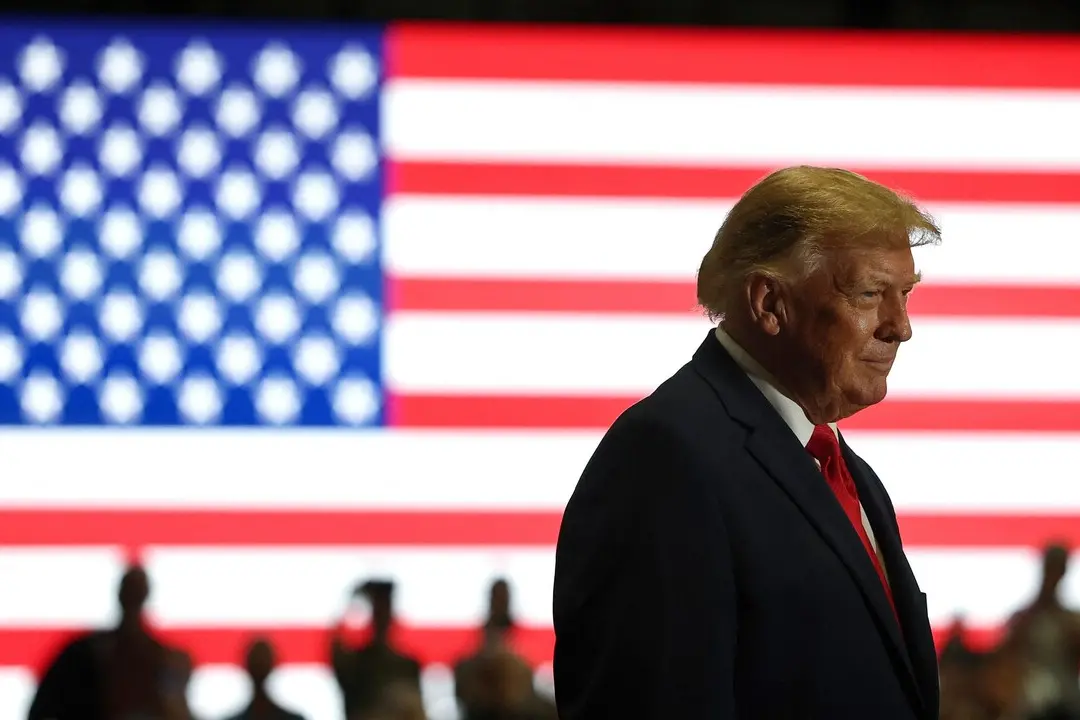
US President Donald Trump immediately tried to defuse the situation: "I had a very productive phone call with Israeli Prime Minister Bibi Netanyahu, and there will be no troops heading to Beirut." He reported on his social media account, Truth, that he had "a very good phone call with Hezbollah, and they agreed that all shooting would stop, that if Israel doesn't attack them, they won't attack Israel."
A response to Netanyahu's aggression: the attacks, he said, are a response to Hezbollah's "repeated and ongoing violations" of the ceasefire in Lebanon. But for Iran, the ceasefire in Lebanon is "an essential condition for any agreement aimed at ending the war" with the United States, Iranian Foreign Ministry spokesman Esmaeil Baghaei stated at a press conference in Tehran. "The United States is also violating the ceasefire, including this morning," he continued. "We will not hesitate to take all measures we deem necessary for Iran's national security" and to help Lebanon resist Israel's "illegal aggression" against the country. This position was reiterated by Iranian Foreign Minister Araghchi: the truce between Tehran and Washington is "unequivocally a ceasefire on all fronts, including Lebanon."
"Its violation on one front is tantamount to a violation of the ceasefire on all fronts. The United States and Israel are responsible for the consequences of any violation," he wrote on X. Thus, Iran has decided to suspend the "exchange of messages through intermediaries" with the United States in protest against "Zionist crimes" in Lebanon. According to Tasnim, Tehran's armed forces and "the entire Resistance Front" are "determined" to "respond to Zionist crimes."
The truce in Lebanon, it is emphasized, was "part of the prerequisites for the ceasefire, and now that ceasefire has been violated on all fronts." Iran and what it calls its "resistance front," or allied groups, will now attempt to completely block the Strait of Hormuz, Tasnim reports. It stated that it will also attempt to "activate" other fronts, including the Strait of Bab el-Mandem, located off the Yemeni coast, opposite the Strait of Hormuz, across the Arabian Peninsula. The Houthis, an Islamist armed group that controls large swathes of Yemen, are allies of Iran: in the past, they have targeted maritime traffic in the Red Sea and likely also the "resistance" Iran refers to in the statement.
Meanwhile, US President Donald Trump wrote in Truth this morning that "Iran really wants to reach a deal, and it will be a good deal for the United States and for those who are with us." "Rest assured, everything will be fine in the end—as always," he concluded. Regarding the news of the suspension of talks, he told NBC that he had not been informed of the decision in advance. "That's an appropriate thing to say, because they're better at negotiating than fighting," he said in a brief phone call. "But they didn't tell us." "This doesn't mean we're going to start dropping bombs everywhere," Trump added. "We're going to maintain the blockade," he concluded. He then explained in another interview that "honestly, I don't care if the negotiations end. I don't care at all. I couldn't care less."
(Unioneonline)