

Sperm donor with a genetic mutation that increases cancer risk by 90%: 197 children born, some already dead.
Sperm marketed for 17 years throughout Europe by a Danish sperm bank: "The donor was unaware, he had passed screening."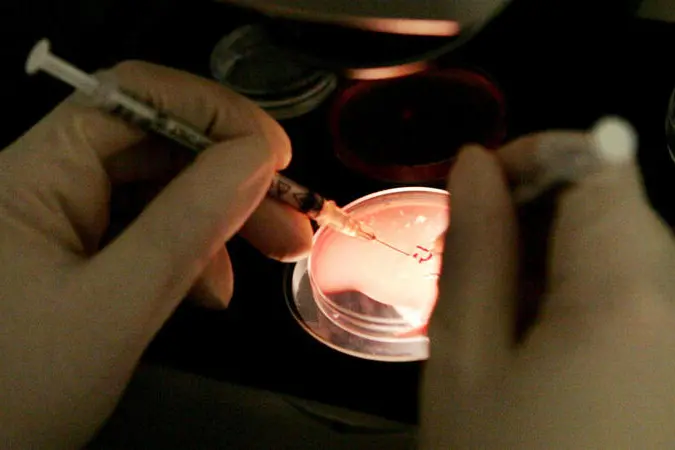
(Handle)
Per restare aggiornato entra nel nostro canale Whatsapp
Sperm from a single donor with a serious genetic mutation that greatly increases the risk of cancer has been marketed in Denmark by a well-known sperm bank, helping infertile or struggling couples to give birth to nearly 200 children across Europe through assisted reproduction in recent months.
This was revealed by an investigation by 14 European television broadcasters from as many countries, including the British BBC.
The man, whose identity is unknown, has a mutation in the TP53 gene (Li Fraumeni syndrome), which is thought to be present in 20% of his sperm, increasing the risk of childhood cancer or breast cancer later in life by up to 90% . He began donating as a student in 2005, passing screening tests. His sperm was used for approximately 17 years .
The recorded number of babies conceived with the sperm of this donor—unknowingly, it seems—amounts to exactly 197. This isn't necessarily all of them, as not all countries have provided the data. Some of the babies have since died .
According to some experts quoted by the BBC, the genetic mutation in question, detected late, is destined to ensure that only a minority of the children involved can hope to be free from oncological diseases for their entire lives.
The BBC also specifies that the Danish bank has not seen the contaminated sperm at any clinic across the Channel, as it does not have any partnerships in the UK, but that nevertheless "a very small number" of British couples currently undergoing infertility treatment in Denmark have been put on alert by the authorities.
The officials at Denmark's European Sperm Bank, for their part, admitted the incident, insisting that the donor was "unaware" at the time of the donation . At the same time, they expressed "deep compassion" for the families involved, while acknowledging that the samples sold abroad may have been used to generate "too many children" in some unspecified countries.
(Unioneonline)