

Peace talks in Berlin, US-Kiev agreement on security guarantees close.
Europeans open to multinational force, Donald Trump "very satisfied" with "extraordinary work"Thanks to European support, after two days of intense talks in Berlin, the Americans and Ukrainians have realigned, and the chance of a truce is now "real." Indeed, "it has never been greater than it is now," according to Friedrich Merz, who would like a ceasefire before Christmas and has appealed to what "remains of human decency" in Vladimir Putin to stop bombing civilians.
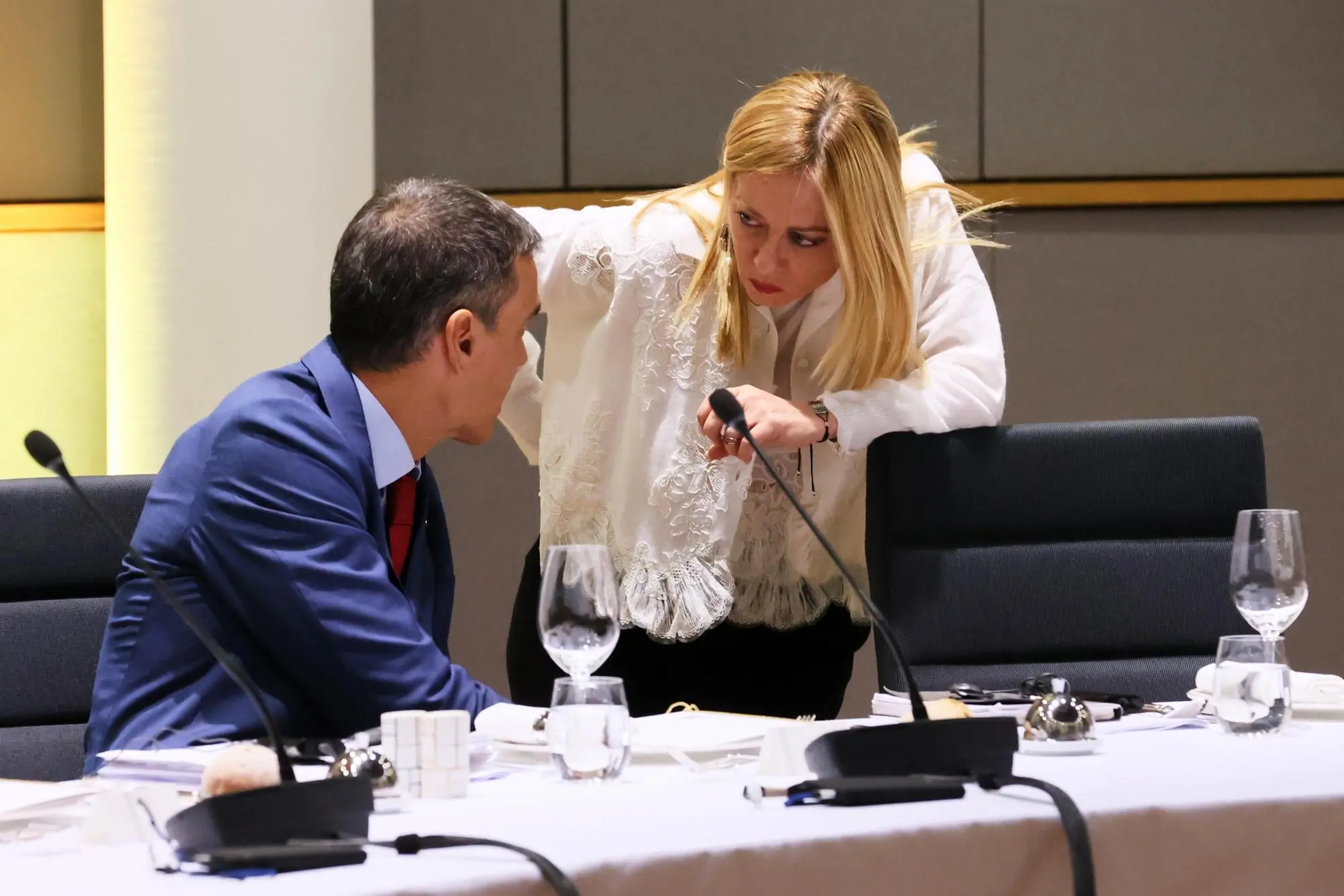
Volodymyr Zelensky didn't contradict him: "It wasn't easy, but the meetings were very productive," he commented in the evening, when he finally took the floor . Progress on security guarantees for Kiev is recognized by all, while the territorial issue, particularly the Donbass issue, clearly remains open : "The positions are different," the Ukrainian stated bluntly. And even though Russia wasn't at the table and hasn't yet expressed its opinion, the tone in Washington is more than optimistic : "Ninety percent of the issues between Moscow and Kiev have been resolved," they stated in a call via a White House source. And Donald Trump, "very satisfied" with the "extraordinary work" of the Europeans, announced a connection overseas with EU leaders at the dinner at the Chancellor's office, where Giorgia Meloni also attended.

The EU partners' joint statement confirmed the significant progress, giving credit to the American leader and appreciating the "strong convergence" between the United States, Ukraine, and Europe: "We welcome the significant progress made by President Trump to secure a just and lasting peace in Ukraine." And "we welcome the close cooperation between President Zelensky's and President Trump's teams, as well as with European teams, in recent days and weeks," read the statement from Merz, Frederiksen, Stubb, Macron, Meloni, Schoof, Store, Tusk, Kristersson, Starmer, Costa, and von der Leyen. The leaders also "agreed to work with President Trump and President Zelensky to achieve a lasting peace that preserves Ukrainian sovereignty and European security."
Furthermore, the Europeans pledged their full support to the Ukrainian leader in "any final decision on specific Ukrainian issues." And they reiterated that international borders must not be changed by force: "Decisions on the territory are up to the Ukrainian people, once solid security guarantees are effectively in place," they emphasized, effectively endorsing the possibility of a referendum.

In Berlin, the Ukrainians and Americans worked as partners, taking considerable time to address details and engaging in multiple formats. This was also emphasized by Merz's entourage, who emphasized the "quality of work and dialogue" between the teams, while the European Sherpas were simultaneously developing the process. The atmosphere was "constructive and of mutual respect," according to the Ukrainian leader, as evidenced by the fact that the two US negotiators, Steve Witkoff and Jared Kushner, ultimately attended the Europeans' dinner, along with NATO Secretary General Mark Rutte and Commission President Ursula von der Leyen.
This participation was far from a given, and had been in doubt the entire time, conditioned precisely by the outcome of the negotiations, which began on Sunday at the Adlon and continued at the Chancellery. The real breach at the negotiating table was opened on the issue of security guarantees: the documents have made significant progress and include "very strong guarantees," senior American officials reported, evoking a mechanism similar to NATO's Article 5. They also estimated that Moscow would accept this in the final agreement. Meanwhile, European leaders have taken a further step forward, putting in writing their willingness to create a European-led "multinational force" in Ukraine , composed of contributions from the willing nations within the Coalition of the Willing and supported by the United States, as well as "a ceasefire monitoring and verification mechanism led by the United States with international participation."
Zelensky confirmed that "some issues remain difficult, and positions on territorial issues differ." Ukraine is also ready to do its part, he added, once again rejecting the idea of ceding Donbass: "It's a demand not from the Americans, whom I see as strategic partners, but from the Russians through them." Now the ball is back in Russia's court.
(Unioneonline)