

Iran confirms Larijani's death, Israel: "Now he's in hell." CNN: "2,200 Marines heading to the Middle East."
The head of security was killed in an IDF raid along with paramilitary guard leader Soleimani. The US counterterrorism chief resigns: "The war was pointless."The conflict inflaming the Middle East continues ( ALL NEWS ), with Iran continuing to strike US targets across the region in retaliation for raids conducted by the US and Israel.
The explosions that shattered the silence of Tehran on Tuesday night dealt a deadly blow to the regime of the Islamic Republic : Israel claimed to have killed in the raids the head of Iranian national security, Ali Larijani, a key figure in the establishment considered by the Jewish state to be the de facto leader of the regime , particularly in the last two weeks of conflict following the death of Ali Khamenei.
The IDF then announced it had "eliminated" Gholamreza Soleimani, commander of the Basij unit responsible for the brutal repression of street protests in Iran. A double "success" that decapitates Iran's security apparatus. It also plunges the country's leadership into the abyss, while the new Supreme Leader, Mojtaba Khamenei, remains silent and the war shows no sign of slowing, leaving no room for diplomacy.
Live news for Tuesday, March 17, 2026
10:10 PM – Iranian Security Council confirms Larijani's death
"Ali Larijani was martyred." The Iranian Security Council confirms. After Israel claimed responsibility for his killing in targeted attacks this morning, "After a life dedicated to the elevation of Iran and the Islamic Revolution, he finally fulfilled his long-cherished desire, answered the call of truth, and proudly achieved the noble goal of martyrdom in the service," read a statement from the Council, released by Mehr.
9:30 PM – CNN: "The USS Tripoli, carrying Marines, has set sail from Singapore for the Middle East."
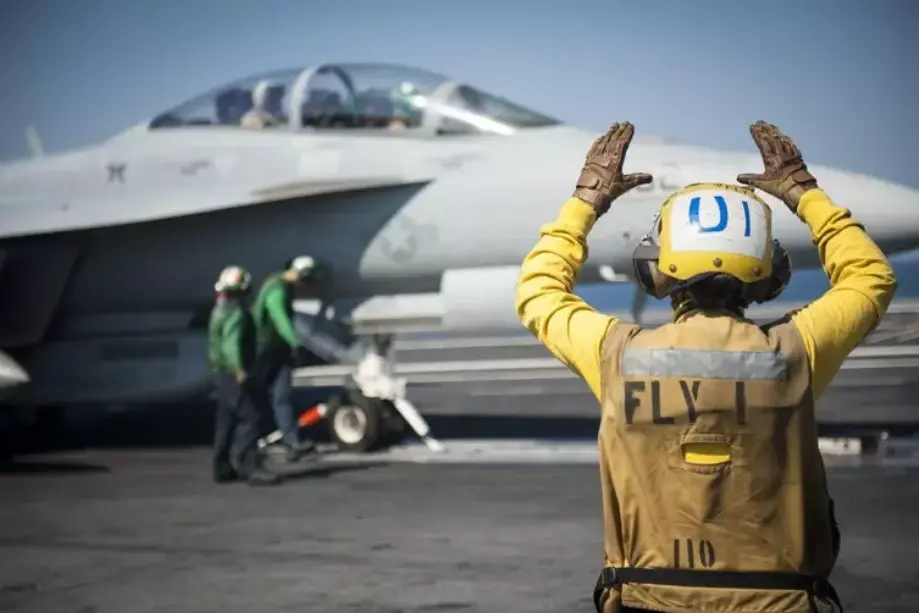
According to maritime tracking data released Tuesday, a U.S. Navy warship believed to be carrying thousands of Marines and sailors to the Middle East is approaching the Strait of Malacca, off the coast of Singapore, on its way to the region. CNN reports that the ship is believed to be carrying troops from the Okinawa-based 31st Marine Expeditionary Unit (MEU), a 2,200-man rapid response force.
8:15 PM – IRGC confirms death of Basij leader Soleimani
Iran's Revolutionary Guards confirmed the death of General Gholamreza Soleimani, head of the Basij paramilitary organization, previously announced by the Israeli military. The Guards stated on their official website, Sepah News, that the senior officer "was martyred in a terrorist attack by the American-Zionist enemy." Israel reported killing the commander of the group responsible for maintaining order in Iran in an attack in Tehran, as well as the head of the Supreme National Security Council, Ali Larijani, whose death has not been confirmed.
7:30 PM – Tajani: "A war isn't in our best interest. Iran has endless missiles and drones."
"Entering a war is complicated for us. Why go to war? I believe our commitment isn't that, but rather to try to find stability in the Middle East, to find an agreement. And even from a military standpoint, I don't know how right it is to get involved in a war. Why? Because the Iranians have endless missiles and drones. Shooting down a drone is sometimes very costly." Deputy Prime Minister and Foreign Minister Antonio Tajani said this when discussing the Middle East crisis in a meeting with Daniele Capezzone in Rome. Then, giving a textbook example, he added: "If they have, say, 10,000 drones and Western ships have 1,000 missiles, once 1,000 drones are shot down, 9,000 remain. So I don't know how convenient it is even from a military standpoint."
7:25 PM – Trump: "The war in Iran will be over in a couple of weeks."
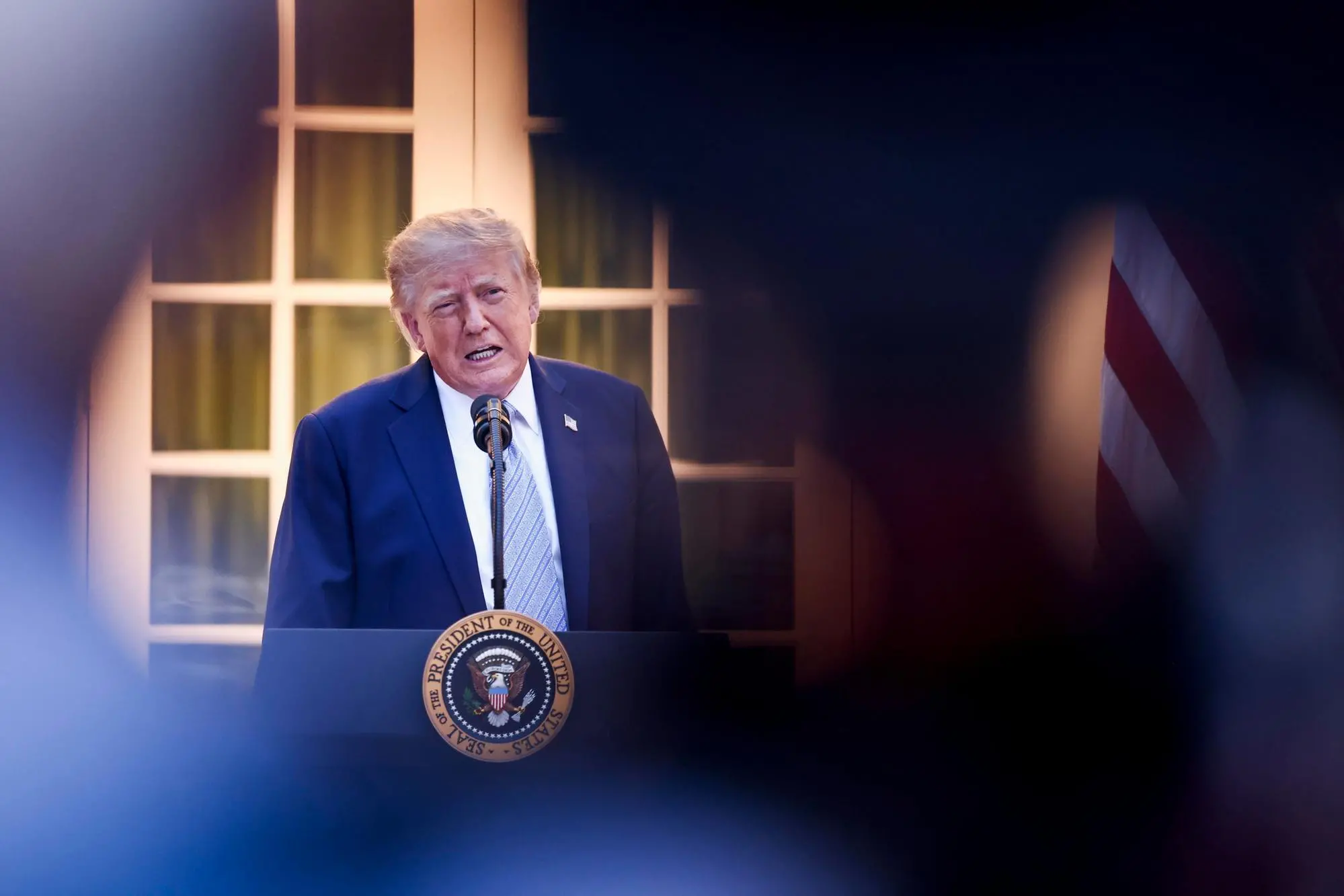
The war in Iran is "a little excursion" and will be over "in a couple of weeks," Donald Trump said at a Capitol Hill event marking St. Patrick's Day. "It won't take long... We're well ahead of schedule," he reiterated.
7:00 PM – Trump: "We're doing the right thing in Iran; it shouldn't have nuclear weapons."
"We're doing very well" against Iran, "we couldn't allow it to have nuclear weapons." Donald Trump said this on Capitol Hill during St. Patrick's Day celebrations.
6:10 PM – Tajani: "No to war in the Strait of Hormuz, priority should be given to defensive missions."
"We have always remained outside this conflict. Intervening in the Strait of Hormuz would, in effect, mean going to war, with all the consequences that entails. As Europeans, we have instead decided to strengthen our defensive military missions to protect merchant shipping: the Atalanta mission (against piracy in the East), the Aspides mission, and the Agenor mission." This was stated by Foreign Minister Antonio Tajani at Palazzo Wedekind for a conference organized by Il Tempo. "We will continue to defend these strongholds, just as we will continue to protect Cyprus, where we are operating alongside other European Union countries because the very identity of the Union on the island has been put under pressure by Turkey. Going to war would be complicated and, frankly, devoid of a clear strategic purpose. Our commitment must be focused on the stability of the Middle East and the search for an agreement. Invading the Strait of Hormuz militarily presents enormous risks, especially given the technological and economic disproportion," he concluded.
5:30 PM – Trump: "US soldiers in Iran? I don't fear another Vietnam."
"I'm not afraid of another Vietnam." Donald Trump said this at the White House, responding to a question about the possibility of American troops being deployed to Iran.
5:20 PM – Trump: "NATO made a stupid mistake. We don't need help."
“All NATO allies agreed” to the war against Iran, but now “we don’t need any help” from NATO which “is making a stupid mistake”.
5:10 PM – Trump: "Hormuz? Only Arab countries support us."
Donald Trump emphasized that the only countries that have expressed support for the coalition to ensure the security of the Strait are the countries of the region: Qatar, Bahrain, Saudi Arabia, and the United Arab Emirates. In addition to Israel.
5:05 PM – Trump: "The counterterrorism chief was a weakling; I'm glad he's out."
"I'm glad he's out. He claimed Iran wasn't a threat." Donald Trump said this when commenting on the resignation of Joe Kent, the head of the US Center for Counterterrorism. "He was a good guy, but very weak on security," he added.
5 p.m. – White House: "The counterterrorism chief made a false claim that Iran wanted to attack the U.S."
The White House criticizes Joe Kent, the head of the counterterrorism center who resigned because he opposed the war on Iran. "There are many false claims" in Kent's letter, says spokeswoman Karoline Leavitt. "Let me address one in particular, which is that Iran did not pose an imminent threat to our nation. This is a falsehood that Democrats and some in the liberal media are repeating," she explained, emphasizing that "as the president clearly stated, there was strong evidence that Iran would attack the United States."
4:45 PM – Kallas: "Diplomacy is the only possible solution for Hormuz."
"Diplomacy is the only possible solution for Hormuz. We are working with our Gulf partners, with Jordan, with Egypt, but also with partners from other regions. We are trying to understand what proposals we can make to stop this war. We all agree on one thing: we want it to end because it is too costly for everyone globally," EU High Representative Kaja Kallas said during a hearing before the European Parliament's Foreign Affairs Committee.
4:10 PM – Crosetto: "No to Hormuz because it could have looked like going to war. We need the UN."
"The Aspides mission covers the Red Sea, and that can be strengthened to ensure peace in the Red Sea passage. The other issue is Hormuz, where countries haven't said no to securing the Strait. They've said no to a mission that could almost be seen as going to war in that channel," Defense Minister Guido Crosetto said on 'Diario del Giorno', on Rete4. "What all countries hope for is an international multilateral mission that can somehow guarantee security in Hormuz," he added. "There needs to be a UN, perhaps the United Nations would take the lead on this issue, and then probably all nations—not just European ones, not just NATO ones, but also Asian ones, especially India, I think—would participate."
3:45 PM – Macron: "No operations in Hormuz in the current context."
"In the current context, France is not ready to undertake operations to open the Strait of Hormuz," said French President Emmanuel Macron.
3:20 PM - Trump: "We're winning by a landslide, it won't take long."
"We're doing great in the war. We're winning hands down." US President Donald Trump reiterated to Corriere della Sera what he has repeatedly said in recent days. "Frankly, no one has ever seen anything like this, and it won't be long," he added, indicating that the end of the war is near.
3:00 PM – Netanyahu: "Larijani's death offers Iranians the opportunity to overthrow the regime."
"We have eliminated Ali Larijani, the leader of the Revolutionary Guards, the gangster group that de facto rules Iran, and along with him, the head of the Basij Force, who spreads terror among the Iranian population," Israeli Prime Minister Benjamin Netanyahu said in a video statement. "We are helping our American friends in the Gulf and weakening this regime in the hope of giving the Iranian people a chance to overthrow it. It won't happen all at once, it won't be easy. But if we persevere, we will give them a chance to take their destiny into their own hands."
2:50 PM – US Counterterrorism Center Chief Resigns Over Iran War
Joe Kent, the head of the U.S. Center for Counterterrorism, is resigning. "I cannot in good conscience support the war in Iran. Iran did not pose an imminent threat to our country, and it is clear that this war was started under pressure from Israel and its powerful American lobby," Kent said in a statement posted to his X account.
In a letter to Donald Trump, Kent denounced the "disinformation campaign" orchestrated by senior Israeli officials and the media that undermined the president's "America First platform." A longtime Trump supporter, Kent is an Iraq War veteran, and in the letter, he explained how, in his view, the arguments supporting the attack on Iran and the promises of a quick victory echo the debate surrounding Iraq's entry into the war in 2003. Kent then referenced his late wife, Shannon, a military cryptographer who died in Syria. "As a veteran of 11 combat tours and the husband of a soldier who died in a war provoked by Israel, I cannot support sending the next generation to fight and die in a war that neither benefits the American people nor justifies the cost of American lives," he emphasized. With Kent's departure, Intelligence Director Tulsi Gabbard loses a key adviser, one who has so far pushed for a more moderate approach to foreign policy.
1:30 PM – New Israeli airstrikes near Beirut airport
According to the Lebanese National News Agency, the Israeli army carried out an airstrike on a road near Beirut airport. "Israeli warplanes launched a raid, the third today in the southern suburbs, targeting the old airport road near the Ansar Stadium in the Burj al-Barajneh area," a short distance from Beirut International Airport, the report states. The agency quotes Mohammad Aziz, head of the Lebanese Civil Aviation Authority, as saying that airport operations are continuing normally and the main access road was not affected by the raid.
1:10 PM – New alert in Tel Aviv over missile launches from Iran
New alert in Tel Aviv and central Israel following a missile launch from Iran.
12:44 PM – Iran: "Moitaba Khamenei is not in Russia."
Iranian Ambassador to Moscow, Kazem Jalali, denied reports that the new Supreme Leader, Moitaba Khamenei, is in Russia for medical treatment. "Iranian leaders have no need to flee and hide in shelters," Jalali said, quoted by Tass.
12:12 PM – New IDF raids in Beirut
Three more Israeli airstrikes were conducted in the southern suburbs of Beirut, according to local sources and the government news agency NNA.
11:45 a.m. – Alarm sirens in Tel Aviv and central Israel
Alarms have been raised in Tel Aviv and central Israel following a new missile launch attributed to Iran.
11:20 a.m. – Hormuz, Kallas: "A diplomatic solution is needed."
"No one is willing to put their population at risk in the Strait of Hormuz. Instead, we must find diplomatic solutions to keep it open, in order to avoid food crises, fertilizer crises, and energy crises," High Representative for Foreign Affairs Kaja Kallas said regarding US President Donald Trump's push for a coalition to liberate the Strait of Hormuz.
11:00 AM – A message from Larijani was posted on social media.
The X and Telegram accounts of Ali Larijani, the secretary of the Iranian Security Council whom Israel claims to have killed, published a written note attributed to him regarding the funeral ceremony for the Iranian Navy soldiers killed since the beginning of the conflict with the US and the IDF. "Their memory will forever remain in the hearts of the Iranian nation, and these martyrs will form the foundation of the Islamic Republic Army in the structure of the armed forces for many years to come," the text reads.
10:40 a.m. – Israel: "Ali Larijani killed"
Israeli media outlet Ynet has received confirmation from Defense Minister Israel Katz that the powerful secretary of Iran's Supreme National Security Council, Ali Larijani, was killed in the IDF's overnight attack in Tehran. Larijani was considered the most influential man in the Iranian regime, as well as the de facto leader of the Islamic Republic. He is also widely held responsible for the brutal repression of protests in Iran last January.
10:05 a.m. – "Hormuz closed to cut off supplies to the U.S."
Iranian Ambassador to Moscow, Kazem Jalali, said the state of war in the Strait of Hormuz is intended to prevent the United States from supplying its bases. "The logistics and supply routes to these bases pass through the Strait of Hormuz. Iran controls the transit of ships through this strait. Martial law is in effect there, and Iran is taking measures to limit the enemy's logistics for its own security," he said.
observed the Iranian diplomat.
9:53 a.m. – IDF: "Gholamreza Soleimani killed."
"The Israeli Air Force, acting on intelligence information, targeted and eliminated Gholamreza Soleimani, who for six years served as commander of the Basij unit, a force that is part of the Iranian regime's armed apparatus." The IDF announced this, adding that during the internal protests in Iran, particularly in the most recent periods when demonstrations have intensified, Basij forces under Soleimani's command have led the main repression operations.
9:00 AM – Oman, oil tanker hit
According to the British shipping agency UKMTO, an oil tanker was hit by an "unidentified projectile" while at anchor in the Gulf of Oman, near the mouth of the Strait of Hormuz.
The vessel, which was not specified as a natural gas or oil tanker, suffered only "minor" damage and there were no casualties, the agency added.
8:00 AM – Drones over oil field in United Arab Emirates
The oil-producing zone of Fujairah, on the eastern coast of the United Arab Emirates, was hit by another drone strike that started a fire, but no injuries were reported, according to local authorities.
7:20 a.m. – Explosions in Dubai
Three explosions in Dubai after a missile warning in the early hours
Tuesday morning. The explosions followed a cell phone alert to residents, urging them to "immediately seek safety" due to "potential missile threats."
6:45 a.m. – Israel bombs Tehran and Beirut
The Israeli IDF has launched a large wave of attacks against
terrorist targets in Tehran and simultaneously in Beirut against Hezbollah infrastructure.
(Unioneonline)