

Crans-Montana massacre: Rome prosecutors return to Switzerland in two weeks
A very delicate step to test the real availability of Swiss magistrates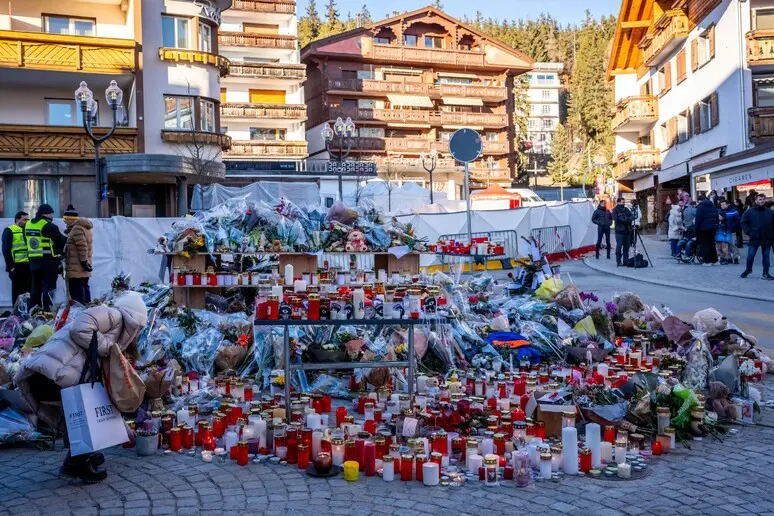
(Handle)
Per restare aggiornato entra nel nostro canale Whatsapp
A possible breakthrough in the investigation between Swiss and Italian investigators is expected by the end of March. The investigation into the Constellation nightclub massacre in Crans-Montana, where 41 people, including six Italians, died on New Year's Eve and 115 were injured, is expected. The first operational meeting between prosecutors from the Rome Prosecutor's Office and those from the Canton of Valais will take place between March 23 and 27. This is precisely a week in which Deputy Prosecutor General Catherine Seppey, the case manager, intends to resume questioning by interviewing Rozerin Ozkaytan, the photographer at the Constellation nightclub, on Wednesday, March 25. Ozkaytan was injured and released from the hospital in recent weeks.
"I hope the Swiss public prosecutor will speed up the investigation, because we can't afford to wait too long, given the severity of the tragedy. I also hope the investigation will be expanded to determine the responsibilities of the municipality, the mayor, and the security councilor, and to conduct a specific assessment of the management of the rescue operations, which were severely deficient," explains Fabrizio Ventimiglia, the lawyer representing the family of one of the injured Italian girls.
The mission to Switzerland should allow Roman investigators to examine the extensive dossier: they will be able to select documents useful for the Italian investigation and for their subsequent formal transmission, which will in any case require Sion's approval for each individual document. This will be the first concrete step in the "enhanced cooperation" process defined on February 19 in Bern during a meeting between Rome's Chief Public Prosecutor Francesco Lo Voi and Attorney General Béatrice Pilloud. In the Swiss investigation, Jacques and Jessica Moretti, owners of the nightclub where the tragedy occurred, are being investigated for manslaughter, bodily harm, and arson; Christophe Balet, head of public safety for the municipality of Crans-Montana; and his predecessor, Ken Jacquemoud. Currently, the case opened in Rome is against unknown persons, and proceedings are underway for manslaughter, manslaughter, and bodily harm.
The Italian-Swiss operational meeting scheduled for two weeks will therefore be a very delicate step to test the true willingness of Swiss magistrates. Meanwhile, the establishment of the joint investigative team, which had been requested by the Italian government, appears increasingly remote. Indeed, the Italian ambassador to Switzerland, Gian Lorenzo Cornado, recalled to Rome on January 24, has not yet returned to Bern. A reassessment of Italy's position could depend precisely on the room for maneuver that the Valais Public Prosecutor's Office demonstrates its willingness to grant its Roman colleagues.
(Unioneonline)