

Sassari Sant'Orsola, Canu: "The river is polluted. Degradation and danger abound."
If, due to the drought of the last few months, the river is now advancing slowly, in case of heavy rains the movement takes on a completely different intensity.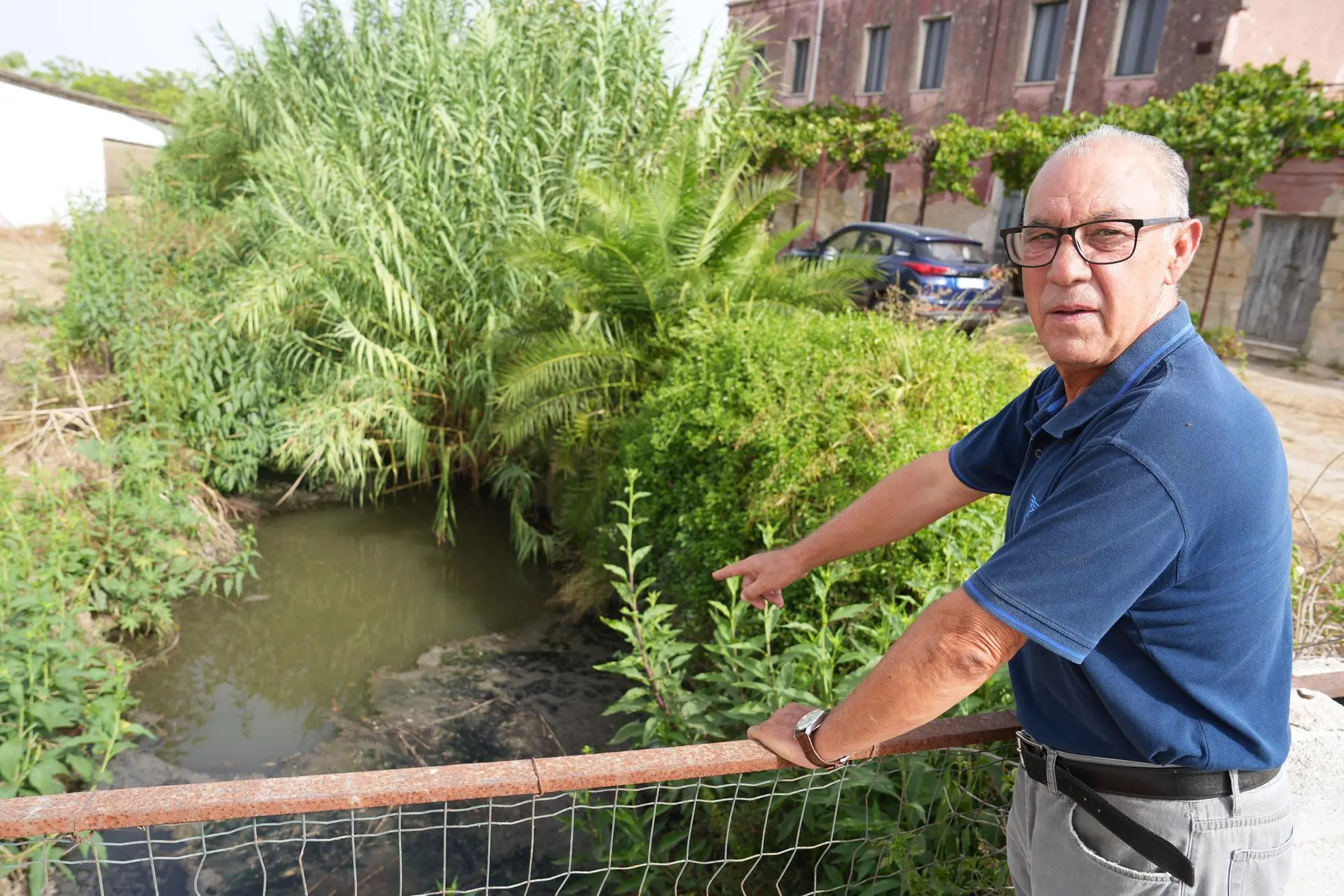
Per restare aggiornato entra nel nostro canale Whatsapp
From eels to car wrecks. The river that flows through some areas in the Pischina region of Sassari has long since disappeared from its fish population, replaced by decay and waste. This is reported by the Canu family, owners of several plots of land, who urge everyone to smell the stench emanating from the waterway. "This is sewage discharged elsewhere and ending up here," says Gianuario Canu, one of the landowners.
And while the river is now moving slowly, thanks to the drought of recent months, heavy rains can make it flow at a completely different pace. "The water comes in very quickly, at 100 km/h, and overflows, flooding the land with the risk of deterioration and collapse of the bridge connecting the fields." This is a safety issue, first and foremost, along with the consequences of that water, which has caused extensive damage once absorbed by the earth. "Due to its pollution, the cherry and apricot trees, the orange and mandarin trees, and the almond trees have dried up. They're all dead."
The Municipality began cleaning this stretch of land two years ago, while Gianuario has repeatedly called for action recently. This is also because it's an area with a significant history for the city. "Sassari's vegetable gardens originated here. In the late 19th century, the legumes and green beans grown there were donated to the hospital." Fed by a spring river that flows from the Eba Giara, descending into the Rosello Valley and crossing the entire plain, reaches Santa Maria di Pisa and Sant'Orsola before rejoining the Rio Mannu, which flows into the sea at Porto Torres.
And while the Municipality is working to contain the hydrogeological risk between the Fosso della Noce, Via Sorso, and Viale Sicilia, the fate of this waterway remains to be seen. Meanwhile, we're witnessing evidence of the neglect highlighted by the Canu family, whose lands are a link in a river chain crucial to the city. However, the pure, white gold arrives only intermittently. "They force us to keep agricultural land, and then we don't have water to cultivate what's left," Canu concludes bitterly. From that other water, it seems, nothing can grow or thrive.