

Sassari, five candidates for the position of rector
Gavino Mariotti's six-year term will expire between November and December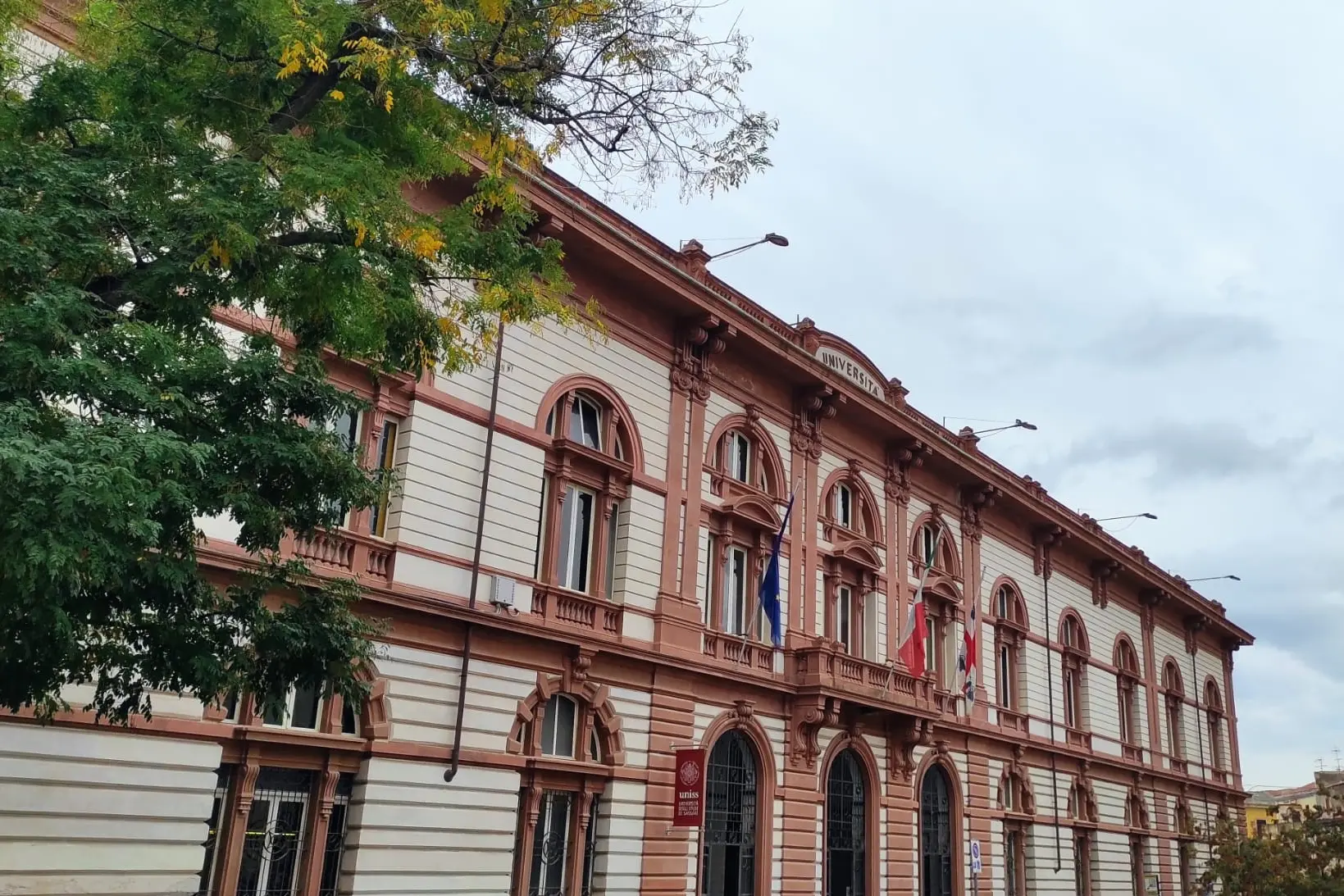
Per restare aggiornato entra nel nostro canale Whatsapp
In the running to become rector of Sassari. Gavino Mariotti's six-year term expires between November and December, and five professors have already submitted their candidacies.
"I was the first to make myself available," says Sergio Uzzau, full professor in the Department of Biomedical Sciences. "I want to see the university grow." This is the mission of all the candidates: Giorgio Pintore, full professor of Pharmaceutical Biology, Pier Andrea Serra, full professor of Pharmacology, Omar Chessa, full professor of Constitutional Law, and Francesco Morandi, full professor of Tourism Law.
Important curricula for everyone, across regional, national, and beyond, and a goal, specifically stated by Chessa: "I have received so much and would like to give back just as much, if not more, by putting myself at the service of the University." The plans, for now, before entering the fray, are only hinted at.
"My vision," Morandi states, "is grounded in the centrality of critical thinking and scientific research, innovates higher education, and serves regional development, capable of addressing the challenges of the present and creating value for the younger generations." For Serra, it is necessary to "combine technological innovation with the needs of the community" and "offer ourselves as decoders of complexity." Beyond external horizons, we must first approach internal ones, those of the University of Turritana itself, where 620 professors and 500 technical and administrative staff work. Each of the five members knows the administrative machinery and knows they must also interact with the unions, which, in recent years, have advanced various demands and, this time, it appears, will not openly support any candidate. Furthermore, the alleged hemorrhage of members must be stemmed.
"The University of Sassari," Morandi disagrees, "is solid and competitive, as confirmed by its fourth place among medium-sized Italian universities in the 2025 Censis ranking." This opinion is also confirmed by Serra, who states: "We don't need revolutions, but rather revitalization of what already exists." So isn't there a discontinuity with the current Magnifico? "I'm absolutely not at odds," Pintore adds. "The politics of action has characterized this six-year term, and the current governance has achieved a lot." "My experience," Morandi emphasizes, "teaches me that in times of transition, it's right to strengthen what has been done well, transform what hasn't worked, and confidently plan for growth." Of course, everyone is aware that the NRRP Christmas tree is about to be put away in the closet of the past, and future management will be business as usual. The specter of political support looms over the candidates, but no one discusses it as a possibility.
"Having it," Pintore summarizes, "could be counterproductive. The University is a world unto itself. What matters is university politics." On this very point, someone who has experienced the experience of aspiring to the Magnifico in other competitions, speaking on condition of anonymity, admits that the political factor exists. "The only possible politics," Uzzau reports, "is the kind with a capital P, to be implemented after the election." With institutions required to provide the university with financial resources.
And speaking of Uzzau, he's the only one explicitly distancing himself from Mariotti. "I disagree with the current governance," he says in the interview, after repeatedly emphasizing this in the Academic Senate. "My perception is different from what has been expressed in recent years." In conclusion, everyone is confident they can improve the university. "Otherwise, why even run?" Chessa comments. The only certainty, at the moment, is that, unlike the last election, the winner will not receive the same landslide victory as the current rector six years ago.