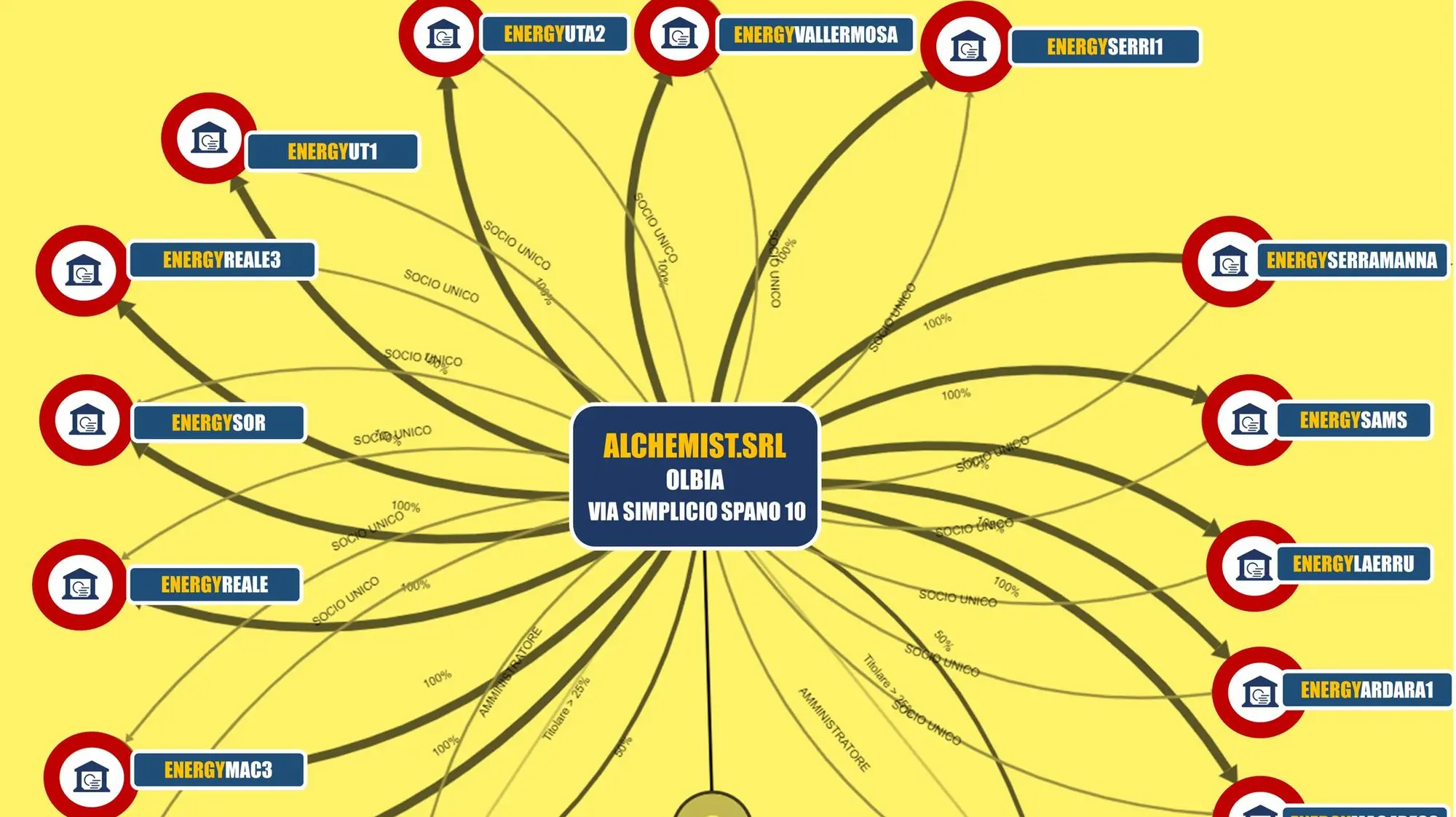


Don't look at it like that, it's not a garage, despite its appearance. Don't be fooled either by the dead-end street on Via Simplicio Spano, on the dirt road where the rides usually send us. On the maps it is the outskirts of Olbia. In the maps of the energy assault, however, it is a camouflaged crossroads of deals, pawns, memorable climbs from the north to the south of the island, Chinese boxes and corporate entanglements that make the financial networks of the "Panama Papers" pale.
That fake “garage”
When you arrive in the Quartucciu countryside and you glance at those first green containers with the indelible "Made in China" brand, you understand that the gentlemen of "EnergyQ1Bess", those of the apparent garage in Olbia, were not joking. In 2021, when the wind and photovoltaic assault on the island was still in its infancy, they were already planning how to fill Sardinia with Chinese "batteries" to store the energy produced for no reason by shovels and panels to be spread in those sort of electrochemical cells with impunity in the most evocative promontories of the land of the Nuraghi. Never, even those like our newspaper, who intercepted that project hidden in the meanders of the palaces of Rome two years ago, could have even imagined what was hidden behind what appeared to be a cheap ambition.
From Olbia to ancient Rome
An operation destined to dissolve in an instant, in the face of the advance of giants and multinationals, if only because that company in the alley of Olbia had a paid-up capital of just ten thousand euros. A corporate "solidity" not even sufficient to cultivate the illusion of being able to build an expanse of Chinese lithium on the outskirts of Cagliari. Instead, the story tells a completely different story. The company that is building the largest electrochemical battery in Italy, 180 megawatts, is nominally the same one registered on the outskirts of "Terranova", but on 18 December 2023 it changed partners and headquarters. From the dead end of the Gallura city to the powerful heart of ancient Rome. The step was short, just enough time for the old partners, those from Olbia, to get the mega battery project approved by the Ministry of the Environment and Energy Security.