

Harry, the Island reckons with the storm: "Immense damage."
Today in Cagliari, Fabio Ciciliano, head of the National Civil Protection Department, inspected the most affected areas with Todde, Zedda, Laconi, and Merella. Rivers are still under special observation.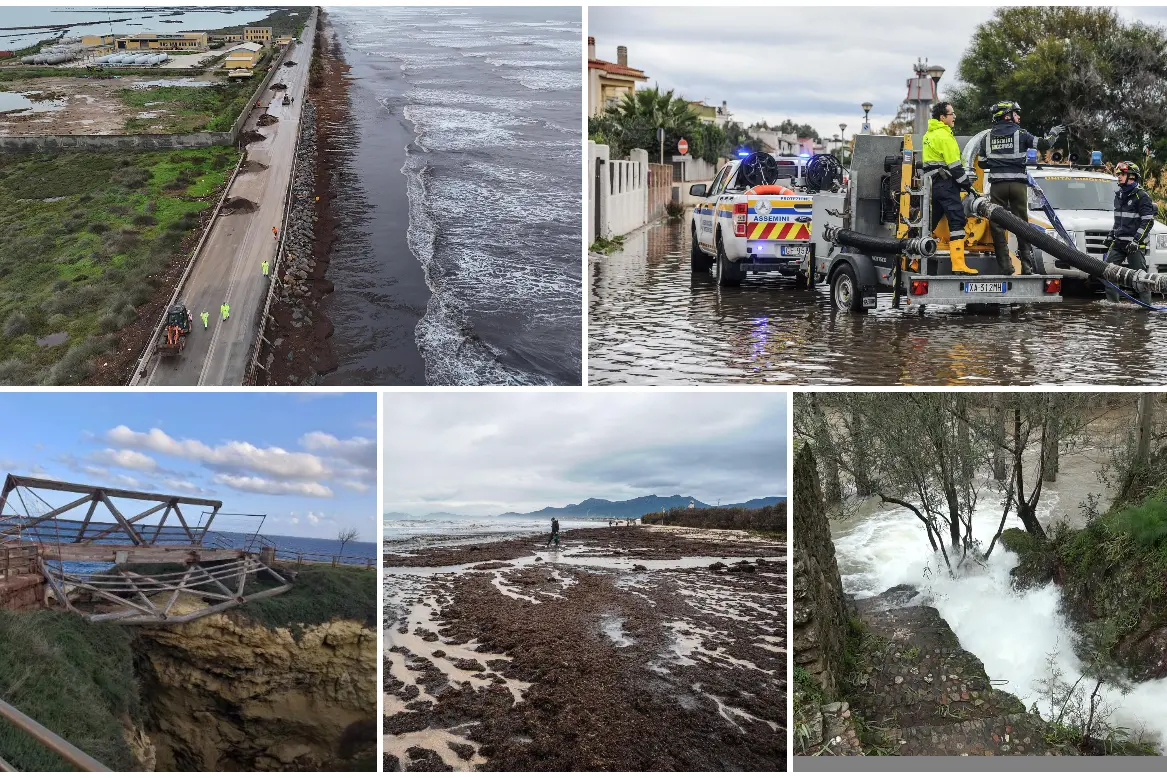
Per restare aggiornato entra nel nostro canale Whatsapp
Now that the great fear has passed, Harry is no longer the cyclone but the damage count. "Immense," said Governor Alessandra Todde , who yesterday, together with Environment Councilor Rosanna Laconi and Civil Protection Director General Mauro Merella, conducted an initial reconnaissance of Capoterra, Sarroch, Pula, and Nora . This morning , starting at 9 a.m. and departing from Marina Piccola with a subsequent stop at Poetto , the new inspection of the areas most affected by the bad weather will also be conducted with Mayor Zedda and the Head of the National Civil Protection Department, Fabio Ciciliano.
And while schools and offices are reopening, with the weather warning now downgraded by the Civil Protection Department , the risk of flooding isn't over: the rivers' swollen banks continue to pose a threat. The Cedrino, Posada, and Flumendosa rivers are the three under scrutiny.
HERE ARE ALL THE UPDATES ON THE ISLAND'S BAD WEATHER
However, it will take days to obtain a financial estimate of Harry's brutality because " the assessment will take time ," Laconi specified. "Not all the damage is visible, as is the case with ports and roads: beaches and coastlines will also need to be examined." It will also be necessary to ensure that the beaches washed away by the sea return to their original state.
Among the hardest-hit municipalities are Cagliari, Dorgali, Cala Gonone, and Torpè. Villaputzu and the other towns in the Sarrabus area are also isolated, as are Gairo and Villagrande Strisaili, which have been hit by the extraordinary rainfall. And Capoterra , where the mayor has already declared a state of natural disaster and approved a €400,000 budget adjustment for urgent expenses. "Between Maddalena Spiaggia, Picciau, Frutti d'Oro, and the entire coast, the estimated damage is no less than €1 million . But it will be much, much more," he said.
Further services and insights in L'Unione Sarda on newsstands today and on the app