

Falcone's driver at Asinara: "He was a great man who changed my life."
The testimony to the students of Giuseppe Costanza, who escaped the Capaci massacre of May 23, 1992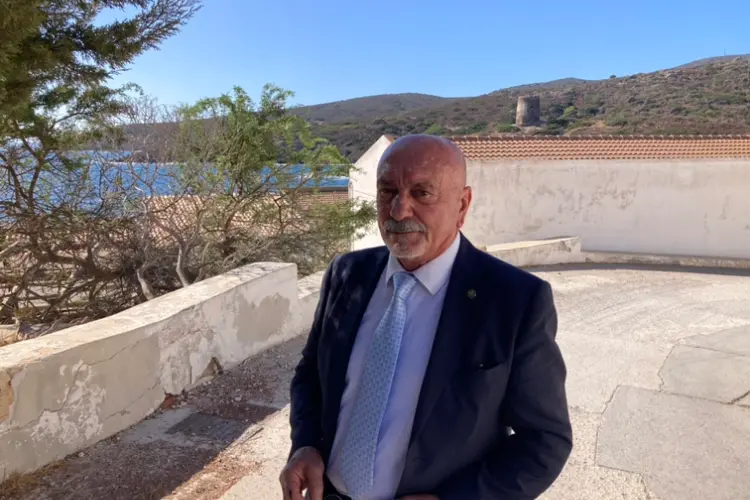
Per restare aggiornato entra nel nostro canale Whatsapp
Judge Falcone wasn't killed by the Mafia, understood as a hired gun, but he was trying to disturb someone else, not the shooter. Even today, I remember the day of the massacre and why I survived the Capaci attack: I owe it to Falcone, who, even before becoming a magistrate, was a great man who changed my life.
This is the lucid testimony of Giuseppe Costanza, the judicial driver who escaped the massacre of May 23, 1992, in which magistrate Giovanni Falcone and his wife Francesca Morvillo, as well as four of their escorts, were killed. He spoke to students from schools in Quartu, Tonara, Porto Torres, and Stintino, on the island of Asinara. Stories that remain in the memory, identify places, and each time reveal new emotions and leave messages of hope.
Asinara provided just that on the opening day of the traveling photography exhibition "The Invisibles, Killed by the Mafia and Indifference," curated by Lavinia Caminiti, which began in Palermo and toured several Italian locations. Set up inside the Asinara National Park Memorial Museum, in the former Cala d'Oliva branch, the exhibition, organized by the Region and the Sardinian Coastal Conservation Agency, will be open until October 31st in the rooms that once housed the prison school, the former armory, the former police barracks, the offices of the former prison police headquarters, and a museum that includes the former infirmary and barber shop, the sentry post, and the six solitary confinement cells. Traces of history on an island that hosted judges Giovanni Falcone and Paolo Borsellino in the summer of 1985, a place where General Carlo Alberto dalla Chiesa left his mark, choosing Fornelli as the site of the maximum security prison.
Lucia Borsellino and Nando dalla Chiesa, sons of statesmen killed by Cosa Nostra, were there to remember the heroes who fought against the Mafia. "This island represents the refuge of Giovanni Falcone and Paolo Borsellino, the place where they were forced to spend a month of their lives, during a not-so-pleasant period. Penalized for their activities, even though they worked here on the ruling in the maxi-trial against Cosa Nostra, protected for a long time on this island that deserves to be celebrated as a symbol of legality and justice."
Costanza retraced the day of the Capaci attack, when she was waiting at Palermo's Punta Raisi airport to accompany the judge to the Sicilian capital, aboard one of the three Fiat Cromas. Falcone's driver was sitting in the back, while the judge had chosen to drive to keep his wife company, who suffered from motion sickness. They were traveling along the A9 highway at 5:59 PM. "At that moment, I asked the magistrate to return the keys to me once we reached our destination, so he instinctively removed them from the dashboard, causing the engine to stall and the car to suddenly slow down." It was at that moment that the car was hit by the explosion. The escort officers died instantly, and Falcone and his wife died later in the Palermo hospital. Yesterday morning, Asinara was once again the focus of another day of remembrance, in which not only officials but also ordinary victims and as many as 103 children killed by the Mafia appear in the images and photos published in national newspapers and magazines. "A memory we want to pass on to new generations, because memory is responsibility, something sacred. Those without memory are without freedom. It brings back to life the invisible, so many of them, including journalists, administrators, and children," said Nando dalla Chiesa.


 bans feeding stray dogs. Veterinarians: "There's an emergency."")