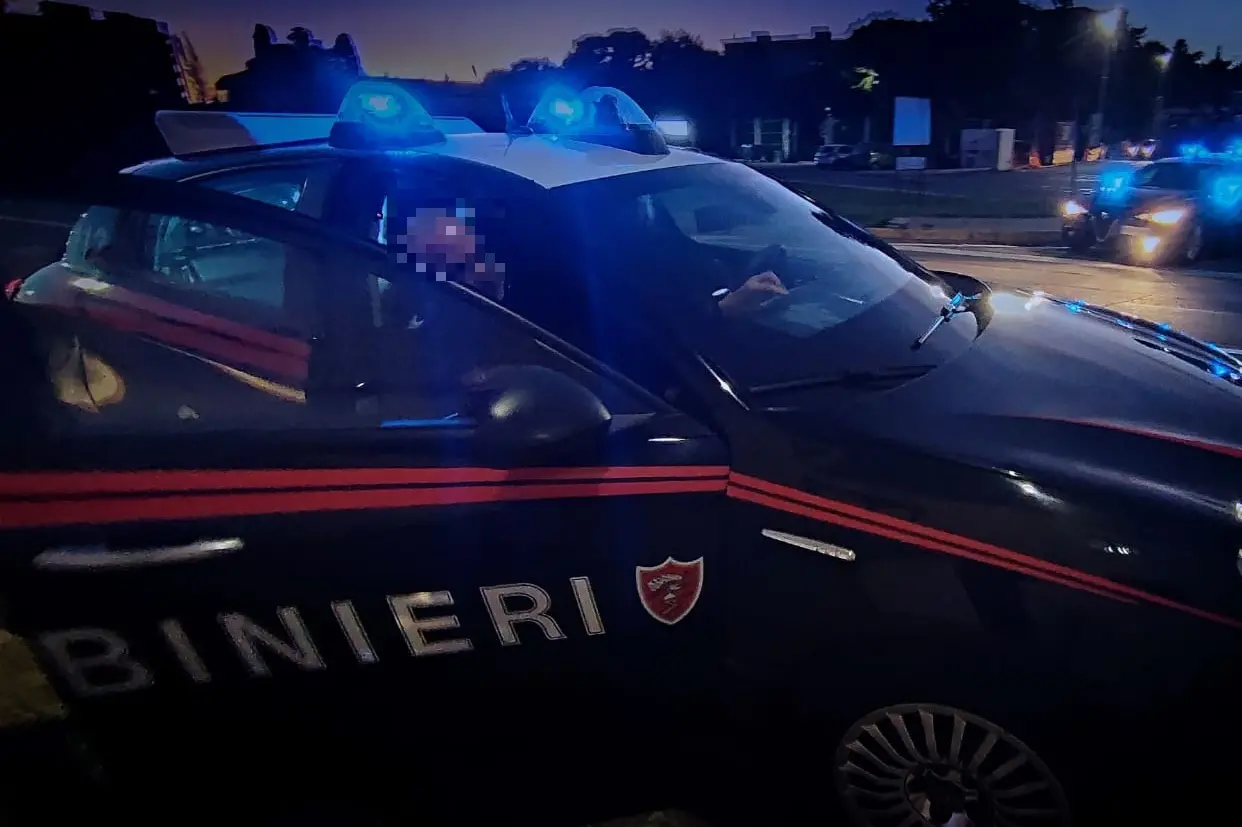


AI wears the toga: the verdict written with the algorithm is confirmed.
The Oristano court case. The Court of Appeals "saves" a ruling formulated (in part) with artificial intelligence. The debate continues among magistrates and lawyers: "The final decision must be left to the judge."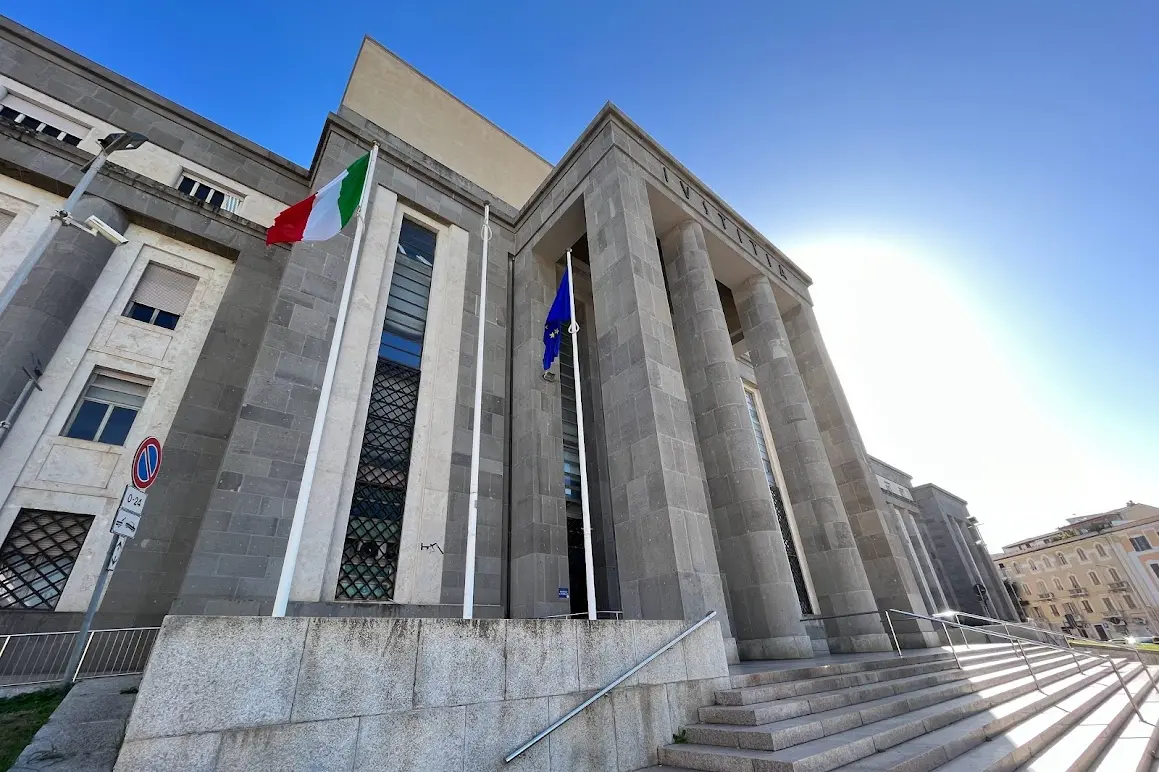
The Court of Cagliari
Per restare aggiornato entra nel nostro canale Whatsapp
On the one hand, the sentence mistakenly entered into the text of a civil ruling by the Court of Oristano, written with the aid of artificial intelligence ("Perfect. I'll construct the reasoning paragraph for you in the style of a ruling"). On the other, the ruling of the Court of Appeal of Cagliari, which deemed that sentence insufficient to overturn the decision. For the panel presided over by Judge Maria Teresa Spano, with Stefano Greco and Valentina Santa Cruz as associates, the automatic creation of a sentence in the reasoning does not prove that the judge delegated the interpretation of the law or the evaluation of the evidence to the machine.
The decision
"The law clarifies that artificial intelligence in the judicial field can only be a support tool," explains Vincenzo Amato , President of the Court of Cagliari. "In fact, all decisions regarding the interpretation and application of the law, the assessment of facts and evidence, and the adoption of measures are reserved to the magistrate. AI can therefore be used to organize and simplify judicial work, research, and ancillary activities, but not to decide in place of the judge." One principle remains firm. "The individual," concludes the President, "is solely responsible for the measures in which AI has been used. Delegating the decision to an algorithm would mean undermining the magistrate's role." Giovanni Manca , lawyer and professor of Criminal Law in Cagliari, also agrees with the Court. "The use of generative AI, revealed by the typo, is permitted," he emphasizes, "as long as the judge does not substitute it for his own assessment of facts and evidence and for interpretative activity, which cannot be delegated to the machine, and in our case, it was not found that this occurred. The furore surrounding the case reveals, in any case, how the perception of the reliability of sentences is always a sensitive issue that needs to be addressed."
The doctrine
"Artificial intelligence is an indispensable tool for any activity, especially intellectual ones," confirms Massimo Orlando , president of the Cagliari Court of Appeal. "Even the justice system cannot do without it: it functions like a human collaborator, but much faster and more efficient. Just as a person's preparatory work is scrutinized, the judge must subject the AI product to critical analysis. The decision must always remain with the human magistrate, with his technical preparation, sensitivity, and humanity." District Attorney General Luigi Patronaggio shares the same opinion. "Artificial intelligence can find, and has already found, broad and fruitful applications in judicial activity, as long as the final decision always and exclusively rests with the judge, a natural person who is legally trained, cultured, and sensitive. There is no problem if the tool is used to support regulatory, doctrinal, and jurisprudential research, for summarizing and organizing documents, for linguistic review, and for preparing drafts." But "it cannot replace the judge in interpreting and applying the law, in evaluating facts and evidence, in forming convictions, and in adopting measures." Chief Prosecutor Rodolfo Sabelli , head of the Sardinian Anti-Mafia District Directorate, agrees. "It can also be a very useful aid for the magistrate, provided it is used correctly. Its extraordinary potential requires caution: AI can never invade the essence of jurisdiction—that is, interpretation, evaluation, and decision-making—which the magistrate can never delegate. Moreover, the CSM has already expressed clear opinions on the limits and modalities of using this technology in our work."
The fears of the jurists
Leonardo Filippi , a criminal lawyer and former Professor of Criminal Procedure, is not shying away from the risks of abuse. "Artificial intelligence is spreading across every field, and while it promises to be a major help in many areas, it cannot be used in any way in the justice sector. In procedural matters, both civil and criminal, supreme values such as personal freedom, honor, and property come into play. The decision-maker must always remain the judge, a third-party and impartial person, who cannot be influenced in any way, much less by a machine. Unfortunately, several incidents have already occurred showing that judges have used artificial intelligence to draft provisions for decision-making, evaluative, or even interpretative purposes." Matteo Pinna , president of the Cagliari Bar Association, also raises concerns. "It's not AI that's flattening ideas and language," he explains, "it's us who are letting it flatten ourselves, using it without the skills and rules commensurate with its power. The problem is not whether a judge relies on a machine for help, but where: reasoning is the intangible place where one demonstrates understanding, and delegating it means failing to notice if the reasoning doesn't hold up, sliding toward standardization and the "dictatorship of precedent." Rules are needed that make use visible, controllable, and traceable back to the signatory, with shared tasks and symmetrical duties: judges and lawyers must have the same transparency, verification, and accountability. We need an organization that distinguishes between delegable tasks, those to be supervised, and those reserved for the judge: evaluation of evidence, decision-making, and reasoning. And the time saved must translate into critical scrutiny, not more measures. "Not 'technological justice,'" he concludes, "but 'judicial technology': tools at the service of guarantees."
For Franco Villa , spokesperson for the Criminal Court, "the question is not whether a magistrate can use artificial intelligence, but whether he or she retains full control of the order he or she signs. The sentence that remained in the text demonstrates how essential personal verification is. A similar incident in criminal proceedings, where people's freedom is at stake, would be even more serious: it must always be the judge, not the algorithm, who evaluates the evidence and makes decisions. Finally, I hope that the same understanding shown to magistrates is also extended to lawyers, for whom similar errors can lead to liability and sanctions." Maria Cristina Ornano , president of the Cagliari Surveillance Court, believes that the technology cannot be stopped. "It is a process that would be illusory to try to stop," she summarizes. "Rather, we need to define the governance of AI in the justice system and regulate its use, so that the platform, the data it implements, and the algorithms that guide the final results are controlled and certified by authoritative and independent bodies. Sensitive data protection must be ensured, establishing what, and with what limits and purposes, can be used in judicial work. AI cannot and should not replace judges or lawyers; rather, it should be put at the service of justice.
Francesco Pinna