

A clash erupts between magistrates and lawyers in Cagliari's justice referendum.
The Court of Appeals chamber was granted to the ANM's "no" committee. After a protest from their lawyers, Amato and Patronaggio responded. Slogans from the 1920s were invoked.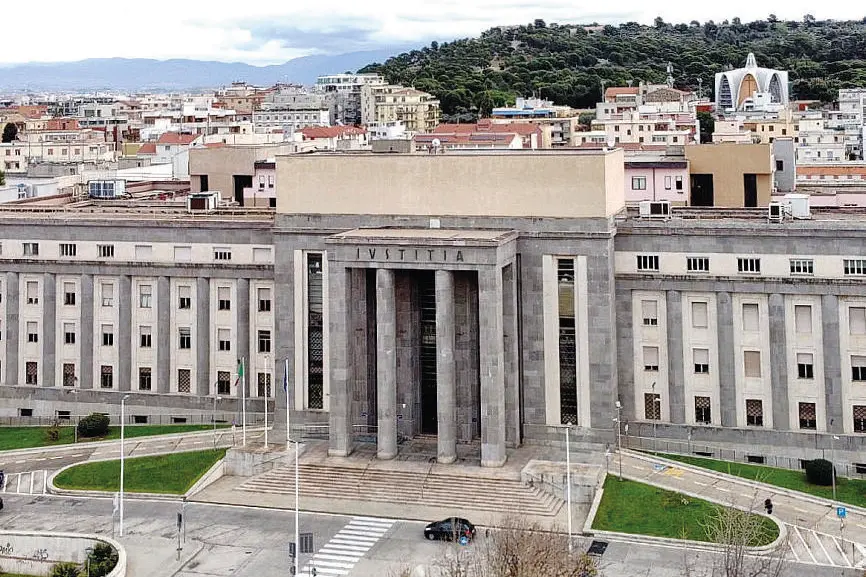
Per restare aggiornato entra nel nostro canale Whatsapp
Cagliari's courthouse becomes the scene of a "political" clash. At the heart of the dispute is the granting of the Court of Appeals hall for a meeting organized by the "No" committee in the Justice Referendum, formed to oppose the reform enacted by the Meloni government. The Bar Association and the Aldo Marongiu Criminal Chamber, in two separate letters, challenged the authorization for an initiative they characterized as "political"—while the Court is the people's courthouse— and went so far as to call for its revocation.
"The courthouse and its courtrooms are not—and cannot become—a theater of politics and electoral contests," maintains the Order's president, Matteo Pinna. "They are not partisan places: they represent one of the highest bastions of democratic institutions, the space where justice is administered in the name of the people and where the political neutrality of institutions must be cultivated as an absolute value."
The responses to this position bear weighty signatures. One is that of Vincenzo Amato, president of the Court. The other is that of Luigi Patronaggio, attorney general . They resign from their positions and describe themselves as "a magistrate serving in Sardinia at the Court of Cagliari," the former, and as "a member of the No committee," the latter. But the names—and their statements—suffice it to clearly demonstrate the level of the conflict.
According to Amato, "the lawyers' initiative is not only surprising, but also extremely serious." The No Committee, he emphasizes, "was established by the National Association of Magistrates as a tool for action, open to non-magistrates as well, to pursue its institutional goals, specifically with the statutory mandate of implementing the decisions of the ANM assembly," which is based "at the Court of Cassation—just like the No Committee, which has its headquarters at the ANM." For this reason , it "has always requested and legitimately obtained the availability of a courtroom given the need to accommodate a large number of participants, as with assemblies, as was the case with the deliberation and presentation of the initiative related to the constitutional referendum, for which the available space would have been insufficient."
The territorial branches of the No Committee, the judge continues, "are required by statute to convey the aims of the Committee at the district level, coordinating with the peripheral bodies of the National Association of Magistrates, and the Sardinian section is precisely a peripheral body of the association" and has always "carried out and carries out its activities in the Palace of Justice of the district capital of the Court of Appeal of Cagliari, and its members are only and exclusively the magistrates who work in the Courts of Sardinia and in Cagliari, the exclusive headquarters of their activities".
No one, at least until yesterday, "had ever disputed that the district section of the ANM could legitimately request and obtain the availability of spaces where the association's activities required it."
Magistrates, on the other hand, continues Amato, "are public employees and, as such, through the associations and committees they have set up, they indisputably have the constitutionally protected right to meet among themselves and discuss matters of interest, such as the questions concerning jurisdiction and the dangers of regulatory interventions capable of impacting on the independence and autonomy of the judiciary must be considered and are".
Amato expressed his enormous surprise that "the president of a local bar association, an institutional body, through a misleading and false description of the meeting as a 'political-electoral' initiative, requested the revocation of the concession of an adequate space for an initiative undoubtedly linked to the issues of justice and rights, urged by representative bodies of the magistrates who work there."
Rather, the request to revoke the concession of the Aula Magna " betrays a personal and, in any case, non-institutional partisan position, in favor of the referendum yes, legitimate in itself as an individual choice but certainly unrelated to the purposes of the public body for which the lawyer represents, in its essential purpose of preventing an initiative that is more than legitimate because it is a manifestation of rights protected by the legislation currently in force."
If the issue weren't so serious, the conclusion is, "one could even recall another prohibition sign from the twenty-year period, which appeared on Milanese trams, and which immediately became an ironic idiom about attempts to hinder those who don't follow the lines drawn by those in power: 'Do not disturb the driver'."
Patronaggio emphasized that he "does not wish to enter into controversy" and that he will speak "with a free spirit and open to discussion." But he added: " I believe that demanding that the 'No Committee' (a legitimate branch of the National Magistrates' Association) be barred from accessing the Palace of Justice, a building that is the home of magistrates, lawyers, and all honest citizens, is an illiberal and anti-democratic act. I hope," the magistrate emphasized, "in this delicate moment of unjustified tension and turmoil, that the Palace of Justice becomes a glass, transparent palace , a place of freedom and open discussion."
(Unioneonline/E.Fr.)