

Hackers attack European supermarkets, causing refrigerators to malfunction in Italy as well: meeting at Palazzo Chigi.
Tons of food at risk, investigations underway to identify the perpetrators. The EU: "The situation is worrying."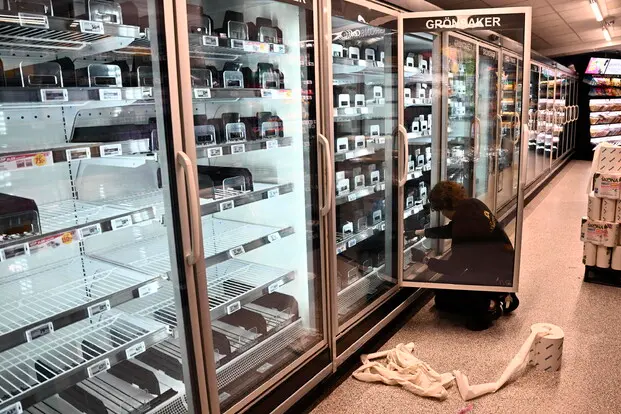
Per restare aggiornato entra nel nostro canale Whatsapp
Hackers targeting supermarket refrigerators are increasing in Italy and across Europe, following the example of what happened in France on October 12th. Now it remains to be seen where the investigation will lead , to discover who ordered them and how they operated, also to avoid further surprises in the future.
Large-scale retail chains in Belgium, Sweden, Luxembourg, Estonia, the Netherlands, and Ireland were the first to report serious anomalies—with freezers suddenly transformed into ovens, given temperatures soaring to 50 degrees above zero . But Italy is also on high alert, with hacker attacks on food counter refrigeration systems at some Coop stores. These incidents prompted the Prime Minister's Office to convene a meeting coordinated by Undersecretary to the Prime Minister's Office, Alfredo Mantovano, and attended by the Director of the National Cybersecurity Agency and the Directors of the Intelligence Agencies.
The European Union has called the situation "highly worrying."
The outages began overnight between Sunday and Monday, with the bitter discovery made after opening. "We're emptying the freezers; there's not much else we can do," commented Dennis Vidal, manager of one of the stores in southern Sweden affected by the problem, this morning. "They're starting to get cold again, but everything's already ruined," he emphasized to public television SVT.
Given the extent of the damage, there are fears that tons of food will be wasted across half of Europe. In Belgium, retailers such as Delhaize, Carrefour, Intermarché, and Spar have reported "cyber incidents" at dozens of stores in both Flanders and Wallonia. Hackers, again, remotely activated the defrosting mode of the systems, causing the temperatures in refrigerators and freezers to rise above legal limits.
In Sicily, too, the attack led to temperature changes, overheating counters and causing food to spoil. The postal police are therefore investigating whether there are any connections to what happened in other countries.
Meanwhile, the French National Cybersecurity Agency has issued an alert urging operators in large-scale retail trade, food logistics, and industrial refrigeration to adopt the security measures already recommended following digital incidents at a number of supermarket chains in France.
Meanwhile, COPASIR is taking action: hearings are scheduled for the director of AISI, Bruno Valensise, and then for the director of the National Cybersecurity Agency, Andrea Quacivi.
However, no one has yet claimed responsibility for the attacks, although there is little doubt about the coordinated nature of the incidents.
According to an initial assessment, if the data is cross-referenced, the issue of updates emerges as crucial, since the systems targeted appear to be older ones—for example, those connected to the 4G network instead of the more modern 5G—or insufficiently shielded.
(Unioneonline/vl)