Emma Bonino's funeral was emotional at the Capitoline Hill: "The fight for the weak was her guiding star."
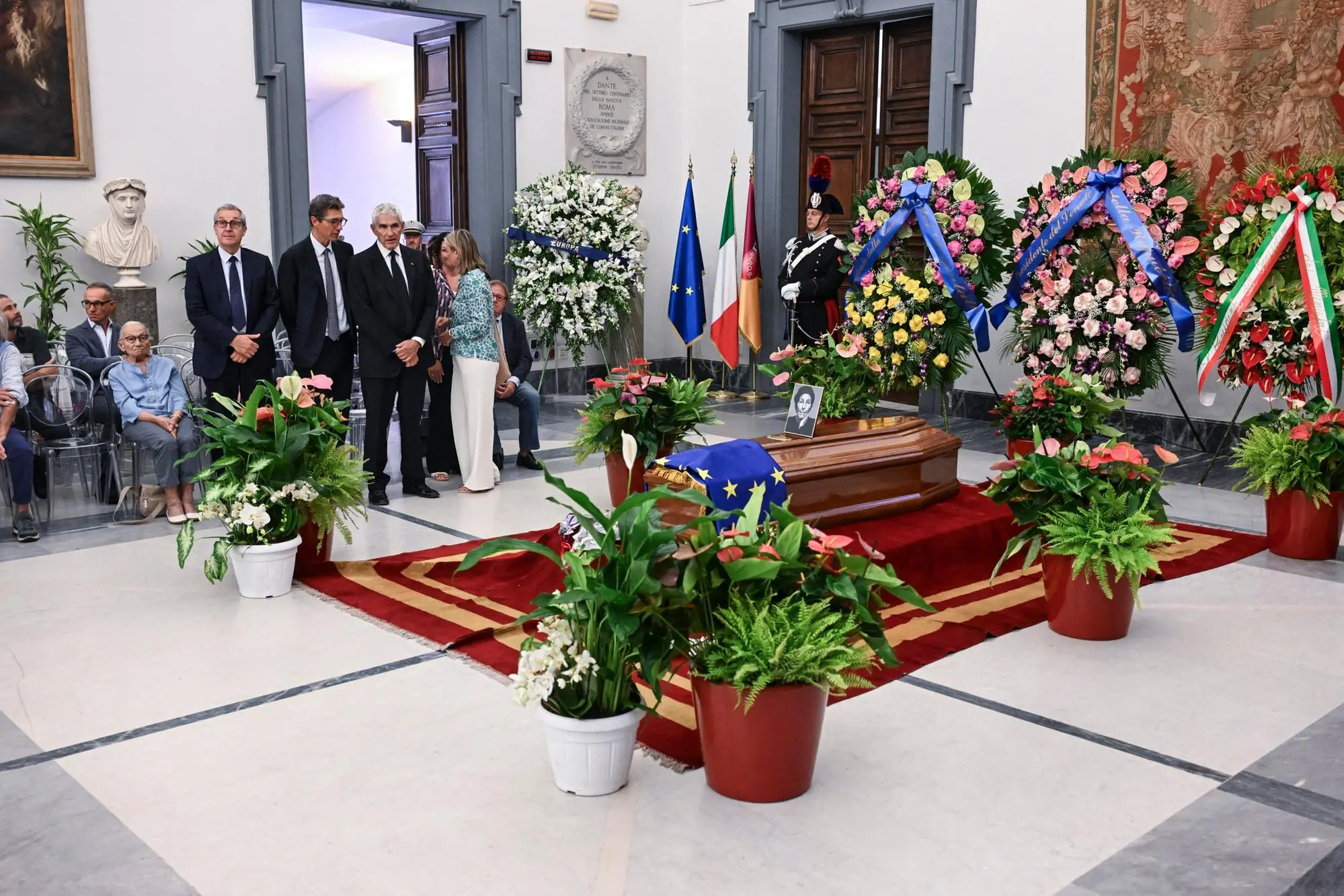
Mattarella and Meloni accompanied the coffin in their final farewell to the historic Radical leader: Magi's tears, the memories of Prodi, Letta, and Della Vedova.The state funeral for Emma Bonino has concluded at the Capitoline Hill. In the Sala della Protomoteca , the final farewell to the historic Radical leader, 78, brought together representatives from all political persuasions, along with her family and many comrades from the battles Bonino fought for decades. At the end of the ceremony, President Sergio Mattarella and Prime Minister Giorgia Meloni, following the family, accompanied the coffin outside the building to the hearse. There were moments of general emotion, with political leaders spending time with the family. Bonino, according to reports, is expected to be cremated and then transported to the family chapel in Brà.
Arriving at the Capitoline Hill, among others, were Carlo Nordio, Elly Schlein, Massimo D'Alema, Paolo Gentiloni, Carlo Calenda, Matteo Renzi, and Giuseppe Conte. Also present were Mario Monti, Roberto Giachetti with Maria Elena Boschi, Minister Marina Calderone, and Angelo Bonelli. Prime Minister Giorgia Meloni was welcomed by Mayor Roberto Gualtieri wearing his Italian sash, by Più Europa leader Riccardo Magi, and by MP Benedetto Della Vedova. Also present were Senate President Ignazio La Russa, Chamber Vice President Giorgio Mulè, and Constitutional Court President Giovanni Amoroso. Shortly before the start, President Sergio Mattarella also arrived.
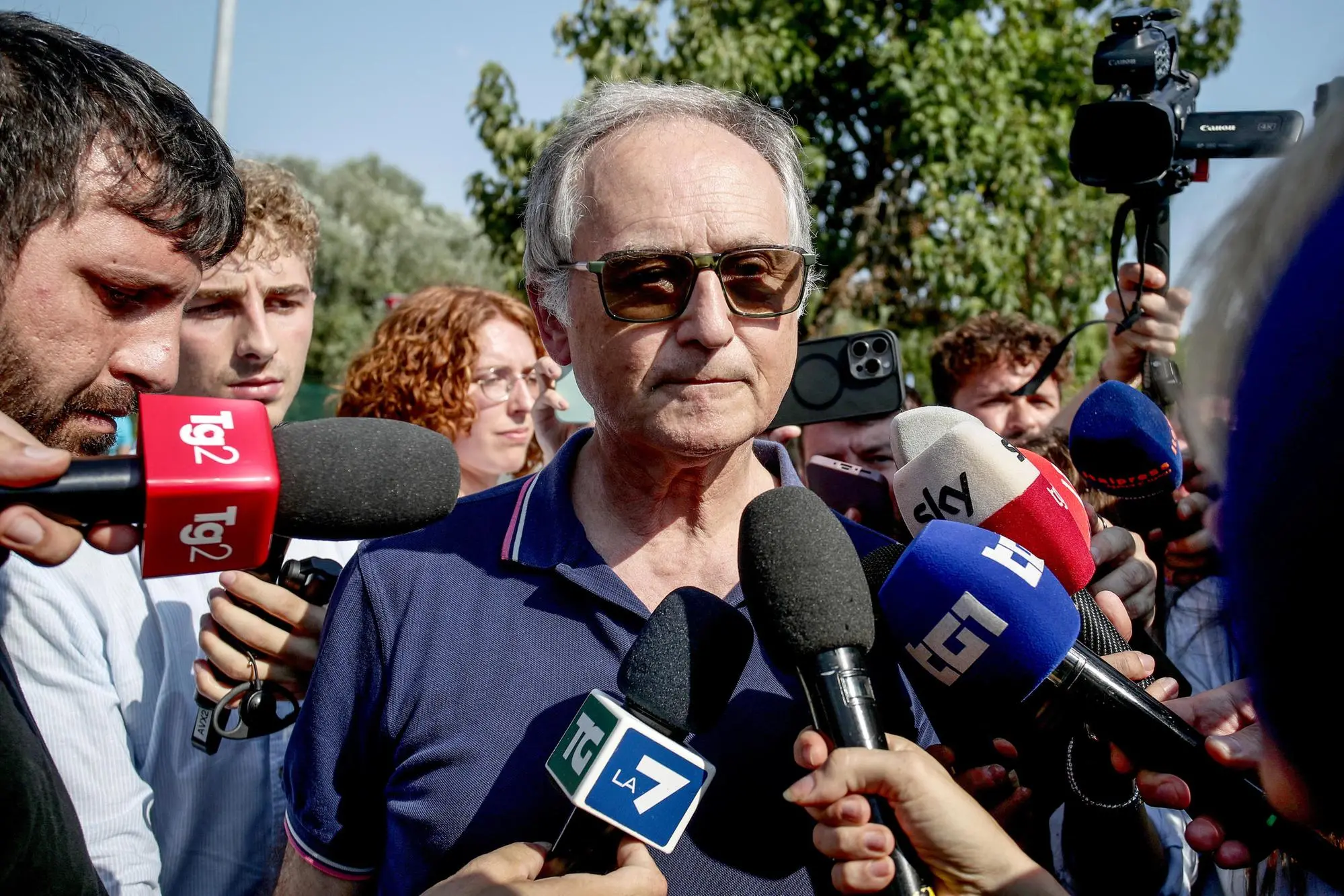
R iccardo Magi, secretary of Più Europa, was moved: "Emma criticized institutions, contested them to the point of disobeying laws she deemed unjust and libertis-killing, facing the consequences of her actions to reform them. Every action, every controversy, every protest was never intended to damage or tarnish them, but always to improve them ." A life, he added, dedicated "to this love for democracy and democratic institutions," through "the uncompromising fight to obtain reforms that would lead to the achievement of greater rights and freedoms for all citizens."

Benedetto Della Vedova: "Civil rights, law, and human rights have always been one and the same for Emma. The defense and promotion of the rule of law, of power that finds an insurmountable barrier in the Constitution, in the law, were the preconditions for freedom everywhere in Italy and around the world," he said. Della Vedova recalled the principle that Bonino repeated together with Marco Pannella: "Where there is a massacre of rights, there is also a massacre of people. And today we see before our eyes how tragically true these words are." He also recalled Bonino's Europeanism, recounting the birth of Più Europa: "Europe is the best possible destiny for us, to be defended, to be improved, but not abandoned to populist and nationalist illusions that would also lead rights and freedoms backward rather than forward." Then she cited one of the images used by Bonino herself: "Europe is a raft in the middle of the river, perhaps even a little rickety, but if we don't move forward and push it to the other bank, we won't come back, we'll sink."
Romano Prodi instead recalled their shared battles against the death penalty and the use of anti-personnel mines. "Progress has been made in those two areas too, but as often happens in the field of human rights, we have repeatedly witnessed a return to the past. And democratic progress has become increasingly difficult. And precisely against these obstacles, Emma's tenacity in defending rights has never wavered," said the former prime minister. "We didn't always agree with everything, but her fight for the weak and defenseless was her guiding star and a lesson for all of us. A battle that Emma carried forward with unparalleled strength and determination."
"Emma belongs to young people, to today's youth. Every time I invited her to speak to students, they wouldn't let her go," Enrico Letta said. Bonino, he explained, "knew that it was important for young people to have mentors; she had learned the importance of having role models, people you trust and whose word you value." Bonino "knew how to respect institutions and how to break the inertia and the naturally conservative spirit of institutions." And again: "I admired her ability to be a woman of the institutions without being trapped by them." In all her battles, he concluded, "she never fell into the temptation of self-celebration. She didn't want to be a beautiful soul, she wanted to bring about change, she wanted to combine the battle for ideals with the concreteness of achievement."
(Unioneonline/D)