


Musk's rocket explosion endangered 450 passengers on board.
Three commanders were forced to decide whether to continue the flight amid a shower of debris or risk running out of fuel over the ocean. Space X only reported the accident 15 minutes later.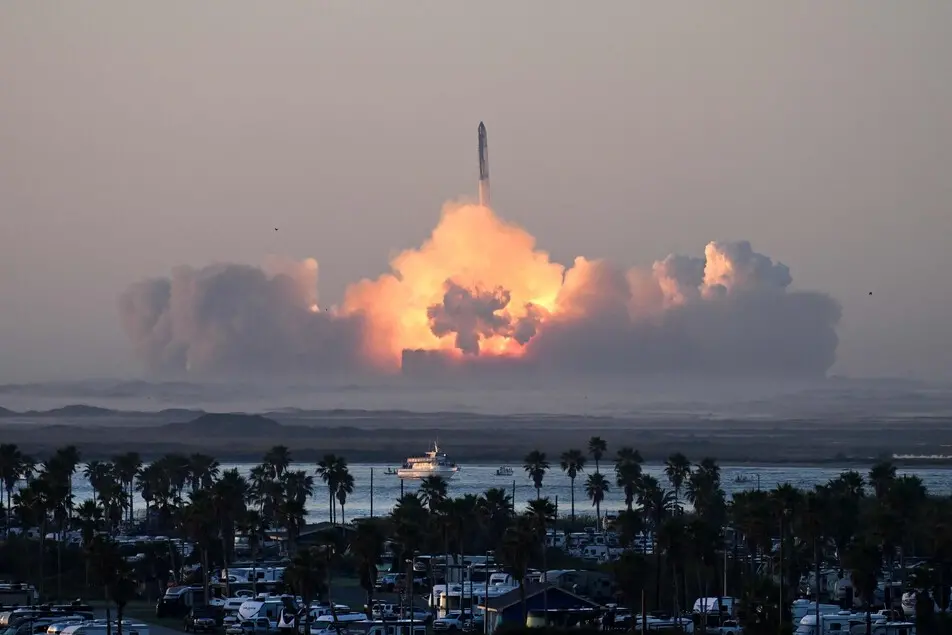
(Handle)
Per restare aggiornato entra nel nostro canale Whatsapp
A debris storm that could have struck at least three planes with at least 450 people on board and caused a tragedy of unimaginable proportions in American skies . The episode occurred almost a year ago, in January 2025, but the story was only now reported by the Wall Street Journal.
“Space X launched a rocket but it didn’t go very well” : this is what the control tower communicated to the pilot of a JetBlue plane en route to Puerto Rico on January 16, 2025, that the Starship, the most powerful rocket in the world launched by Elon Musk’s company , had exploded. An incident that Musk commented on X at the time: “Success is always uncertain but fun is guaranteed!”
The captain must not have been very amused, however, when controllers warned him that the plane was about to cross a danger zone and that if he wanted to continue the journey to San Juan, he would do so "at his own risk." According to Federal Aviation Administration documents, the rocket explosion caused a shower of incandescent debris in the Caribbean region for at least 50 minutes, making flying in some areas extremely dangerous . Thus, the JetBlue pilots faced a difficult choice: continue their journey through an area potentially strewn with rocket debris or risk running out of fuel over the ocean. During those dramatic moments , two other planes, one Iberia Airlines and a private jet, found themselves in a similar situation and declared a fuel emergency, crossing the temporarily closed-off zone . In the end, all three planes landed safely, without the more than 400 passengers on board realizing the risk they had taken .
A month later, the Federal Aviation Administration established a commission of experts to understand what happened and prevent another accident in the future. This is also because the FAA itself issues licenses for commercial rocket launches, as well as for missions in which missiles or shuttles return to Earth from space. Space debris, on the other hand, could pose an increasingly greater risk to aviation safety, with an annual average of around 200-400 rocket launches or reentries in the coming years . In this case, the FAA also complained that Space X failed to immediately notify it via the standard emergency telephone line.
The no-fly zones were activated four minutes after the Starship spacecraft stopped transmitting data about its flight. But Space X didn't report the explosion until 15 minutes later. That was too long . Fortunately, the Miami airport control tower learned of the accident from pilots who had spotted the debris , according to agency documents. Other FAA officials learned of the incident through an internal chat. Even passengers on other planes in the area noticed the explosion . Bob Beresh, for example, saw it from his window seat on a Delta Air Lines flight from Barbados to Atlanta. "It was incredible," he said, but then wondered, "What would have happened if we had been closer?"
Delta clarified that it had not received any reports of its flights coming close to space debris that day, but four were subsequently forced to change course. After the Wall Street Journal article was published , Space X assured that "for every Starship flight test, public safety has always been the top priority. No aircraft were put at risk . Space X," Musk's company added, "is committed to using airspace responsibly during launches and reentries, prioritizing public safety to protect people on the ground, at sea, and in the air."