

Christa Pike breaks her silence after her execution failed: "I feel pain in my body and soul."
An incident that has caused strong controversy in the United States and raised questions about the procedures adopted by the prison authorities in Tennessee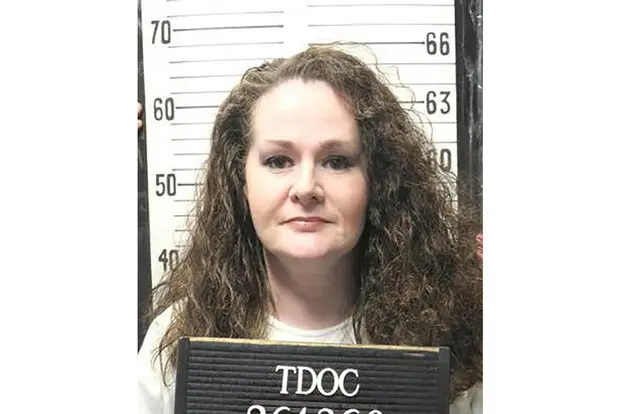
A mug shot of Christa Pike
Per restare aggiornato entra nel nostro canale Whatsapp
Christa Pike breaks her silence a month after her botched execution in Tennessee. The 50-year-old, sentenced to death for the murder of a classmate, recounts the physical and psychological aftermath of the lethal injection attempt she survived on September 30th. Her condition is improving, but the scars of what happened continue to weigh on her health. "My body hurts. My arms hurt. My hands hurt. I still have trouble speaking. The pain isn't just physical. There's pain in my mind and soul," she said in a statement released by her lawyers, without explicitly mentioning the authorities' attempt to kill her.
On September 30, Pike was taken to the execution chamber at Riverbend Prison in Nashville. The procedure was supposed to conclude with the administration of pentobarbital, the drug used for lethal injections. But something went wrong. Staff members took nearly an hour to locate and correctly position an IV line through which to administer the drug. According to her lawyers, difficulty inserting the needles and possible vein collapse compromised the procedure, preventing the drug from reaching the bloodstream. Despite the administration of two doses, Pike did not die and was rushed to the hospital.

The woman remained hospitalized for ten days, during which she received intensive care. Initially, she was unconscious, on a ventilator, and in such serious condition that doctors considered withdrawing life support. Then, unexpectedly, she awakened. When she regained consciousness, she had difficulty moving her arms and hands, was severely swollen, and had also developed pneumonia and a blood clot. A rehabilitation process that, a month later, is still not complete.
"I am deeply hurt by the incompetence that forced so many people into this terrible situation," she added. Pike said she prepared to die that night, convinced she would never have another chance. Waking up in the hospital, alone, confused, and in pain, forced her to confront a prospect she hadn't contemplated. She now lies in the Nashville Correctional Facility infirmary, held in solitary confinement—a particularly difficult situation for a woman who has already spent 28 years on death row.
The case has sparked intense controversy in the United States and raised questions about the procedures adopted by Tennessee prison authorities. Governor Bill Lee has ordered an external review of the case and suspended all other executions scheduled for 2026 in the state. The head of the Department of Corrections, Frank Strada, has also announced his resignation. Pike's lawyers have also requested that her sentence be commuted to life imprisonment, to prevent her from being subjected to another execution attempt in the future. The death penalty, however, remains in effect.
Pike was convicted of the 1995 murder of Colleen Slemmer, 19. She was 18 at the time and had tortured and murdered her young classmate, whom she had met during a vocational training course in Knoxville, with the complicity of her then-boyfriend and another person. A particularly brutal crime that resulted in her being sentenced to death. She is the only woman currently on death row in Tennessee.
(Unioneonline)