

The Region can reduce fuel prices for residents: "The law allows it, here's how."
Fratelli d'Italia motion: "The intervention required by national law and approved by the Constitutional Court: we must act immediately."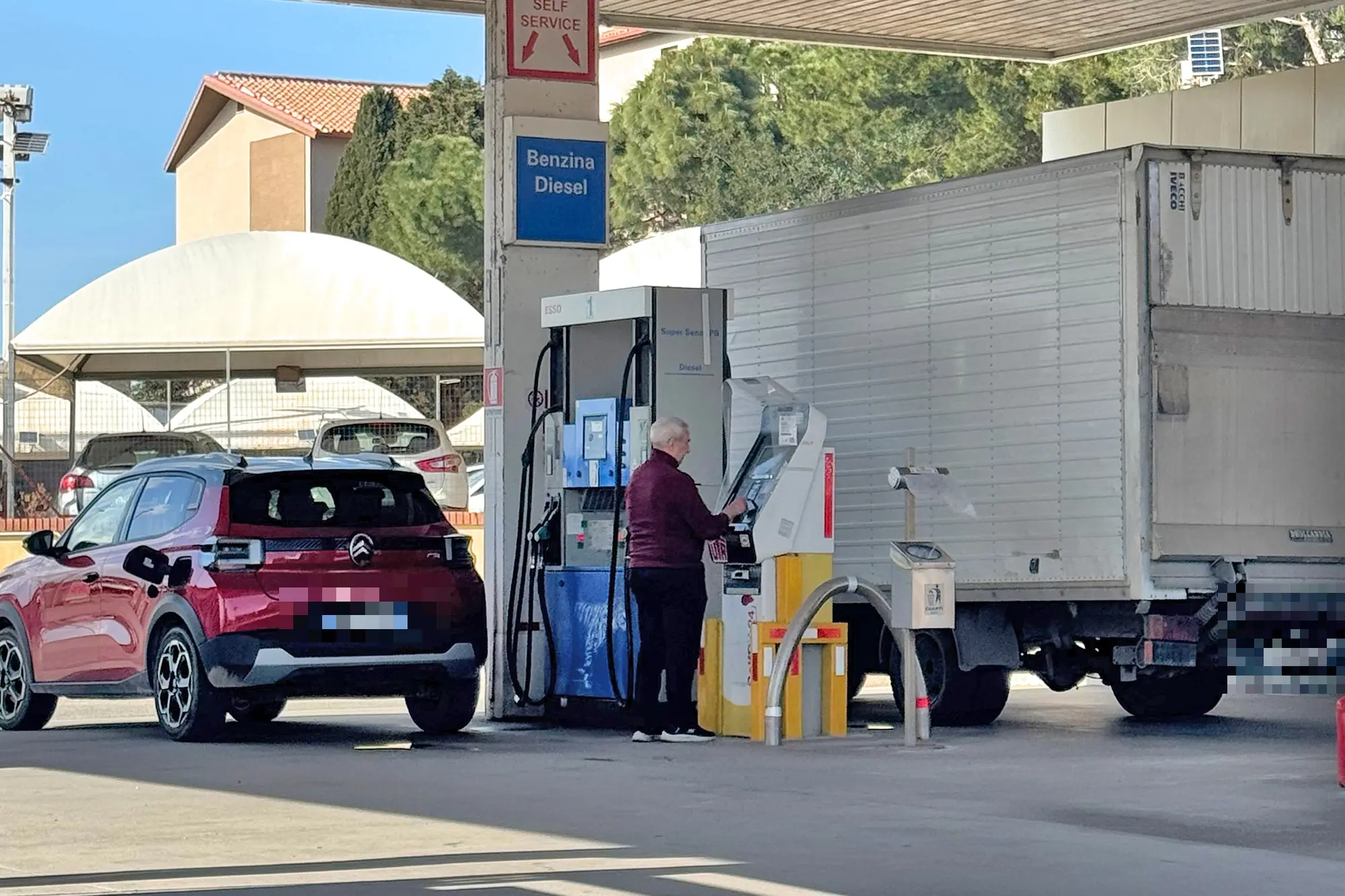
Per restare aggiornato entra nel nostro canale Whatsapp
The Region can reduce fuel prices at the pump for Sardinian residents. A law allows it: it just needs to use its own resources to do so. Fratelli d'Italia regional councilor Antonello Floris, an accountant, was the first signatory of a motion supported by all his party colleagues, combing through the regulations, precedents, and Constitutional Court rulings.
"On the island, the problem is structural: more expensive transportation, fewer alternatives, and an almost total dependence on fuel. For this reason, the Region cannot stand idly by or pretend nothing is happening," explains Floris. In the text of the document intended to bind the Regional Council, submitted to the Regional Council, he details the potential measure.
The regulatory reference, first of all: «Article 3, paragraph 15, of Law 28 December 1995, n. 549, and subsequent additions, such as Legislative Decree 28 December 2001, n. 452 (converted with amendments by Law 27 February 2002, n. 16). Various paragraphs and texts which, in summary, establish one thing: the Regions with ordinary and special statutes are recognized «the power to
Providing, through its own law, for "pump price reductions" on fuel for residents. These measures must be financed with regional resources, in compliance with national and European Union regulations.

Friuli Venezia Giulia had leveraged those laws to adjust pump prices with a subsidy for motorists. And in 2011, the Constitutional Court recognized the legitimacy of the decision: "The Court," Floris explains, "clarified that such measures, if configured as a subsidy to the final consumer and not as a direct tax exemption, do not infringe on the state's exclusive jurisdiction over taxes."
According to the motion, any intervention by the Region would not constitute "state aid," which would be rejected by the European Union: "An intervention can only be classified as state aid if it affects trade between Member States, grants a selective advantage to certain companies, and distorts or threatens to distort competition," as established by the Constitutional Court. However , "a generalized subsidy to resident citizens for the purchase of fuel for private use is unlikely to meet these requirements."
Not only that: Sardinia had already reduced the price of gasoline and diesel for residents. This had happened, Floris recalls, when Mauro Pili was in charge of the regional government. Furthermore, "the adoption of extraordinary regional measures to mitigate fuel costs appears not only appropriate, but necessary to concretely implement the constitutional principle of insularity and to support the Sardinian economy and society at a particularly critical time."
For this reason, Fratelli d'Italia is urging the Regional Council "to urgently initiate a technical, economic, and legal assessment to define an intervention model aimed at reducing the final price of fuel for residents of Sardinia, in accordance with current legislation" and "to establish a system of contributions or incentives, financed with adequate regional resources, that can be operational as soon as possible, specifying the operating methods (e.g., discount cards, reimbursements, etc.) and the criteria for identifying beneficiaries."
The motion makes no mention of financial coverage for the potential operation. The decision is now in the Todde administration's court.