Sassari, the building on Via Washington will have a new life
For years it has been in the news as an emblem of housing hardship and will soon be fixed.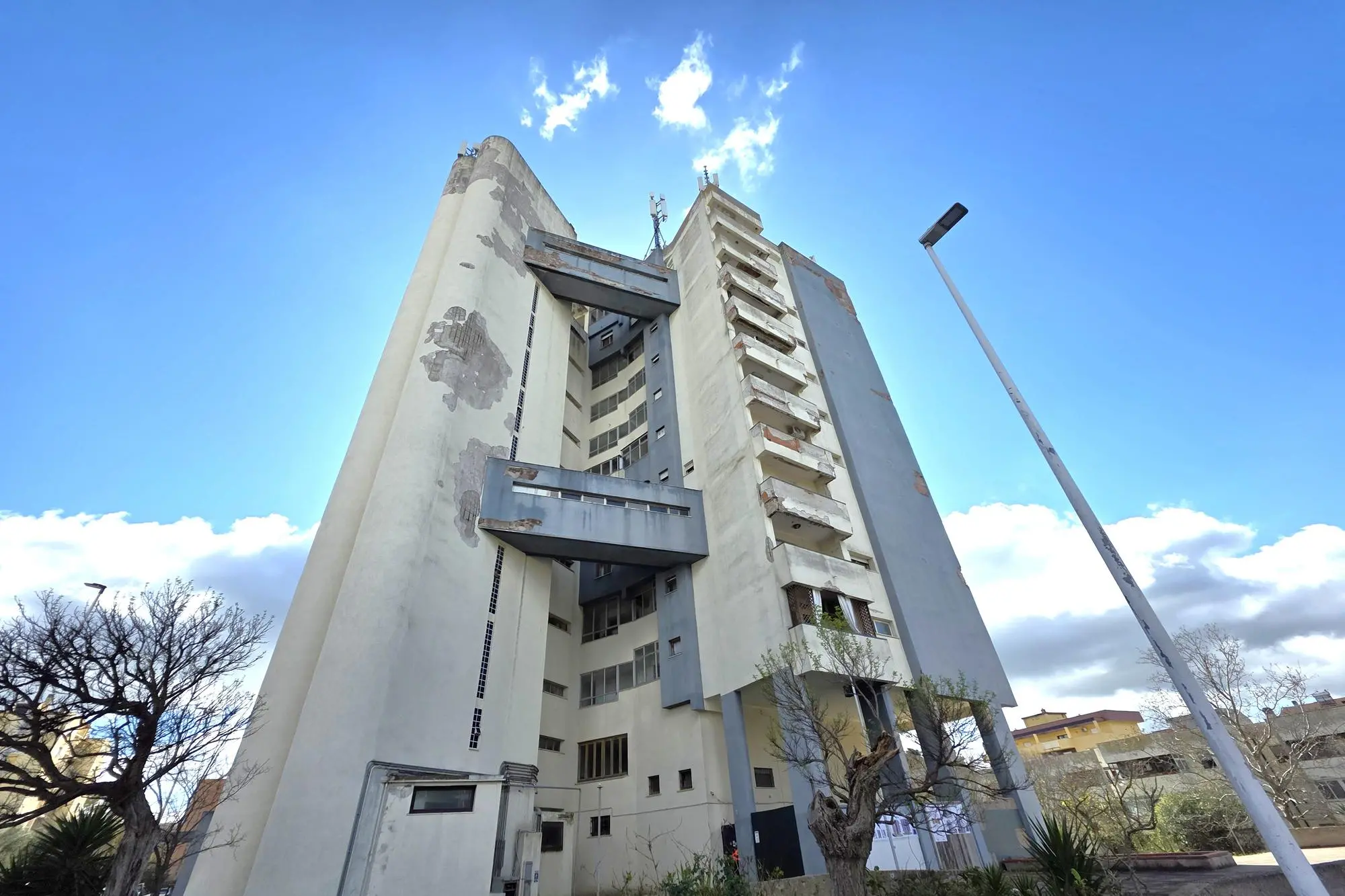
Per restare aggiornato entra nel nostro canale Whatsapp
Eleven floors, 30 families, over 100 residents, and a reputation for extreme disrepair. The building between Washington and Daniel Bovet streets, in the Rizzeddu neighborhood of Sassari, has been in the news for years, including on national television, due to its state: surfaces stripped bare by leaks, both inside and out, a connecting tunnel where the plaster has disappeared, and garages closed due to leaks. Its image has also been circulating on social media as a symbol of housing hardship, while several reports have also been raised, citing concerns about potential air pollution, regarding the antennas placed on the building's roof by several telephone companies. The RinnovArea program will launch from this very building, owned by the Regional Housing Agency, as explained yesterday by the Regional Councilor for Public Works, Antonio Piu, who was present for the handover of the construction site. The €1.1 million project will secure the building by eliminating potential hazards in the exterior of the units.

"We'll work on the facades, one at a time," the design staff reports, "and, barring unforeseen circumstances, we should be finished within a year."
The building, completed in 1985, is now suffering from humidity, and in heavy rains, the water swells the structure. "Sometimes, even one-square-meter slabs of plaster explode," a local resident states, "and then fly downward." The "holes" on the exterior are clearly visible, with pipes exposed, clearly showing the rust-blocking passivating agent applied during previous construction sites. To this end, as the Region reports, they will proceed with "the cortical restoration of all degraded and damaged elements on the façade, including those exposed to the elements." "We will work on the connecting tunnels," the staff adds, "and some of these will need to be demolished and rebuilt." These mini-tunnels represent an extreme example of the critical situation, damaged internally by atmospheric agents. Finally, all work will include a single-brand specification, to prevent products made by different companies from compromising the effectiveness of the intervention.
As for the roof, Area had two years ago, using other funds, waterproofed the surface affected by leaks that then "rained down" on the residents of the top floors. Meanwhile, three cell phone antennas are installed atop the "skyscraper." "The funds provided by the companies," reports Area's sole director, Matteo Sestu, "allow us to cover some expenses."
Meanwhile, a project is underway to renovate the underground area, using other resources, with construction work to be done on the garages that have been closed and inaccessible for years. This initiative, overall, aims to restore the building's dignity, allowing the families who live there to live in a dignified environment. "The focus," confirms Councilor Piu, "is on the citizen and the right to sustainable housing because I am convinced that without it, there is no dignity for anyone. I firmly believe that socioeconomic recovery can arise from the suburbs."