Sardinian healthcare: goals achieved, new perspectives, and sustainability
The Region announces the completion of 59 Community Houses and 17 Community Hospitals: an important milestone, but crucial issues remain.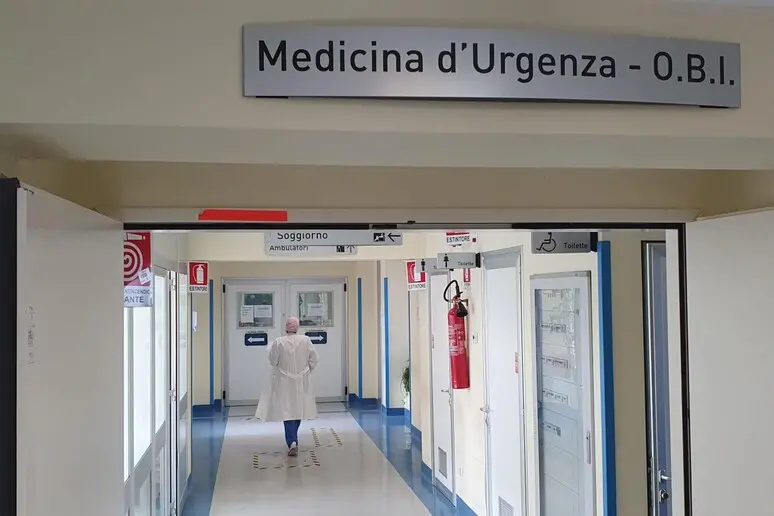
Per restare aggiornato entra nel nostro canale Whatsapp
Recently, the President of the Sardinia Region and interim Health Councilor, Alessandra Todde, announced at a press conference, along with the Department's Director General, Thomas Schael, in office since last February, that Sardinia has exceeded the objectives of Mission 6 of the National Recovery and Resilience Plan, which focuses on community healthcare. Translating this into numbers, 59 Community Homes and 17 Community Hospitals have been built. This is certainly welcome news, as healthcare in Sardinia has faced significant challenges over the years, particularly long waiting times and a shortage of medical personnel, which have led many citizens, in some cases, where resources permit, to turn to private healthcare, and in others, it appears, to forgo treatment. Many more interventions will likely be necessary, and the system is undergoing a profound and ongoing reorganization. This is especially true considering that Sardinia, unlike Sicily, fully self-finances its regional healthcare system. The Constitutional Court itself, with ruling number 141, in 2024, confirmed the constitutionality of Article 56 of Sardinia Regional Law no. 9 of 2023 and Article 5, paragraph 1, of Sardinia Regional Law no. 21 of 2023, by which the Autonomous Region of Sardinia, in order to guarantee essential levels of care and reduce waiting times, had authorized an increase in spending on healthcare services exceeding the limits set by national legislation. First, because the public finance constraints established by state legislation essentially do not apply to the Autonomous Region of Sardinia, which fully finances its own regional healthcare service. Consequently, full funding of the regional healthcare service remains the responsibility of the Sardinian budget, and therefore, the State cannot intervene with financial coordination rules that impact regional responsibility for allocating healthcare spending.
The aforementioned ruling, beyond its undoubted significance within Sardinia, is also relevant in a much broader context, addressing one of the most current political debates: the issue of funding for the National Health Service, considered by many to be insufficient, and the effects of so-called "regionalization," which, indeed, could be further undermined by the potential implementation of the differentiated autonomy provided for in Article 116 of the Constitution. Health is a primary good, and the ability of all to access related services, as well as their quality, have always been a reflection of the level of administration of the service. This means that, while the recent reorganization of Sardinia's hospital network, with the achievement of its planned objectives, is certainly a milestone of the utmost importance, it must also serve as a stimulus to persist in reorganizing the regional healthcare network, especially emergency care, to ensure equal and timely access for all, also taking into account the morphology of the region and the actual distribution of the population. In this sense, the role of the "family doctor" cannot fail to be fundamental, and should be more valued and encouraged, given the insular nature of the region and the geographic isolation of certain municipalities, which are less populous and, moreover, poorly connected.
Giuseppina Di Salvatore – Lawyer, Nuoro