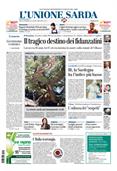


"ASL Commissioners dismissed as of December 25th": a statement from the Region, Sardinian healthcare at risk of total paralysis.
The department's statement arrived late Saturday evening after the Constitutional Court ruling: "The substitutes are the administrative or health directors." But they too were affected by the verdict: concerns about the legitimacy of the decisions.Per restare aggiornato entra nel nostro canale Whatsapp
"As of December 25, 2025, the mandates of the extraordinary commissioners of the regional health service companies must be considered terminated." The communication arrived shortly after 9:00 PM on a post-Christmas Saturday evening. The sender of the document, sent to 8:00 AM local health authorities, the Cagliari and Sassari health authorities, the Brotzu hospital, and the Areus hospital, is Luciano Giovanni Oppo, director general of the regional health department.
Here, then, is the Region's official interpretation of the effects of the Constitutional Court ruling that rejected the (non) reform that had led to the appointment of a commissioner to administer all Sardinia's health care institutions : an illegitimate operation, the Court ruled.
But now, who makes the decisions and signs the documents to keep the complex healthcare system functioning? Oppo offers a solution, explaining that it's simply a matter of enforcing the law. But paralysis poses more than a risk.
"The termination of the commissioners' duties will result in the vacancy of the office of general manager of the companies and the absence of the relevant legal representative," the communication states. However, "in the event of a vacancy in the office," the regulations provide for the manager to "exercise his or her functions on a substitute basis, in order to ensure the continuity of administrative action." The substitute, according to Oppo, would be "the administrative director or the health director," who must exercise "ordinary administrative powers," issue "urgent and non-deferrable acts," and "all acts necessary to ensure the continuity of services and essential levels of care." The provisional regime, according to the department led ad interim by Alessandra Todde, "is strictly temporary and will last until the installation of the general manager, according to the ordinary procedures established by current legislation."
And here, according to what is persistently circulating in phone calls and chats between top-level insiders, two types of problems arise.
First, the Constitutional Court not only rejected the dismissal of the incumbent general directors and the appointment of a commissioner (decided in March), but also the system for appointing new administrative and health directors (following the dismissal of those appointed by the previous directors). Therefore, the "substitute" recalled by the department risks being "illegitimate." While some of those called upon have already declared, "I'm not signing anything," there's also the principle of necessary administrative continuity. Simply put, this means someone must be able to make decisions. Otherwise, healthcare will grind to a halt.
The second problem concerns the immediate future: who will be the general managers appointed "according to the procedures established by current legislation?" Those ousted (illegible) have already knocked on the door asking for reinstatement. But their positions were assigned when Christian Solinas was at Villa Devoto, and they bear the stamp of the center-right. And the Democratic Party and the Five Star Movement, who don't want them back (at least not all of them), are already bickering over possible new names . Even if the current majority parties were to reach an agreement, the possibility—not at all remote—of huge claims for damages and back pay would loom. This could come from the removed general managers, but also from their administrative and health directors. If a balance isn't found, the bill could run into the millions. And another circulating question is: who would pay?