

Moby Prince, Onorato: "External causes, but not fog or human error." He relaunches the bomb hypothesis.
The shipowner, before the commission of inquiry, does not rule out the possibility of a bomb explosion in the tragedy that cost the lives of 140 people (26 Sardinians): "Did the bow fall off? If so, the order to turn to starboard was given." Then the ship struck the Agip Abruzzo oil tanker.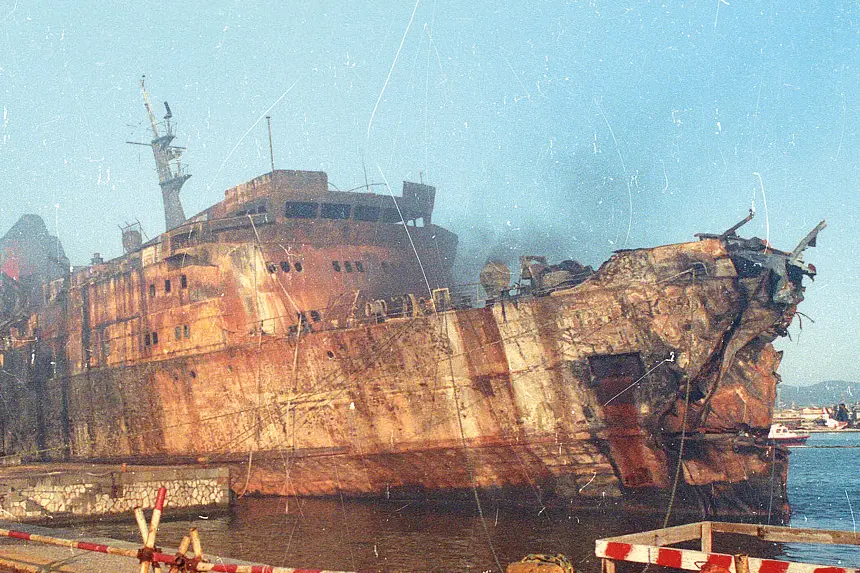
The Moby Prince ferry after the fire (L'Unione Sarda)
Per restare aggiornato entra nel nostro canale Whatsapp
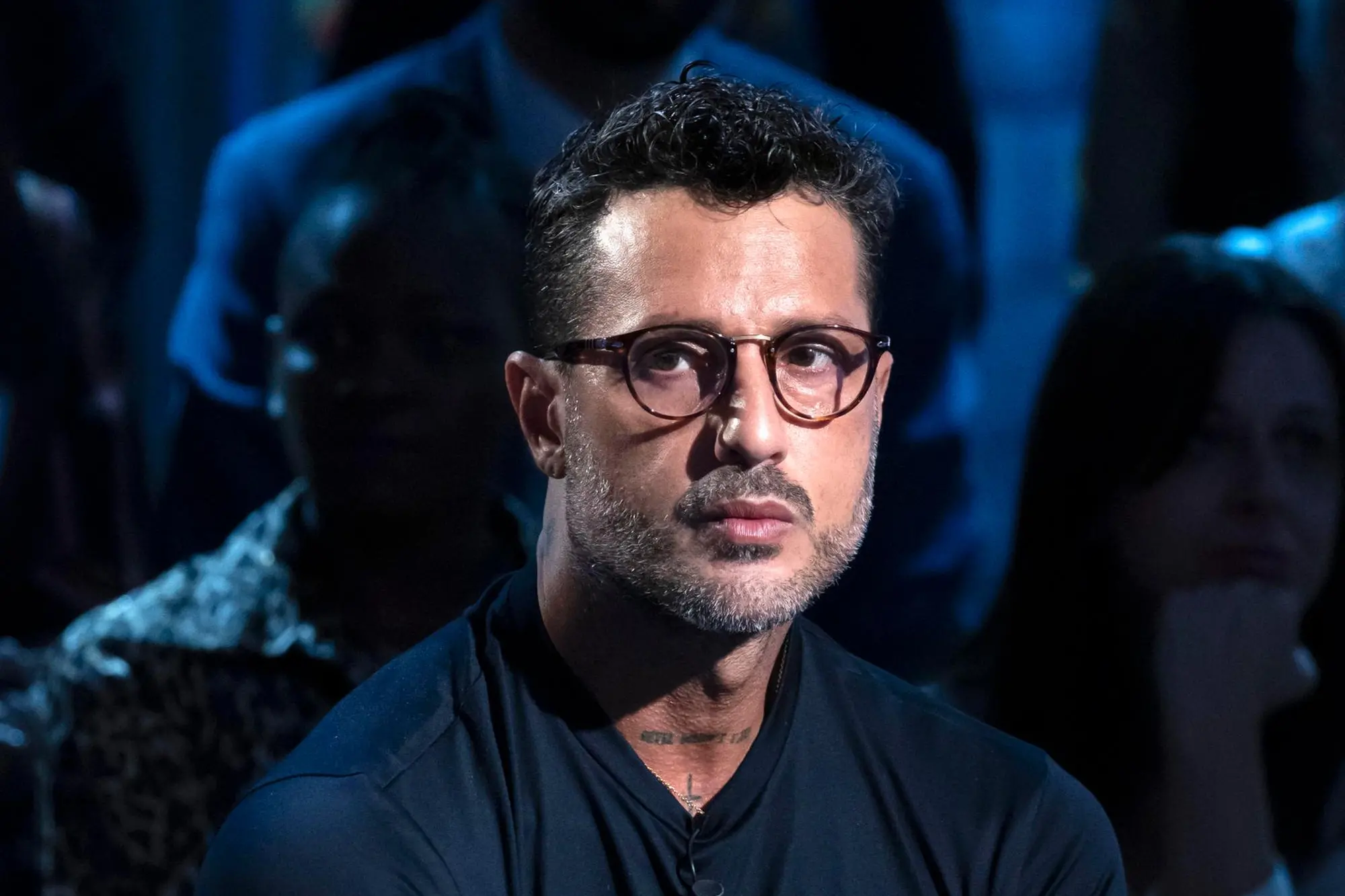
There were "external causes" in the collision between the Moby Prince ferry and the Agip Abruzzo oil tanker off the port of Livorno on the evening of April 10, 1991, but the following day, "after a quarter of an hour of conversation between the port commander Albanese and the Minister of Merchant Marine, Calogero Vizzini, inside Albanese's office, behind closed doors, they came out and dictated the verdict: human error and obscurity, which is why we then continued with this dogma." Shipowner Vincenzo Onorato said this this morning in response to the Parliamentary Commission of Inquiry into the Moby Prince disaster, which claimed the lives of 140 people (26 of whom were Sardinians).
Onorato claims that the incident was caused by "media misinformation," and maintains that "the entire trial was influenced and tainted by the fact that Vizzini and Albanese said 'fog and human error.' There was no way out. And we, Onorato, ended up in the dock with our company." Instead, Onorato continued, "I've been repeating the same things for 35 years: it was due to external causes, I said it immediately the morning after the accident. I was 31 years old, sailing on the Moby Prince. Of all the captains, the one on the Moby Prince, Ugo Chessa, with whom I sailed, and his crew," he recalled, "in my life I've never met anyone like Ugo Chessa because he was absolutely scrupulous and rigorous in his command."
The fact that the Moby Prince "left port and simply collided with the tanker at just 2.7 miles" was "technically impossible for someone like Chessa and his crew. There had to be an external cause. That was my explanation."
For Onorato , "whether there was fog or not was an irrelevant detail from a seafaring point of view for a man like Ugo Chessa, accustomed to sailing at full speed and at full power in the English Channel where there is constant fog."
"The fog was not the cause," Onorato stated, "nor could it incredibly have been human error, as Vizzini and Albanese claimed."
Then he referred to the traces of explosives on the bow: "If there was a bomb and the bow blew off, the bridge didn't understand what had happened," Onorato continued. "If there's a problem that isn't immediately identified, on ships they call a starboard turn, and perhaps that's how they ended up on the Agip Abruzzo."
"What if there was a bomb on the ship? I tried to explain why," Onorato speculated. " There was the Gulf War, there were unidentified ships in the Livorno harbour. It could have been an attack."
Before the commission, Onorato also examined the possibility—as an external cause— of the sudden appearance of a barge in the path of the ferry leaving the port and heading for Olbia, which could have prompted the Moby Prince's bridge to suddenly change course. "Captain Ugo Chessa," the shipowner testified, "always asked for an optical reading before leaving port and then took a radar reading. 'What you saw optically, see it again on the radar,' he would tell the officer. And the radar had an anti-collision alarm. So how did the ship end up hitting the Agip Abruzzo?" Chessa, whose professionalism Onorato repeatedly reiterated, "was on the bridge, his body was found there." When "will he hand over command to the officer while leaving the port, didn't they see the tanker on radar?" the shipowner wondered, "but it's not a goiter, the Agip Abruzzo is a 300-meter vessel. "It's impossible" they didn't see it. So Onorato hypothesizes that "if there had been a barge under the ship, only one target would appear on the radar screen, not two," since "the barge's mass is significantly less" than that of the tanker. But "the captain's perspective immediately changes. If the barge separates from the ship, the radar goes into alarm, then there's another target, there become two. I try to imagine Ugo Chessa wondering 'Where did this come from, what is it?' The range of 2.7 miles is close. Very, very limited."
And then, Onorato reconstructed, "the Moby Prince encountered an obstacle and, to avoid it, crashed into the tanker." Onorato also recalled statements by Captain Superina of the Agip Abruzzo, "a veteran, who said, 'A barge hit us.' But how could someone like him mistake a ferry for a barge? A barge is a low, small vessel, while the ferry is enormous. How could he call it a barge when it's actually a ferry? How can you do that? This is one of the many mysteries of the Moby Prince."
"We were in the dock, everything we said was to distract from our alleged guilt," Onorato also said, speaking ironically of "a somewhat unbalanced confrontation, with the Italian State on the other side."
The Moby Prince affair is full of lies, according to Onorato: "It was said that the Chessa crew had put the ship on autopilot; we were saddened to read that they had started watching the final of a football match." Or it was said that "there are no survivors, but that's a lie: the entire Agip Abruzzo crew survived. The collision splits." Onorato recalled that at the Livorno port authority, Albanese gave the Agip Abruzzo crew a room with their company's lawyers and experts. The interrogations began on April 12th, two days later; wonderfully, their statements are all mirror images, they're like tissue paper, they all say the same thing."
(Unioneonline)