

Italy and the middle class crisis
In Giuseppe De Rita's essay the reasons for the decline of Italian society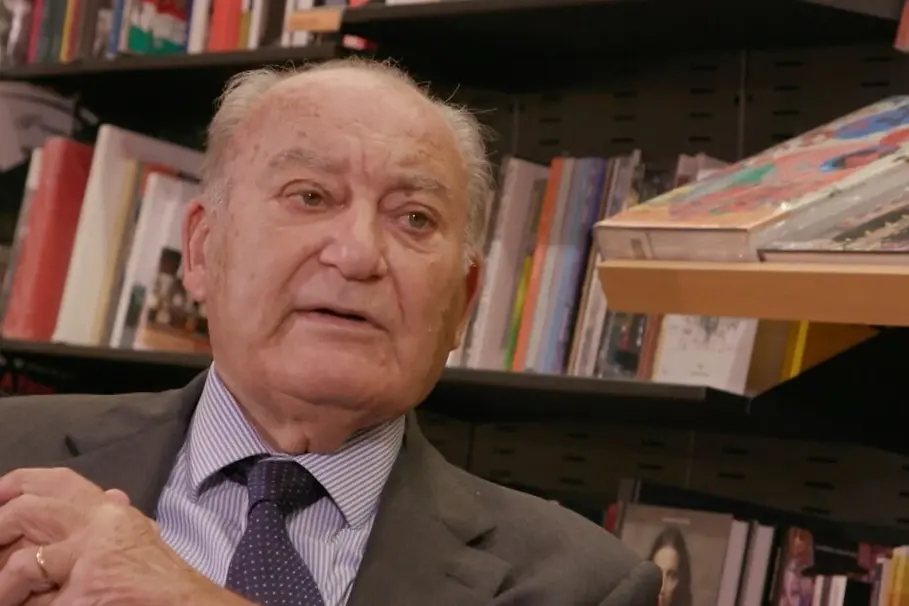
Per restare aggiornato entra nel nostro canale Whatsapp
"Once, lawyer Agnelli jokingly asked me, 'But how many middle-class Italians are there?' I replied, 'Look, it's all of them, except you and a few desperate people.'" This is the ironic yet truthful opening line with which Giuseppe De Rita begins his conversations with Mirko Grasso in the booklet L'Italia che conosco (Carocci editore, 2026, pp. 104). The book's topic: the Italian reality, which De Rita, founder and president of CENSIS (Centro Studi Investimenti Sociali, or Social Investment Study Center), has investigated, interpreted, and understood like few others.
The volume's pages, in fact, have the feel of a mosaic of our identity, a map through which to retrace the country's continuities and discontinuities, to recognize the changes before and the factors that led to the decline of Italian society after. From the postwar transformations to the emergence and crisis of the middle class, De Rita's research, which began in 1964 with the founding of Censis, has precisely delineated our social history. A social history that, at its best and most vital, has been marked, since the end of the Second World War, by the growth of the middle class, a "broad" social class with blurred boundaries, yet capable of contributing to the stability of our country.
These pages gather his interpretation of the rise and decline of the Italian social "great lake" (the middle class ), its fragmentation, and the root causes of populism. The sociologist shows us the connection between economic crisis and cultural shifts, offering essential insights into today's dynamics. Above all, De Rita constantly suggests possible ways out, still unwilling to resign himself to what seems like an inevitable decline. The Italy I Know, in fact, is a book that calls for action: understanding the present to imagine a future founded on collective identity, planning, and shared motivation.

We must, then, abandon the idea that we can tackle complexity alone. We must rediscover the desire and ability to work together toward a goal, large or small. It takes a desire to build community and show solidarity. We must return to politics, wresting it from the hands of professionals or at least carefully monitoring what they say and, above all, what they do.
This is not an easy change to implement. Today we live in a highly individualistic society, at times dominated by the exaltation of personal freedom and a widespread sense of self-assertion. This tendency, at times, becomes radicalized into a veritable religion of one's own ego. This is one of the diseases that has put the middle class in crisis; there's no point in hiding it.
It is right, then, to reflect on this drift toward individualism , and we can do so first and foremost by reaffirming the positive value of individualism when it leads us to choose freely, to fully employ our faculties. Conforming our thinking to that of the majority leads to inertia and passivity. However, giving free rein to the exaltation of our own ego puts our humanity at risk, exposing us to the most unbridled narcissism. The result of this attitude is profound suffering for individuals themselves, but also for society as a whole. It is therefore worth trying to change the rules of the contemporary game, avoiding being overly swept away by the spirit of our times that pushes us toward self-referentiality, a self-referentiality that isolates us and does not help us in today's complex world.
