

Trump and Putin “Domini Mundi”?
From the NATO summit talks in Türkiye: the Ukrainian conflict enters a new diplomatic phase, while Europe appears increasingly divided and lacking real strategic autonomy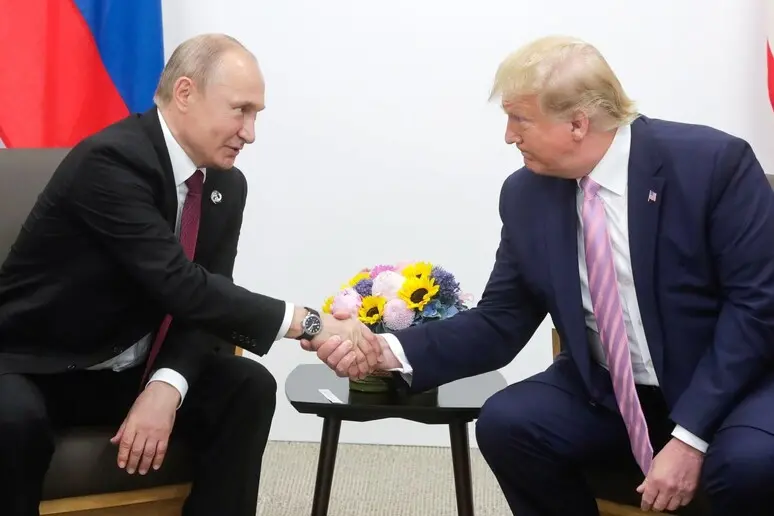
Putin and Trump (Ansa)
Per restare aggiornato entra nel nostro canale Whatsapp
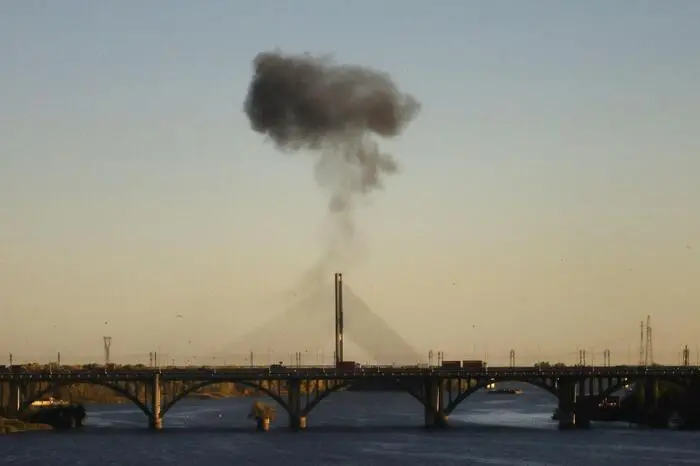
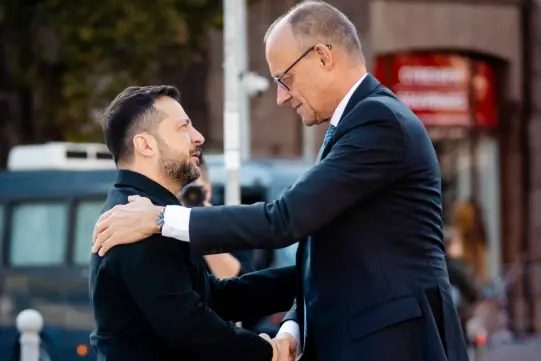
It appears that on the occasion of the July 4th 2026 celebrations, White House resident Donald Trump held telephone conversations with the leaders of Ukraine and Russia, namely Vladimir Putin and Volodymyr Zelensky. It also appears that Trump and Vladimir Putin discussed the Russian-Ukrainian conflict and its resolution, especially in light of Trump's upcoming participation in the NATO summit in Turkey, scheduled for July 7-8. It also appears that in a congratulatory message sent by Putin to Trump on the occasion, the former stated that Russia and the United States share a special responsibility for maintaining global security. What more can we say? All that remains is to take note.
But what's new? Probably nothing, except what has always been known, as Donald Trump's agenda since his inauguration included the intention to end the war by ceding Ukrainian territory to his Russian counterpart, as well as a commitment to prevent NATO expansion eastward, leaving out Ukraine and Georgia. After all, Donald Trump himself has always maintained that "this is Biden's war and it would never have happened if he were president." For his part, Kyiv leader Zelensky has continued to maintain that "his position is that Europe must be involved in the diplomatic process and that its voice must carry weight."
But in the given situation, it seems impossible to identify and/or recognize the role of an increasingly fragmented European Union in terms of its objectives. This is all the more true when one recalls Trump's announcement/reaction regarding a significant withdrawal of US troops from Germany, in retaliation for the German Chancellery's disapproval of the war in Iran, almost as if he were unwilling to tolerate any form of dissent. This attitude would speak volumes about the Alliance's standing. And even more so when, for the time being, it is still premature to argue that transatlantic relations are dissolving. And let's be frank: the European Union still lacks true strategic autonomy for many and varied reasons: first, the lack of the necessary material resources; and second, because many of its leaders have not yet developed the necessary political will to fully embrace this concept of "autonomy."
Europe, with its social model, should have constituted, and should still constitute, the necessary counterweight to a silent, authoritarian involution that shows little respect for the concept of individuals and rights. Put differently, the United States, or rather the ideal conception of the United States as an essential and indispensable ally, is difficult to abandon. The international arena seems oriented toward maintaining a balanced balance between Vladimir Putin's Russia and Donald Trump's United States as nuclear powers, but the unknown factor seems to be the uncertainty as to whether these powers are actually motivated by the desire to restructure international relations as a whole and establish a global order more based on consensus. In reality, the two aforementioned superpowers risk being left without their proverbial host.
Xi Jinping's silent Beijing could very likely only benefit from the actions of a US president who could see its alliances in Asia compromised, leaving China free to take control. In the current situation, after four years of conflict, does it still make sense to invest in weapons? Probably not. The persistence of the conflict could (the conditional is imperative) contribute to marginalizing the European Union's position.
Giuseppina Di Salvatore