

Following Germany and Switzerland, Austria is also sending migrants back to Italy: four transfers since June 12.
A drop in the ocean of migration, but it reflects the political climate and increases tensions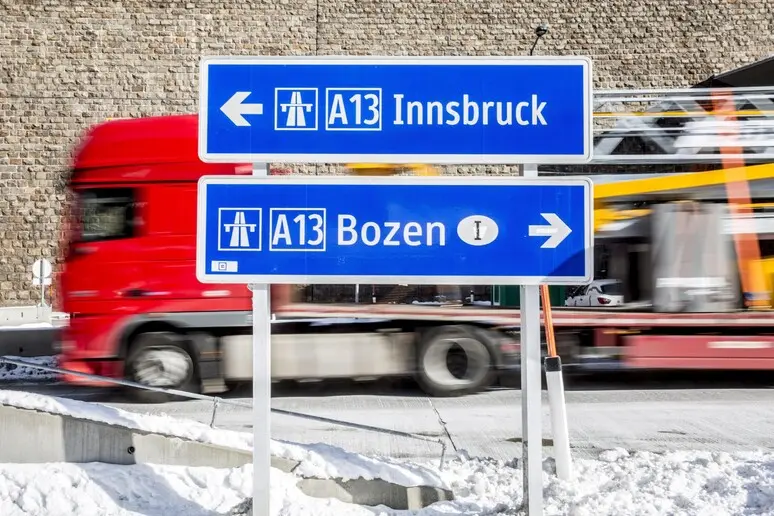
(Handle)
Per restare aggiornato entra nel nostro canale Whatsapp
The dawn of the new European Migration Pact also brought with it a return of transfers to the continent's south. The watershed was June 12th: since then, the "Dubliners" have begun to move again, and this time it's Vienna knocking on Italy's door. Four asylum seekers have already been transferred from Austria , with a train or bus ticket provided by the authorities in their pockets.
A drop in the ocean of migration, but enough to increase political tensions. First Germany, then Switzerland, now Austria : Christian Stocker's center-right government is keeping quiet about how many more might follow Italy's path. But behind the first four arrivals, the uncertainty of a domino effect weighs heavily, and where to draw the line between the old course and the one just begun.
After years of virtually zero returns, Rome's eyes are on the door that's opening again . The numbers from the Interior Ministry provide a measure of what's at stake: from December 2022 to the end of 2025, Italy received approximately 80,000 requests for admission, while transfers virtually stopped after Matteo Piantedosi's circular banned returns. In the previous five years, more than 17,000 Dubliners had returned. Now the new Pact—which Rome had relied on to ease the burden of the old Dublin system—also reveals its other side: partners can once again ask Italy to take back those who have set sail from here for the rest of Europe .
According to Eurostat data, this number exceeds 24,000. Of these, only 85 have returned so far . According to the government, cases prior to June 12th are a closed game; for those after that, the new rules apply.
Now that Northern governments are reinforcing the Dublin principle—which ties asylum applications to the country of first entry—the government is attempting to build a counterweight in the South. It is doing so while relying on the coalition between Meloni and Danish Prime Minister Mette Frederiksen, and on the 22 countries that, following the chaos in Ceuta, have called for the need to secure their external borders. Piantedosi is trying to build critical mass with Greece, Malta, and Cyprus, while a more delicate meeting with Germany's Alexander Dobrindt is looming, with a face-to-face meeting not ruled out in the coming days.
And the opposition is attacking. Riccardo Magi criticizes the Pact, championed by Meloni, as a "colossal flop," echoing Angelo Bonelli, who is busy denouncing a "domino effect" following Italy's tightening of Schengen with Spain. Carlo Calenda is also critical: the government, he summarizes, has now opened "Pandora's box."
Who are the Dubliners?
These are asylum seekers who, after applying for protection in the first country where they were identified, move to another country. The Dublin Regulation requires them to be returned to the country where they were identified, which is responsible for processing their application.
Obviously, first-arrival countries like Italy are the ones most penalized by this system.