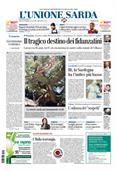


A cap on foreigners in classrooms sparks a clash between the EU Commission and the Italian government: "The treaties prohibit discrimination."
The European Union attacks Italy over its school decree, but Minister Valditara stands firm: "We're moving forward."
(Handle)
Per restare aggiornato entra nel nostro canale Whatsapp
The EU Commission and the Italian government are at loggerheads over the decree setting a cap on foreigners in schools. The European body has recalled that the EU treaties prohibit any form of "discrimination based on nationality," whether "direct" or "indirect." Discrimination based on nationality is "permitted by EU law" only "in the presence of a treaty exemption" for reasons of public order, public safety, or public health. But Minister of Education and Merit Giuseppe Valditara has shown no signs of reconsideration: "The problem does not exist. The government is moving forward without hesitation." Indeed, he emphasizes that "education is not a law under the exclusive jurisdiction of the EU," noting that "the law favors integration: it refers to foreigners who do not speak the language and therefore does not constitute discrimination."
Valditara doubles down: "In most European countries, first-time foreign students are even placed in separate classes." Supporting the minister's position is his party colleague, Senator Roberto Marti, who believes the decree "does not discriminate based on nationality or citizenship, but rather addresses the level of linguistic proficiency." The Democratic Party (PD) opposes this position, calling on President Meloni to withdraw the decree before Europe imposes it on her. For Democratic Party delegation leader Nicola Zingaretti, the decree "is not only contrary to common sense and the reality of our schools: it also violates the European treaties."
"We are pleased to learn that Brussels has highlighted what we have long been reiterating," said Attilio Frattam, national president of Dirigentiscuola, adding: "The measure, among other things, could also undermine school autonomy and demonstrates the legislator's substantial lack of confidence in school principals, who know perfectly well how to create classes suited to the specific circumstances of their local area." Many unions share the same position. "The European Commission has proven us right, and above all, it has proven the Italian Constitution right," emphasized Gianna Fracassi, secretary of the Flc-Cgil union. For Marcello Pacifico, president of the Italian National Federation of Schools (ANIEF), the EU Commission's decision should be seen "as a call to guarantee all students the right to education," and this can only be achieved "by increasing the number of teachers assigned to teach Italian to foreigners."
(Unioneonline)