

Without evangelical piety
Giulio Busi reconstructs the tragic story of Giordano Bruno in his latest book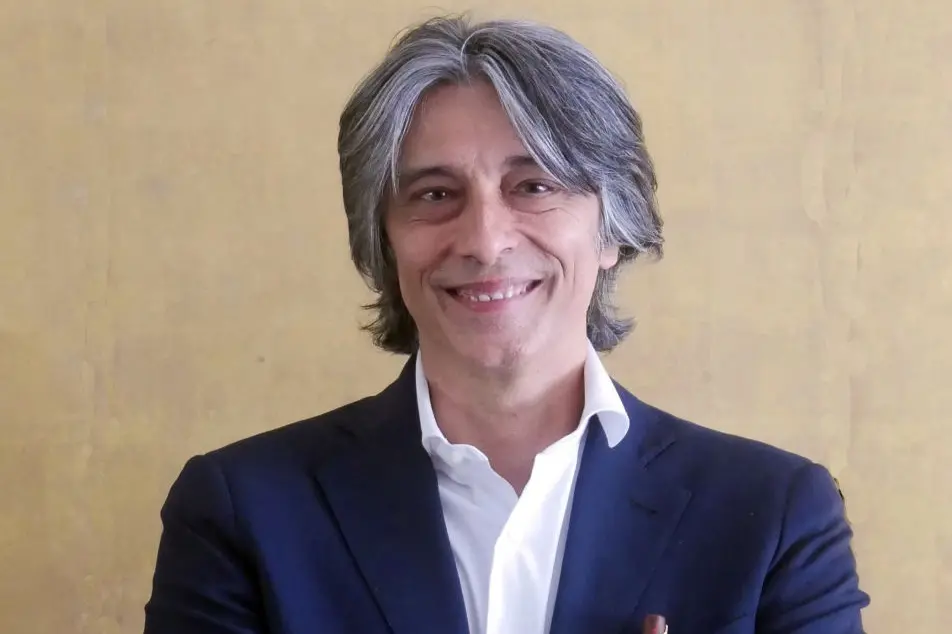
Per restare aggiornato entra nel nostro canale Whatsapp
“Killing a man is not defending a doctrine, it is killing a man.” This sentence, uttered by the French humanist and theologian Sébastien Castellion after the burning of Michael Servetus at Calvin's behest, could easily have been written for Giordano Bruno. Writer, philosopher, and thinker, Bruno was burned alive in Rome in 1600 because his ideas did not conform to those of the Catholic Church, which at that time had just emerged from the Council of Trent and was intent on defending orthodoxy—real or presumed—from the attacks of Protestantism. The condemnation of the philosopher born in Nola came, not coincidentally, in the midst of a Europe ravaged by religious wars and preparing for the first great continental massacre, the Thirty Years' War (1618-1648). It was a Europe where only black and white existed, and where the Church too often showed the face of a whipping stepmother rather than that of a mother.
Bruno took his first steps in this political, cultural, and religious climate, as Giulio Busi recounts in his Giordano Bruno. Many Stars Don't Die (Mondadori, 2026, pp. 156, also available as an ebook). And he took them, as Busi astutely describes, without realizing that it was no longer a time for open philosophical reflections, for debates in which worldliness and sacredness could go hand in hand. The lively, intellectually virtuous, and stimulating era of the Renaissance was over, but Bruno nevertheless remained a humanist and Renaissance spirit. He believed in man as capable of building his own fortunes and endowed with a reason that drove him to investigate the world and the universe without setting limits. He viewed knowledge as something infinite, awaiting the human being capable of exploring it. Bruno felt like that kind of human being, as Busi aptly describes.

And he was a man absolutely convinced of his own abilities as a thinker, abilities he relied on for social advancement. As the son of a soldier from the Campania province, he envisioned himself as a professor at a prestigious university, or better yet, as a court gentleman, a knight. He felt he possessed the qualities, the nobility of spirit, the propensity for decorum. And as a soldier, as Busi makes us understand, Bruno possessed the frankness, the intellectual and physical courage, the ability to stand on the front lines under enemy fire. This enemy fire the philosopher from Nola did little to avoid, given that he had a fiery temper and a self-image as high as his opinion of theologians, academics, and the like was often low. Many were adamant fools to Bruno, and many did not forgive him for such freedom of speech.
For this reason, too, Bruno struggled to retain powerful friends, those who could have been of assistance when he was arrested in Venice in 1593 and then extradited to Rome for a trial that lasted until 1600. Seven years led to a conviction based on theology, contrary to every evangelical teaching in every respect, the fruit of the weakness of a frightened Church that had not recovered from the trauma of the Reformation and was consumed by paranoia, like any fragile authority. Bruno faced judgment with the firmness of a soldier who does not retreat. He did not want to be a hero, nor become a martyr for free thought. He wanted to die as a human being, not live as a ghost after denying himself. To quote Sébastien Castellion again, "You do not demonstrate your faith by burning a man, but by being burned for it." Bruno went that far, and Giulio Busi recounts his end without rhetoric, just as he has recounted his life without any rhetoric. From the book, in fact, emerges the man, his thoughts, his excesses, his virtues, but also his vices, which were not lacking in Bruno. The legend will come later, once the flames in Campo dei Fiori have been extinguished, but that's another story entirely.