

What remains of football
In Lorenzo Casini's book, the crisis of Italian football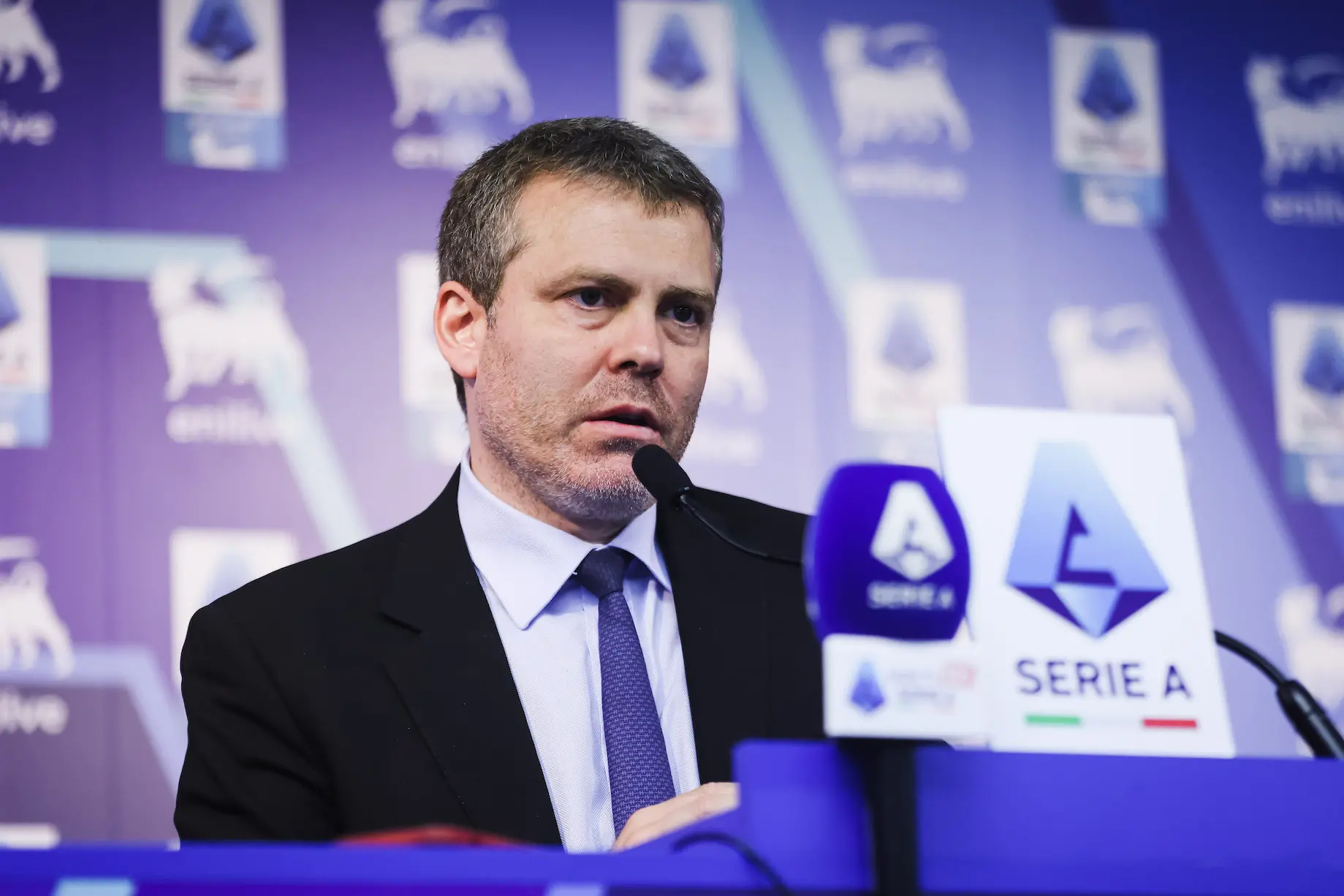
Per restare aggiornato entra nel nostro canale Whatsapp
"True football belongs to the epic: the sonority of the classical hexameter is found intact in the Italian novenary, whose accents lend themselves to exalting the running, the jumping, the shooting, the flight of the ball according to geometry and labile or constant..." This is how the great sports journalist Gianni Brera defined the game of football decades ago, comparing it to the poetry of ancient poems. A romantic image, of great literary value for what has now been the most beloved sport among Italians for decades ...and also among Italian women, given that the number of female fans is constantly growing.
But – because unfortunately there is a but – despite the passion that ignites the fans, despite the thirty-three million supporters, the over four million players and more than a million registered players, something has broken in the Italian football system. Our national team, which boasts four world championship titles, two European Championships and a series of legendary achievements in its history, has not qualified for the World Cup since 2014 and has not been a global protagonist since 2006. Our championship , the most beautiful tournament in the world for twenty years between the 1980s and the early 2000s, has now fallen to a second-tier competition , overtaken by the English Premier League, the Spanish La Liga, the German Bundesliga and perhaps even the French Ligue 1. Furthermore, our stadiums are often dilapidated and professional football has accumulated losses of over five billion euros in just a few years.

But how did we get to this point? Lorenzo Casini, president of the Lega Nazionale Professionisti Serie A from March 2022 to December 2024, and author of the book Quel che resta del calcio (Il Mulino, 2026, pp. 272, also available as an ebook), explains. Casini collected the myths, disappointments, mistakes, and even hopes of Italy's most beloved sport.
For Casini, Italy's failure to qualify for the World Cup three consecutive times isn't a blip: it's the confirmation of a system that has stopped working. And the problem isn't simply a lack of talent, as Italy has always produced and continues to produce in other sports. The problem is broader and affects the entire football movement.
With a wealth of data, international comparisons, and firsthand experience at the top of football's institutions, Casini reconstructs the reasons for this decline and grasps its broader significance: Italy's inability to organize what it has. To be clear: there are millions of players and a million registered players, but the youth movement remains stagnant in terms of organization and facilities, as it was decades ago. Often, club sports centers, even those in Serie A, don't have enough pitches, locker rooms, or gyms for the smaller teams and for youth, youth, and children's teams. Furthermore, the emphasis is on developing players who are tactically skilled, capable of executing plays, and highly disciplined on the pitch, but time and energy are not invested in their technical preparation—in the art of footballing, as the good Brera would always have said. The result is that our national teams excel at youth level because they are well-structured and organized, but they founder later when, in addition to footballing doctrine, flair and skill are required. Because football, before being discipline and strategy, remains a game. And it is precisely from there, from the training, technique, and imagination of a betrayed youth, that a credible hope for the future of Italian football can be born.
But Casini takes a 360-degree view and doesn't stop at youth academies. Italian football faces a structural problem, with stadiums that are almost never owned by the teams, which seem antediluvian compared to those abroad—just look at the recent World Cup to see this—and generate no profits, only costs, often to the detriment of the clubs that use them, if not the community at large. But to transform stadiums, resources are certainly needed, but also a shift in entrepreneurial culture. This shift must lead us to view football clubs as something capable of standing on their own two feet, thanks to the wealth they generate. Stadiums are not simply places where matches are played; they must become economic, social, and urban drivers. Therefore, long-term entrepreneurial platforms are needed, as is the case in many other European countries; otherwise, the alternative is a slow decline, with clubs that will struggle increasingly to survive, especially in the provinces. And without provincial football, spread throughout the country, the football system simply risks imploding... if it hasn't already.