

What is worth fighting for?
Daniele Pasquini's The End of the Frontier: Between Western and Civil War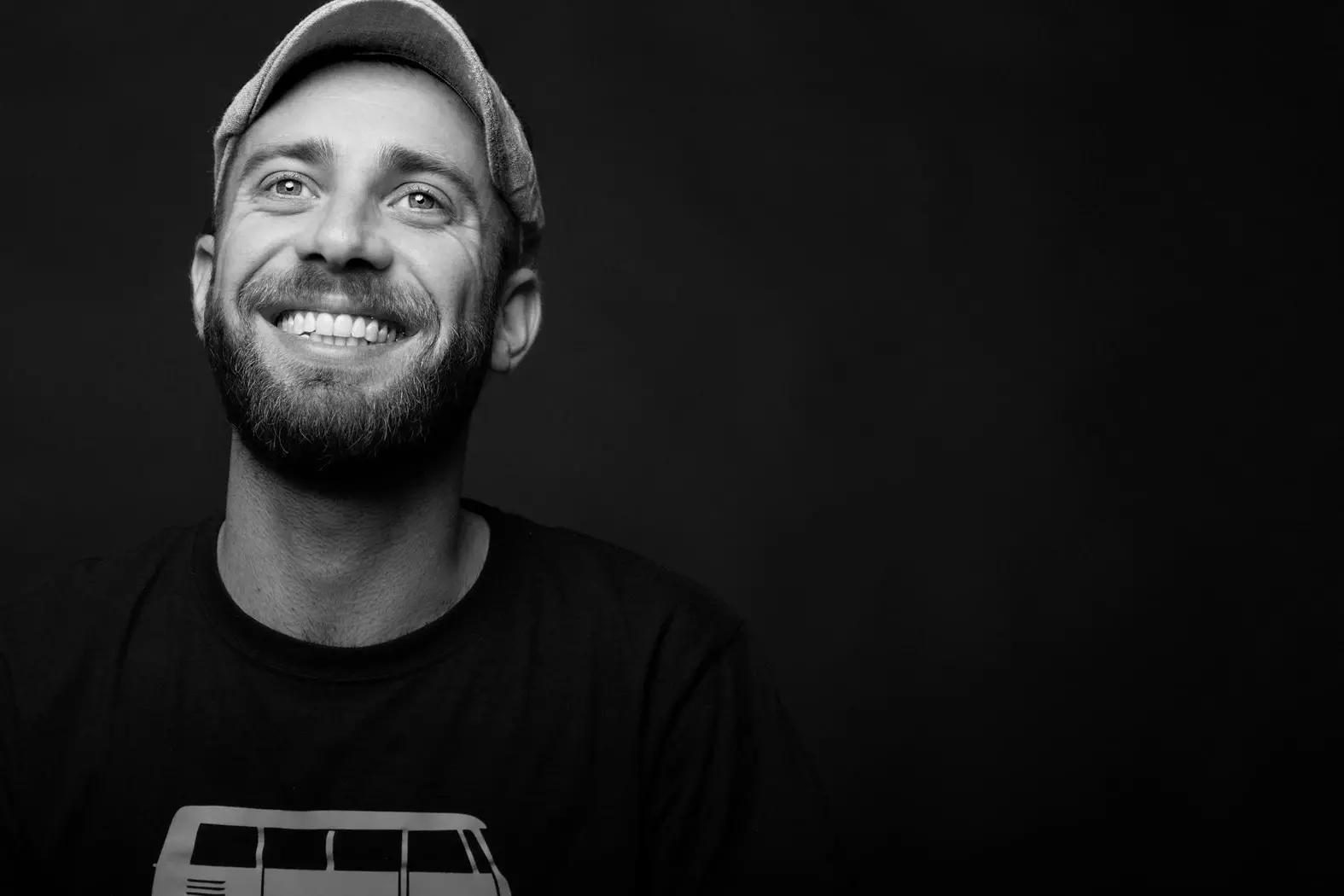
Per restare aggiornato entra nel nostro canale Whatsapp
Life can be a great losing battle, but often all you can do is saddle up and ride away, letting yourself be carried by its gallop. This is what the protagonists of Daniele Paquini 's The End of the Frontier (NN Editore, 2026, 426 pp., also available as an ebook).
It's 1861, Italy is a newly born nation, and America promises an infinite future. Dante Niccolai, a young orphaned Tuscan carter, leaves home to accompany the Ferrini family to the port of Genoa and decides to embark with them for the New World, chasing the mirage of a better life. A correspondence of promises and expectations develops between him and Adele Ferrini, but the vastness of the continent divides them: Dante wanders for years in the heart of America, while Adele finds a new identity among the Cheyenne. Their stories are intertwined with history and the adventures of Carlo Di Rudio, a Mazzinian revolutionary who escaped the guillotine and forced labor, and chose the West as his last stand. And while the white offensive culminates in the legendary Battle of Little Bighorn, a symbol of Indian resistance, a tangle of guilt, betrayal, and violence unites the destinies of Dante, Adele, and Carlo. Historical and adventure novel The End of the Frontier presents itself as an original narrative of the twilight of the myth of the West and a reflection on human destiny, or rather on the destiny of our ambitions, ideals, and dreams.

We asked Daniele Pasquini how the idea for a novel set in the West came about:
I came to the Western through literature, before cinema. My love for the genre was born not many years ago, starting from reading authors like McCarthy and McMurtry. Initially, I was fascinated by certain specific traits of that imagery: I think of the wide-open spaces, the relationship with nature, the struggle between good and evil, the relationship with death and destiny. I became convinced that the Western wasn't just, as I had always thought, a retro genre for white, reactionary men, but that, like the classical epic, it had universal qualities. Then I focused on the historical dimension of the 'conquest of the West,' which was a political process, even before a cultural one, on which America built its identity. And everything that concerns the United States, in one way or another, concerns us all.
What is the Frontier?
For the nineteenth-century USA, it was the land to be "civilized." The so-called Frontier Thesis, expressed by historians as early as the late 19th century, asserted that the process of conquering the West was fundamental in shaping the character of the American people and defining their identity. But in a broader, less colonialist sense—and this was my true literary interest—the frontier is everything we have before us, the space and time yet to be reached. Just like the horizon: it is impossible to touch, and therefore an invitation to continuous exploration.
What unites the protagonists of your novel, besides the fact that they are Italians who migrate?
They are all united by defeat. In an age where we are obsessed with performance—this is, for example, the thesis of philosopher Byun-chul Han—where constant forms of competition and the desire to dominate triumph, we tend to forget how natural defeat is. The 'American Dream' preaches that anyone can achieve success, economic prosperity, and a better life through hard work and determination, regardless of their origins. I believe it is a false promise that breeds individualism, selfishness, and conflict. I therefore imagined characters with different backgrounds, yet all called to confront defeat. It is not intended to be a gloomy vision, but a perspective of acceptance. The characters ask themselves: what is really worth fighting for?
Which of your protagonists are you particularly attached to?
I'd say Dante Niccolai, a young Tuscan carter who, orphaned, left for America almost by chance, after accompanying a family of migrants to the port of Genoa. He's naive, lacking the tools and character to face what awaits him. His is a journey of stumbles and setbacks, yet his long and laborious wandering—only seemingly fruitless—makes him a human being.
What face of America emerges from your novel?
In the same years in which I set my novel, the writer Henry David Thoreau stated that 'a man is rich in proportion to the number of things he can do without.' That, unfortunately, was not the America that won. I portray a fratricidal country, greedy and blinded by the mirage of gold, ravenous and thirsty for land and resources, brutal towards indigenous nations. In the war maneuvers of the vain and unscrupulous G.A. Custer, at the head of the Seventh Cavalry at the defeat of the Little Bighorn, we can glimpse, without too much exaggeration, some traits in common with Donald Trump. An America convinced of its 'manifest destiny,' but incapable of admitting its own responsibilities and its own defeats.
