

Welcome to 2326: Valo Pusceddu makes his weird debut with "Lancette" for Zona 42.
Born in 1996, Valeria grew up in Settimo and is now based in Milan. She has come to the forefront of stand-up comedy.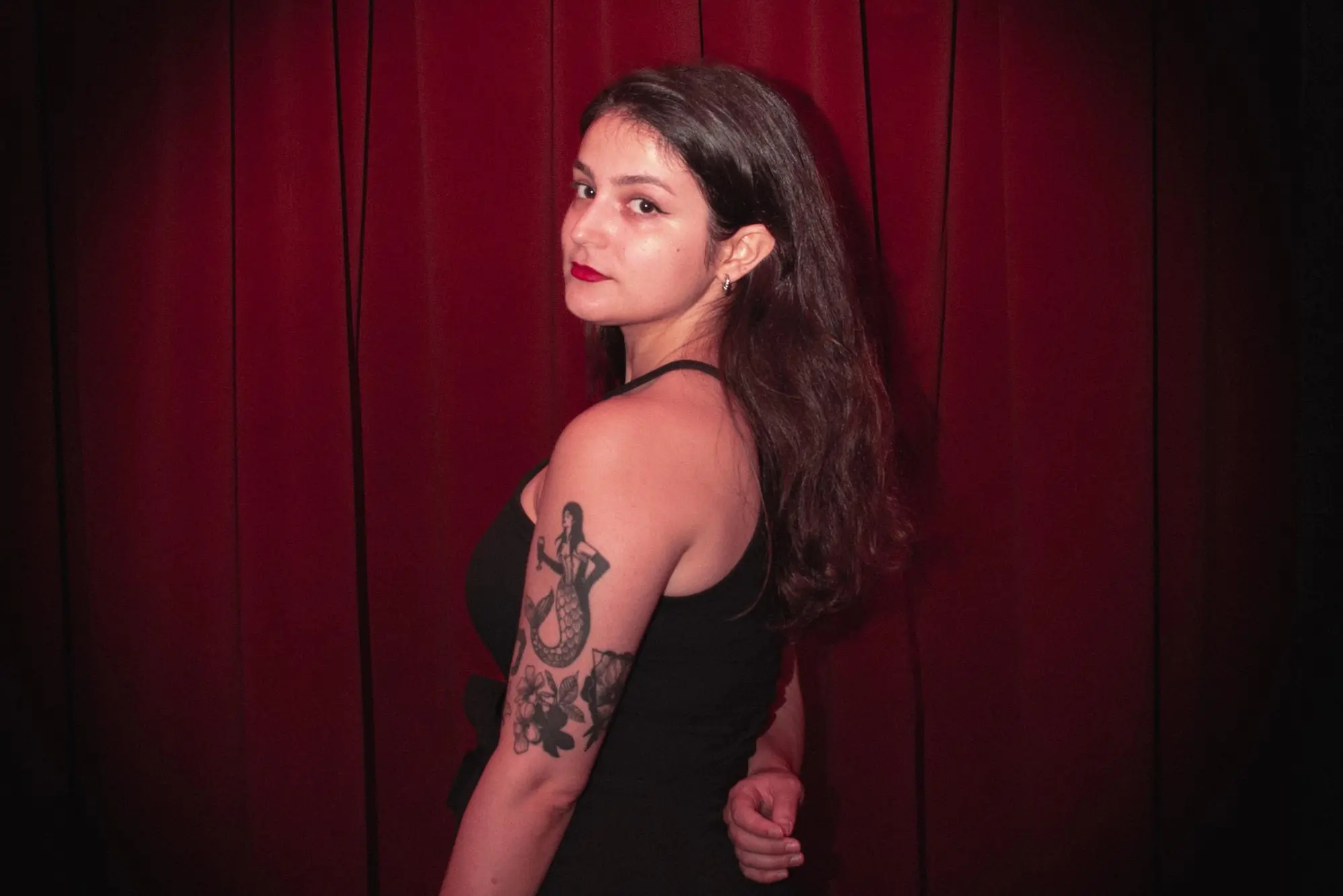
Per restare aggiornato entra nel nostro canale Whatsapp
Bookable but not deliverable: this call-center oxymoron conceals the perfect trap of "Lancette" (Zona 42, 164 pages, €12.90), a short novel by Valo Pusceddu, aka Valeria, born in 1996. She grew up in Settimo San Pietro and now lives in Milan, where, after a stint as a copywriter, she landed on the scene in stand-up comedy, from Comedy Central to hosting the Factanza podcast "A Carte Scoperte." And it's from the coexistence (fun but challenging, we feel after reading the novel) of these two professions—the surgical knowledge of new media bureaucracy on the one hand, the comic timing of those who live on stage on the other—that the author creates a singular and ironic epistolary novel.
The premise is irresistible. Fly&Find, a travel agency, launches temporal tourism and hires two influencers, Carlos and Mina, to document a tour in 2326 of Marseille, Paris, and London. Too bad the future is anything but photogenic: Marseille is submerged by the sea, the bouillabaisse tastes of petroleum, Paris burns at 63°C (145°F) amidst rats and fleas, the Eiffel Tower, well... we'll leave you to discover it. Not to mention what happened in London.
The novel, published in the I Nodi series edited by Elena Giorgiana Mirabelli and previewed at the Turin Book Fair, is constructed entirely from email exchanges, including contracts, brochures, auto-replies, and transcripts of videos shot by the two unfortunates. No narrator, no commentary: the horror unfolds in the blank spaces between messages and in the edits that Lidia, a junior project manager with the usual emoticons, requires of the videos before publication. Gone are the dead seagulls, gone is the mugging in the background, a "tidy-up" of the feverish faces. While bodies decay in the future, social media profiles continue to publish perfect postcards: the digital double outlives the person, and for marketing, that's what matters.
Pusceddu wields corporate language like a weapon: smileys, diminutives, and formal courtesy produce a cruelty that needs neither ruthlessness nor display, right up to the final legal paradox, worthy of a logic textbook, which we won't reveal. The satire strikes everywhere: the climate catastrophe reduced to an experience package, the influencer economy as an expropriation of identities (talented talents hand over passwords, rights, and even unpublished material), the chain of precariousness in which everyone passes on to the next link and the machine never has a head to cut off. It's not a dystopia, because despite the science fiction element, it's all too current. A sign that, perhaps, we've already fallen into dystopia without being able to see it.
