

The girls and boys of 1946
In the book by Alfonso Celotto and Giulia Guerrini, the voice of those who chose between monarchy and republic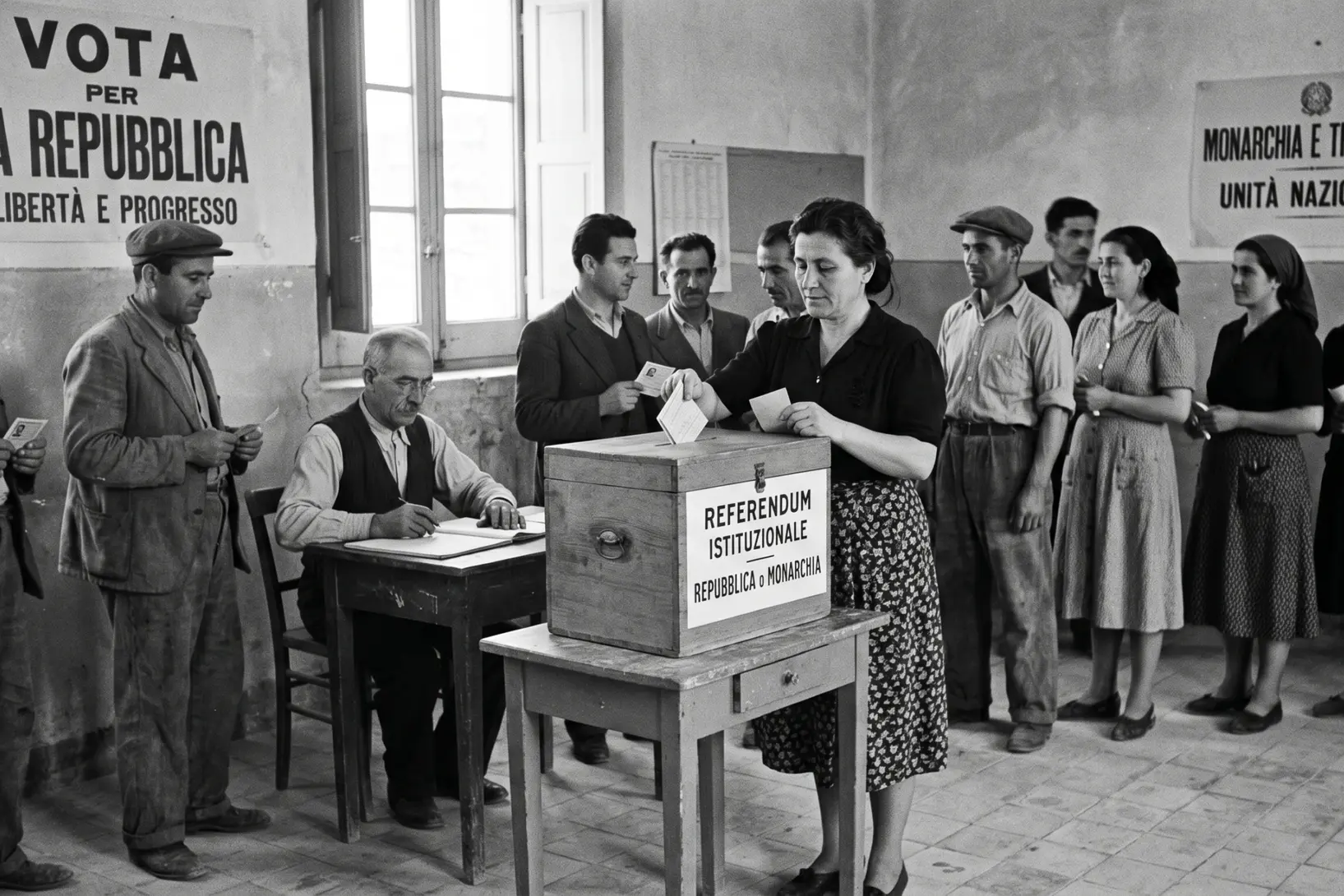
Per restare aggiornato entra nel nostro canale Whatsapp
In 1946 , Italy held an institutional referendum to decide whether to remain a monarchy or become a republic . The referendum had great political significance and a profound symbolic value because it was the first act of the country's regained democracy: by the will of the anti-fascist forces, the people were called to choose the form of their state. For the first time, the decision on the form of the state was not imposed from above, by a dynasty or external political will, but came from below, through a direct and democratic vote by universal suffrage. The people, unaware and bewildered, were called to decide not only on their future, but on the very meaning of their past. Furthermore, the referendum was the first to be held with true universal suffrage: for the first time in the country's history, women too could vote. The decision, which fulfilled a historic demand of women's emancipation movements, was also approved by the most conservative and monarchist forces, who considered women more traditionalist than men and hoped for their support for the preservation of the monarchy.
These assumptions were contradicted by the facts: on June 2, the Italian people went to the polls en masse (89.7%) and chose the republic with a majority of over 2 million votes, equal to 54.3% of the total . The gap was significant (12,718,641 votes against 10,718,502) and left no doubt as to the will of the majority, but the geographical distribution of the votes confirmed the existence of marked differences, since the republican choice was clearly prevalent in the North and Center, while the monarchist choice prevailed in the South . In the following days, the House of Savoy left the country, retreating to Portugal. On June 18, the Republic was formally proclaimed, and on June 28, the Constituent Assembly elected the liberal and anti-fascist jurist Enrico De Nicola as provisional head of state: a new phase had begun for Italy.

The book Viva il Re! Viva la Repubblica (Mondadori, 2026, pp. 288, also available as an e-book) written by Alfonso Celotto and Giulia Guerrini is dedicated to the events of June 2, 1946.
Eighty years later, Celotto and Guerrini retrace that decisive vote in these pages through the direct and passionate testimonies of those who experienced it firsthand. The voices of the protagonists—young people, veterans, women casting their ballots for the first time—now centenarians, evoke the emotions, uncertainties, and hopes that accompanied those crucial days for our Italy. This chorus is accompanied by historical reconstructions, the thoughts and even intimate doubts of political leaders, and the uncertainties surrounding the vote: from the uncertainties of the counts to the legal challenges, from the controversies over fraud to the still-unsolved mystery of the destroyed ballots. What emerges is a portrait of a divided Italy, caught between the drive for change and the desire for stability, yet containing within itself the seed of hope. In short, a valuable story for understanding our past and fully understanding the meaning of our Republic, a project still alive, built vote by vote in a wounded Italy, yet determined to be reborn.