


The Caravaggio Enigma
The life of the great artist in ten masterpieces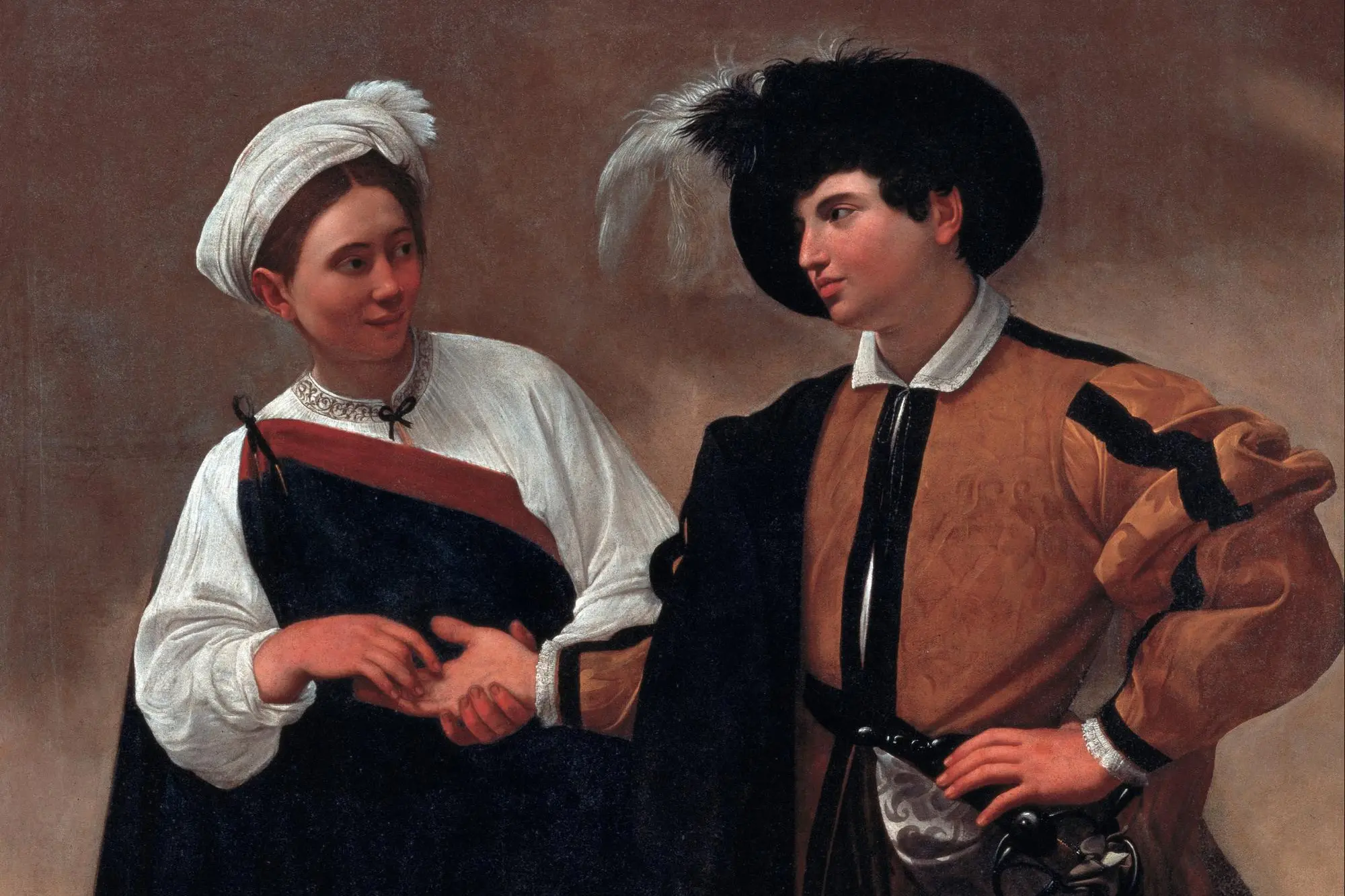
Per restare aggiornato entra nel nostro canale Whatsapp
Until the end of the 16th century, most paintings depicted historical or religious subjects, the only genres considered "noble," along with portraits, which were usually dedicated to important figures (popes, cardinals, princes). In those years, however, artists developed a desire for greater realism, leading them to paint scenes of everyday life, still lifes, landscapes, and domestic interiors. Thus, new pictorial genres emerged, focused on the depiction of reality.
Caravaggio was the first and best painter to embrace realism, breaking with tradition in an original and personal way . Caravaggio's realism shocked his contemporaries: he chose to depict not only moments of everyday life, but even sacred figures, not in an idealized manner but taking as models common people, with their miseries and the signs of a hard or dissipated life. The scenes he depicted were then immersed in dramatic contrasts of light and darkness, the forms emerging from the darkness with a strong impact and a power never seen before.
Because of his originality and his visual and evocative power, Caravaggio simultaneously impressed and scandalized the men and women of his time . He was an enigma, also because within him coexisted the great artist, the genius, but also the recklessness of a man who seemed incapable of containing his passions. Too modern to truly belong to his time, too elusive to be confined to dates and documents, Michelangelo Merisi, as Caravaggio was born, continues to defy definition, suspended between presence and absence. The abundance of information about brawls and trials that have contributed to perpetuating the cliché of the cursed artist to this day is contrasted by gaps and irregular traces that punctuate the mysteries of his apprenticeship, his escapes and crimes, his pictorial revolutions, fueling his fascination. It therefore seems almost impossible to outline a traditional biography of Caravaggio.

Perhaps for this reason, Francesca Cappelletti, director of the Galleria Borghese in Rome and one of the artist's leading experts, presents in her essay "Caravaggio" (Mondadori, 2026, pp. 192) not a conventional biography, but rather a passionate journey to discover the life and genius of Michelangelo Merisi through ten of his most famous works. These are the same works that his contemporaries loved and hated, in both cases with little restraint, indeed, with much excess. Thus, in the pale face of the sick Bacchus, we can perhaps recognize that of the painter abandoned to the excesses of wine, or his fragile and suffering image; in the second thoughts discernible in the dramatic Judith and Holofernes, the tormented nature of the author emerges; in the figure in the background of the Martyrdom of Saint Matthew , Caravaggio's self-portrait, we perceive an unfathomable melancholy. A work like The Fortune Teller , painted around 1595 and now housed in the Capitoline Museums in Rome, is striking for its realism and modern anti-rhetorical tone (a second version of the same subject was painted by Caravaggio a few years later and is now owned by the Louvre in Paris). The painting demonstrates Caravaggio's realist and anti-rhetorical streak and his interest in subjects drawn from everyday life. The title only partially sums up the work's narrative: a gypsy woman, easily identifiable by her turban and woolen cloak worn askew, reads a young man's hand, but at the same time deftly steals a ring from his finger. The inspiration for the painting, therefore, is not a heroic deed or a moral fable, but a skillfully executed deception, as must have been many along the streets of Rome at the time, already a destination for thousands of pilgrims. What is impressive, beyond the unique nature of the subject, is Caravaggio's pictorial rendering, his ability to represent the situation and the characters with a realism that was entirely new in the painting of the time: the vain young man who wants to know his future, proud of his beautiful suit, his plumed hat and the sword at his side; the gypsy with a look that flashes with the cunning of someone accustomed to using any expedient to make a living.
What we've said is just one example of how paintings are the best way to discover Caravaggio . Paintings extraordinary for their ability to capture the reflections and splendor of black, bringing the very quality of the materials to the canvas with a skill that is extremely difficult to match, perhaps developed amidst the many lights and shadows of his life. A painting capable of forever changing the destiny of art and keeping alive the enigma of Caravaggio: an enigma in which, once again, his paintings speak.
