


That sacredness that is in all of us
The Saint of Others, Anna Voltaggio's new novel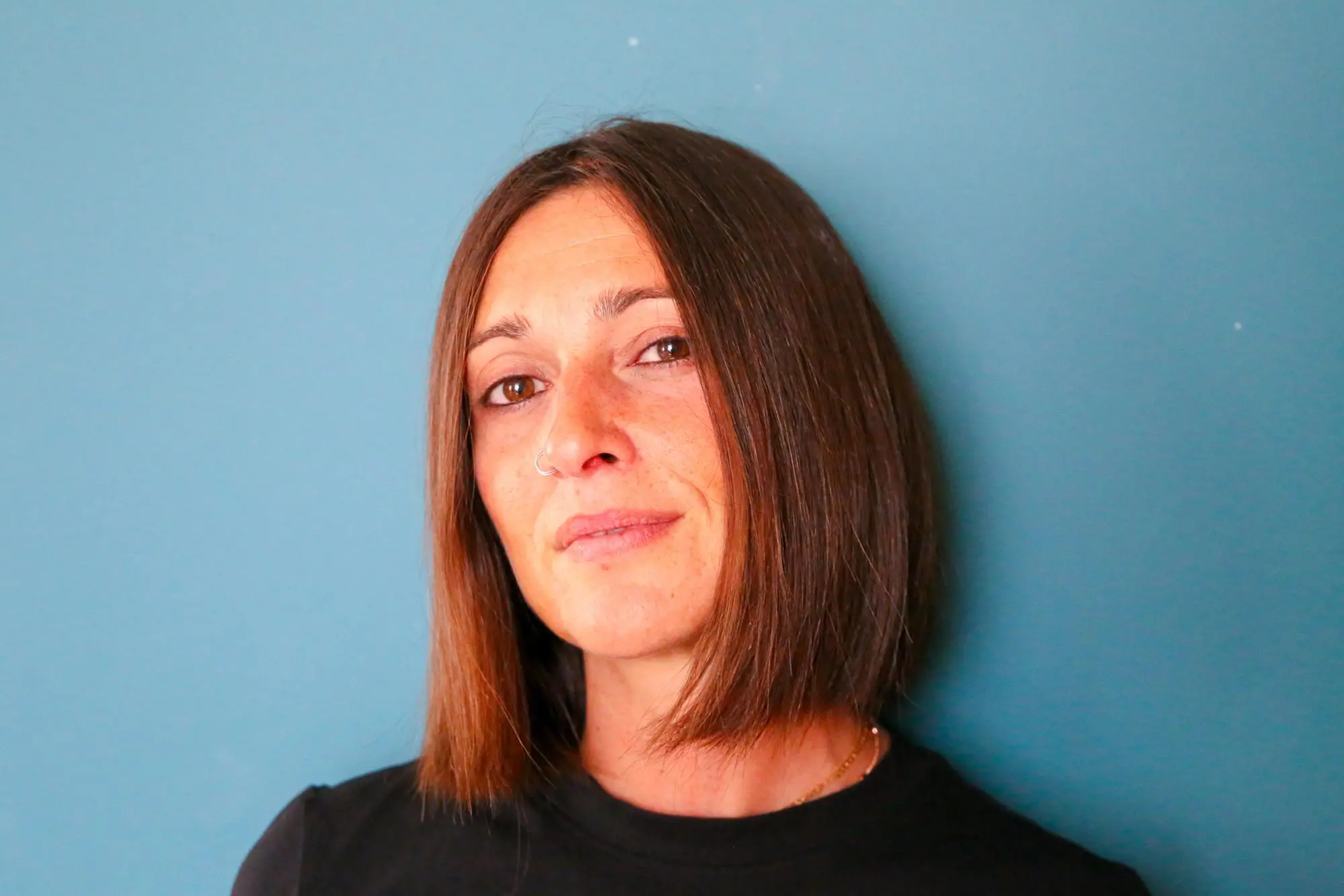
Per restare aggiornato entra nel nostro canale Whatsapp
In spring, life resumes or changes forever. Thus Nica disappears one spring day, severing her ties with Tommaso and leaving only a brief farewell note. Of Nica, laconic and fragile, fickle and haughty, of her mild indifference to the things of the world, of the entirely new passion she had poured upon him, of her being both living flesh and pure spirit, Tommaso is left with only a handful of memories. And the regret of never having imagined his future with her. He searches everywhere for her, sleepwalking through the streets of a Palermo that seems unwilling to give her back. But finding her is necessary because it means rediscovering the most alive part of himself, the one that her desire has revealed to him. Her story runs parallel to that of Gelsomina and her daughter Margherita, who arrived as a gift thanks to a vow made to the saint of the impossible, Saint Rita. A woman and a little girl live their days in exile from their family, in a small house where time stands still and the sea swallows up everything, until the day real life bursts in. From that bond unfolds a story of escapes and returns, of untold truths and conquered freedoms.
These are the ingredients, the protagonists of The Saint of Others (Newri Pozza, 2026, Euro 19.00, pp. 176. Also available as an ebook), a powerful and hypnotic novel in which Anna Voltaggio disregards the materialism of our day, making room for the sacred dimension of even the most secular existences.
We then asked Anna Voltaggio, first of all, what the sacred is for her:
In this book, I explore the sacred beyond its association with the Catholic religion, because I believe the concept pertains to even the most secular of existences. In this story, the sacred is a symbolic force that permeates the female characters in particular.
Saint Rita seemed to me the perfect figure for this reasoning, a character full of contradictory nuances that embodies the image of a maternal and obedient feminine, but also of a feminine that demands freedom from the confines of family. How do we become who we are if not through the choice to believe deeply in something? We make family 'sacred'—a love, an idea, a principle—and from this we choose who to be and what to value and trust. It's a dimension of stability necessary for us, as we continually change and transform ourselves. Sometimes we become capable of tearing down our personal totems and changing our minds, but we prudently build others, because it would probably be frightening to live without them.
Does it still make sense to talk about the sacred today?
Even if we invented God, gods, heavens and hells, saints, if we told stories of witches and prophets, attributed magical powers to places and objects, wore amulets, consulted oracles, that doesn't mean all this isn't real. Like everything born of the imagination, it may be imperfect or contradictory, but the power it assumes and the conditioning it invokes is authentic. Today, no less than in the past, the sacred continues to possess value. Men and women, more or less consciously, choose what to believe in and feel the strength of those beliefs to self-determine.

Let's look at the novel's protagonists, and especially its female protagonists. What kind of bond unites Tommaso and Nica?
I wanted to tell the story of a bond untethered by social norms, a clandestine love, born by chance or through a series of coincidences, just like when we fall in love. Tommaso is married, so his relationship with Nica is a secret, a love without a plan, concentrated in a continuous present. Nica questions herself, without demanding anything, Tommaso seems satisfied but reacts with indifference.
A pair of lovers are isolated, they have no social life, and when their relationship ends, no one notices. Their memory, their passing, is invisible. I was interested in following the emotional state of a character who suddenly feels empty, despite his life seemingly remaining intact. In Nica's absence, Tommaso realizes his own incompleteness, and only at the end of this obsessive search for her does he perhaps find some answers to questions he'd never had the courage to ask himself.
What unites and divides Gelsomina and her daughter Margherita?
In this novel, I tell a matrilineal story, unfolding across two parallel time periods. Gelsomina and Margherita, Nica's grandmother and mother, respectively, have a unique experience because Gelsomina is exiled by a husband wounded in his pride who decides—without anyone's opposition—to relegate his wife to a house outside the city, separating her from their three children. It is in this house that Margherita will be born, thanks to a vow made to Saint Rita, protector and ally of women. Mother and daughter live isolated from the family context and cling to each other as the only form of love possible.
The shadows between them appear once they return to Palermo, reintegrated into the social and family context so deeply immersed in the patriarchal system of an archaic and dark Sicily, where a natural violence pulses. Margherita, growing up, accepts that her family of origin represents a limit to her freedom, and to assert herself in the world, she chooses a clear break, desacralizing the family, even if this means ideally abandoning her mother. It is this break that is transmitted in my story, the black hole in Nica's life, who has no access to her memory because her mother, in order to survive, denied it to her. Even that mother-daughter relationship contains the sacred and its denial.
The novel also evokes the guilt we all bear and the forgiveness that only we can give ourselves. What does forgiveness mean to you?
Forgiveness is a complex process that intertwines guilt, memory, and relationship: it's an experience that passes through memory and its reworking. In my story, Nica feels the impossibility of forgiving her mother's emptiness and silence, but she still feels the need to reconcile with her. She explores herself, seeking connections, but also escapes from these connections, to try to understand her mother's choices and thus be able to forgive her. Forgiveness requires empathy, and empathy is the basis of emotional and human relationships. Then there's also a collective dimension to forgiveness; a community can construct a shared version of the past to mitigate the pain.
