

Sardinian exports, bad news from China: -58.3%. Boom in Germany.
Collapse of SMEs, Meloni (Confartigianato Sardegna): "Small businesses are struggling to maintain their position in foreign markets."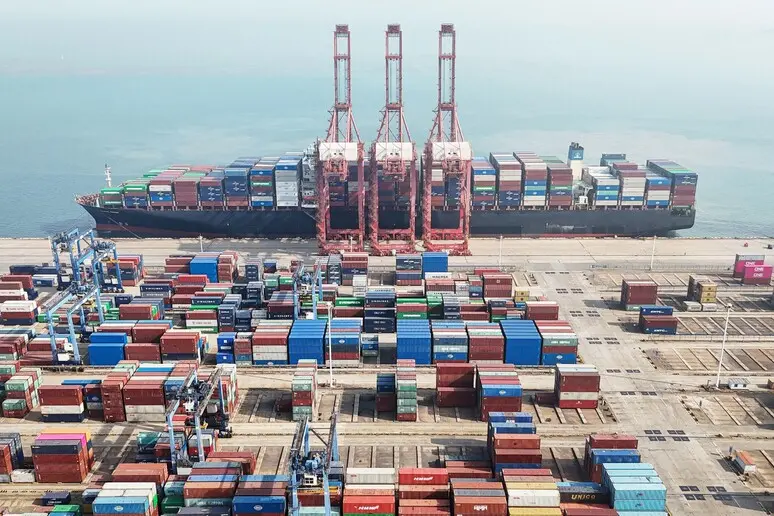
(Handle)
Per restare aggiornato entra nel nostro canale Whatsapp
Sardinia's manufacturing exports have slowed. Sales of Sardinian products abroad, such as food, wood, furniture, textiles, metal products, clothing, jewelry, as well as gasoline and refining products, recorded a worrying 17.5% decline in the six-month period compared to the same period in 2024. This puts the region at the bottom of the national rankings, led by Tuscany with +12.4%, Abruzzo with +10.2%, and Campania with +2.2%, compared to the national +2%. These trends were positively influenced by sales of pharmaceutical products.
The trend for Sardinia remains unchanged when considering exports from micro, small, and medium-sized enterprises. The report, in fact, reports a 29.8% decline in Sardinian sales (again compared to 2024), with Lazio (+7.8%) and Umbria (+6.8%) leading the ranking, compared to the national average of -1.2%. The data comes from an analysis conducted by the Confartigianato Imprese Research Office, based on ISTAT data for the first half of 2025, on sales of Sardinian products abroad . Across the various sectors, Sardinian fashion saw a leap forward, recording a +0.8% increase, compared to the national average of -3.8%. This ranking opens with an 8.4% increase in Umbria and closes with a -44.9% decrease in Molise. Sales of Sardinian mechanical engineering also performed well, with a +4.9% increase, opening the ranking with Tuscany at +11.1% and closing with Valle d'Aosta, compared to the national average of -1.8%.
The analysis also highlights the positive trend in Sardinian exports to Germany , with +83.1%, a feat that places the island in second place after Friuli with +93.7% and a national average of +2.3%.
Conversely, bad news comes from sales in China. Manufacturing exports to the Far East fell by 58.3%, placing the island last in a ranking that sees Italy's decline by 14%.
"Sardinia's manufacturing export performance in the first half of the year highlights a sharp slowdown that deserves attention," comments Giacomo Meloni, President of Confartigianato Imprese Sardegna . "Our region is showing less robust growth than the rest of the country, making it one of the regions most penalized by international competition." "This is a worrying trend," adds Meloni, "especially because it affects not only the large manufacturing sectors, but also micro, small, and medium-sized businesses, traditionally the heart of the Sardinian economy, which are struggling to maintain their position in foreign markets."
"The overall picture therefore suggests," Meloni adds, " the need for a renewed commitment to supporting internationalization, with targeted actions to strengthen the competitiveness of businesses, consolidate existing markets, and identify new development paths." "We need," she emphasizes, "to refinance foreign missions and innovative initiatives to support artisanal and small businesses on international markets. Only in this way will it be possible to reverse the trend and return Sardinian exports to a path of stable and sustained growth."
In all of this, Confartigianato Sardegna points out that, according to the latest available data for 2021, only 633 Sardinian companies have sold their products abroad. In fact, just 0.6% of Sardinian businesses have undertaken trade with Europe and the rest of the world, placing Sardinia fourth-to-last among Italian exporting regions. "Unfortunately, the Sardinian companies that have embarked on the export path are still too few," emphasizes the President of Confartigianato Sardegna, "and these numbers place the island at the bottom of the national rankings. We hope that the business system and institutions will work together to increase the number of companies that want to focus on foreign markets and increase their turnover."
Confartigianato Sardegna also believes it's necessary to establish a fund dedicated exclusively to the exports of micro and small businesses, and above all, simplified operating procedures are needed. " A valuable tool is undoubtedly the role of the Digital Temporary Export Manager, which should be further strengthened because it avoids burdening small businesses with structural costs and can serve as a training interface for internal company resources," Meloni concludes. "It's important to empower SMEs to stand on their own two feet, especially to take advantage of the opportunities offered by the growth of digital commerce. The use of this tool will need to be encouraged and extended to sole proprietorships and partnerships."
(Unioneonline)
