

Rare earth "hunters" arrive in Gonnosfanadiga. The mayor says "No to the project."
The next step could be the opening of a new mine: "Concerns about the possible environmental effects"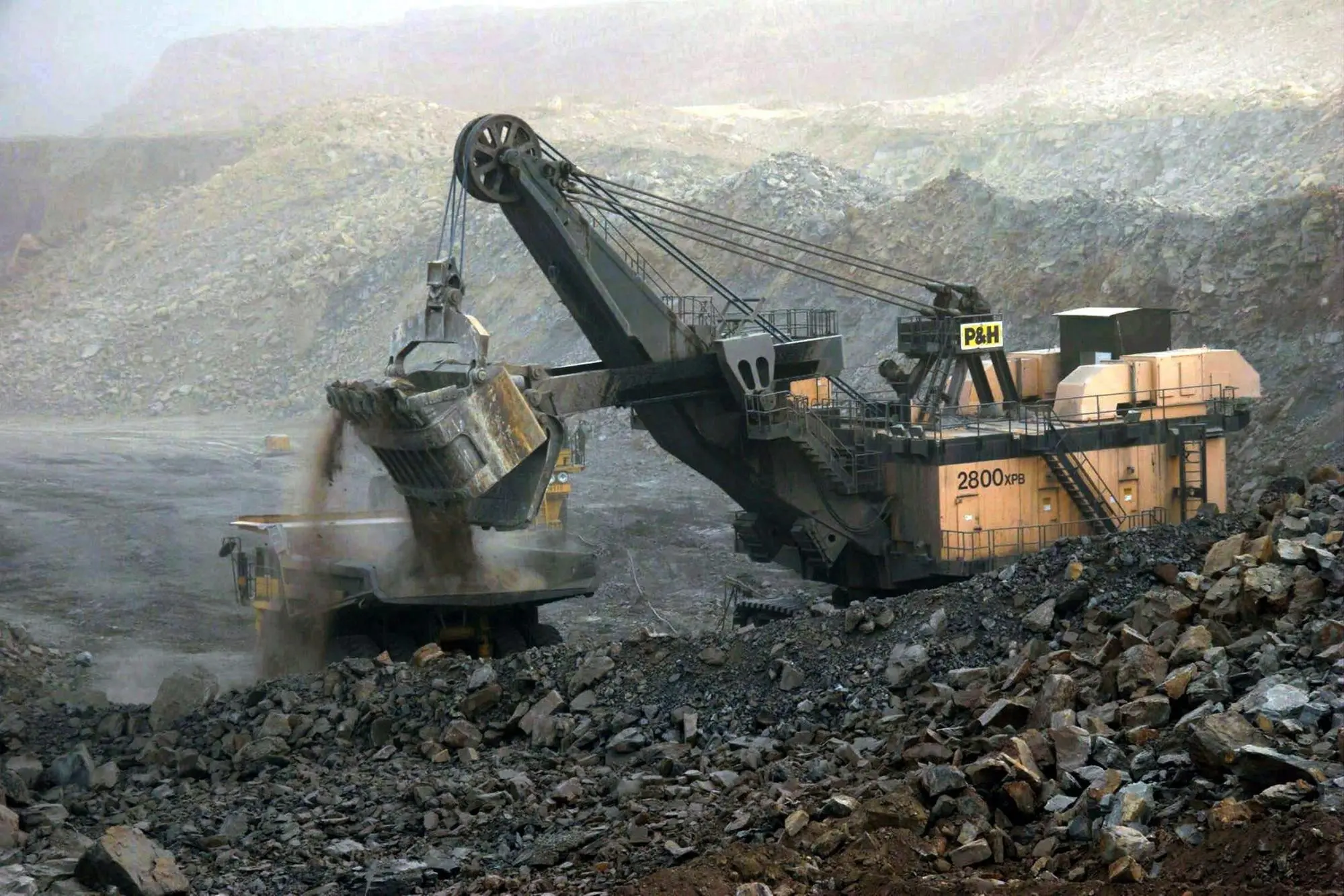
(Ansa - EPA/QILAI SHEN)
Per restare aggiornato entra nel nostro canale Whatsapp
Rare earth prospectors are arriving in Gonnosfanadiga, with Mayor Andrea Floris sounding the alarm: "We will not accept environmental devastation." At the heart of the matter is the "Pira Inferida" mining exploration project, presented by the company Raw Materials Italia srl, for which a permit application has been submitted to the Regional Department of Industry. The company intends to search for copper, tungsten, bismuth, antimony, cobalt, nickel, and neodymium on an area of nearly two thousand hectares in the mountains of Gonnosfanadiga.
Warning and risks
But it's not just the exploration activity that concerns the municipal administration: if economically exploitable mineral deposits are identified, the next step could be the opening of a new mine. This scenario, the council considers incompatible with the future envisioned for the area. Mayor Floris has openly communicated the administration's opposition, emphasizing that new mining activity is not part of the town's development plan, which is geared toward tourism and environmental protection. Gianni Mandis, councilor for urban planning and a professional geologist with expertise in the Gonna area, also highlighted the potential environmental consequences. "A project of this kind is truly unthinkable in our magnificent mountains, as it would lead to the demolition of impressive portions of rock, destroying local flora and fauna," he said. "There are also massive canals, subject to water flow for much of the year, that cut across the surface of our mountains," explains Mandis, noting their connection with the Rio Perda de Pibera, the Rio Zairi, and the Rio Piras. The concern also concerns possible contamination from mining operations.
Not convinced
The administration's position, therefore, is already clear. "We have expressed to the company representatives our absolute opposition to the project," Floris declared. And faced with the possibility of the matter continuing, the mayor warns: "We will also be ready to mobilize, should this become necessary." The issue now hinges on the authorization process. But Gonnosfanadiga has already given his answer. "Sardinia in the past, even the recent past, has given too much. Enough is enough," Floris concludes: "Tottusu impari po difendi sa terra nostra!"
The Sulcis case
Meanwhile, in Sulcis, a delegation from MIMIT, MASE, and ISPRA conducted a two-day institutional mission to Monteponi, Portovesme, and Silius, as part of initiatives to develop critical raw material supply chains—mineral resources of economic importance to the EU. The delegation visited several of the main mining and industrial sites, learning more about Igea's environmental remediation efforts, and toured the CESA laboratory and the Portovesme srl plant. The second day was dedicated to the Silius mine. "Sardinia," said Industry Councilor Emanuele Cani, "has a mining, industrial, and scientific heritage that is unique in the country. The discussions with MIMIT, MASE, and ISPRA confirm the increasingly central role the island can play in the country's industrial and mining policies."
Federico Meloni
(Antonella Pani collaborated)