

Child Neuropsychiatry at the Microcitemico Hospital, a letter to Todde: "A place unworthy of a civilized country."
Inadequate facilities, bathrooms in terrible condition, insufficient staff, parents forced to stay with their children on inadequate bedding: Asarp has issued a detailed complaint.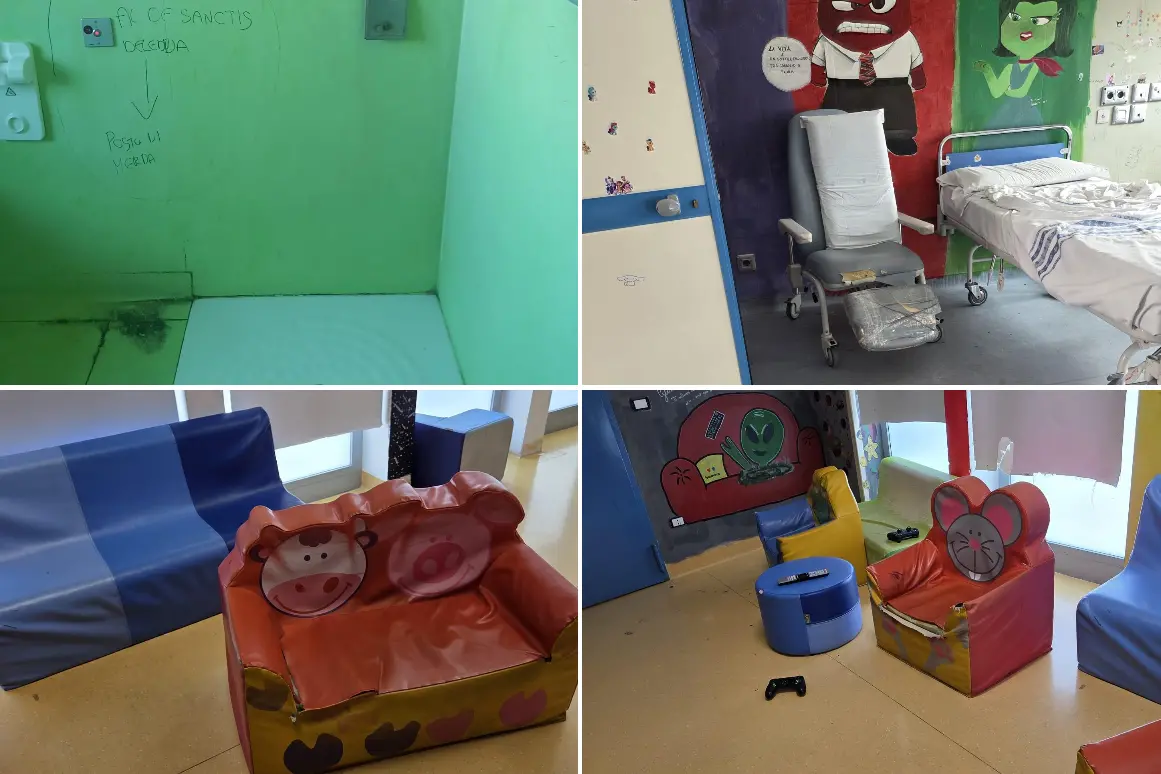
Per restare aggiornato entra nel nostro canale Whatsapp
"A place unworthy of a civilized country." The staff isn't the one being blamed. But the facility is. The Sardinian Association for the Implementation of Psychiatric Reform ( ASARP ) described the conditions of the Child Neuropsychiatry Department at Cagliari's Microcitemico Hospital in a lengthy document sent to the regional health department, and then to its president, Alessandra Todde. It describes a clinic on the fourth floor of the hospital on Via Jenner as unsuitable for fulfilling its role of caring for minors with various degrees of mental health problems. And patients from all over Sardinia flock there, often without alternatives due to the lack of local facilities. Despite the increased demand for care.

"The entire facility is obsolete, despite its status as a pediatric hospital," writes Asarp president Gisella Trincas. It's a ward with no outdoor space, "with inadequate, worn, and neglected facilities. The capacity is seven beds (not enough to meet actual needs), but in emergency situations, it can accommodate nine to eleven patients. Some hospitalizations are long, requiring multiple admissions, due to the inadequacy of community services for prevention, diagnosis, and treatment. These services should be spread across the region and open at least twelve hours a day."

But according to Asarp, what is truly unacceptable for family members and patients, as well as for the healthcare workers who work there, is the state of the ward: "You enter through reinforced doors and find yourself in sad, bare corridors, except for a few dark and gloomy murals. The furnishings are sparse, damaged and worn: a few foam sofas, ruined in several places, unsuitable for all the patients, mostly teenagers." In the multipurpose room, there are "three rickety tables and seven chairs. The rooms are old and bare, the beds old, the bathrooms equally bare and without any hygienic logistics."

Adding to the situation is the staffing shortage, which impacts the relatives of young patients: "Parents of hospitalized minors are asked to be present on the ward 24 hours a day, even though the necessary environmental conditions are not in place. The reasons given to family members for this request are varied, but it is perceived as the quickest solution to address the severe staffing shortage. This shortage is evident in the absence, especially in the afternoon, of staff who "circulate" around the ward."

When family members are asked to spend the night in the ward, "they are provided with a worn, patched armchair, while during the day they are constantly moved back and forth depending on the situations that arise . During the adults' stay, there is very little staff in the afternoon and, above all, there is no activity involving the minors, resulting in an increase in crises. The hospital rooms are bare, with only old, worn beds , and the clothing and products of the hospitalized minors and adolescents are stored in a closet of about one square meter, inside shopping bags. As a result, it is often difficult to distinguish dirty from clean clothes. Exactly as happened in the Psychiatric Diagnostic and Treatment Services for adults after the closure of the asylums."

The bathrooms have a toilet and shower tray, and some even a bidet, "but there's no designated place to put down a bathrobe and other items of clothing. Parents, both male and female, also use the bathroom reserved for hospitalized minors and adolescents. It's even common for a male parent to sleep in the room with his daughter and another patient without the latter's caregivers being informed in advance and giving their consent."
When some family members asked for an explanation about the lack of supervision, they were told that the staff "have everything under control through video surveillance, except for a few cases where, despite the fact that everything is removed, some things are even senseless, but some children cut themselves, pull out their hair, or ingest various pills stolen from their treatment, evidently without careful supervision, putting their lives at risk. This demonstrates that staff cannot be replaced by either video surveillance or families."
Not only are minors in Sardinia small in overall numbers (12.7% of the regional population versus a national average of 15.1%), "but they increasingly find themselves living in conditions of hardship and vulnerability." And when they do need assistance, they find facilities deemed inadequate. Local facilities are undersized compared to demand: "This supply/demand imbalance," Asarp emphasizes, "is confirmed by institutional reports and by the increase in waiting lists. According to the regional waiting list plan, child neuropsychiatry also has priority classes: U (urgent) within 72 hours, B (short) within 10 days, D (deferrable) within 30 days (visits), P (scheduled) within 120 days. These are the maximum times allowed by law. Available evidence indicates that very long delays are occurring. In some areas of Sardinia, waits are months or years for an initial visit to a NPIA." There is no reliable data, because "Sardinia does not yet publish complete access data in a transparent and uniform manner."
The family members who turn to the association "are devastated by dramatic situations that have been dragging on for years. They are parents who feel guilty for not having been adequate and for being responsible for the suffering of their sons and daughters, and are consequently ready to suffer any punishment . And the punishment they must serve comes in the form of putting their lives on hold, putting their own needs on the back burner, losing their jobs or risking losing them. They live with constant unease and anxiety, also caused by unwelcoming environments and slow responses. For some, years have passed before they are even taken into care. And we know well that for minors not taken into care promptly, the risk is a failure to recover (which should always be possible), a transition to adult mental health care, and the condition becoming chronic."
Enrico Fresu