

Cagliari, life as a rider: waiting for a call worth 3 euros or a little more
Nowadays, only foreigners handle deliveries. "Italians? They prefer to wait for another job."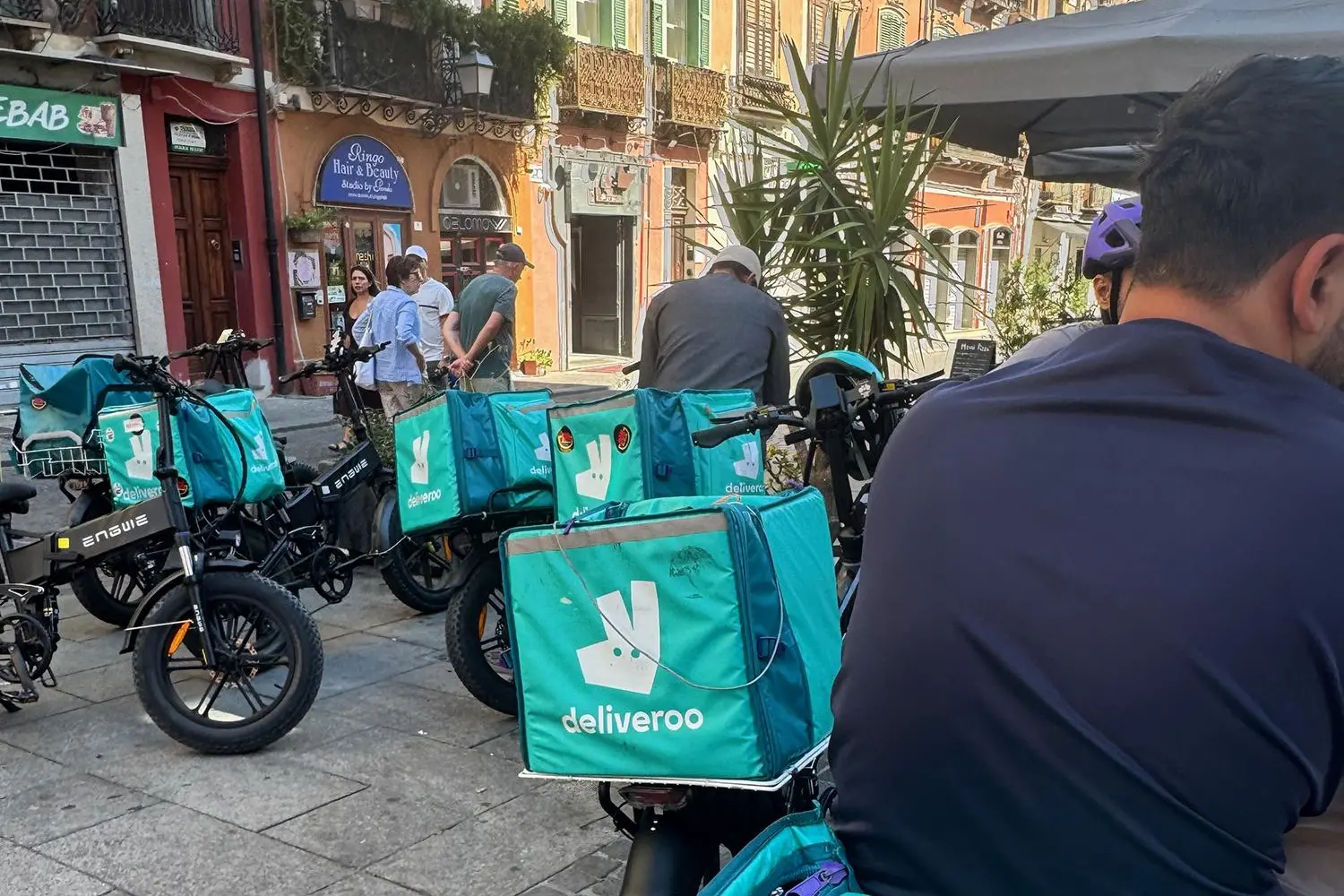
Per restare aggiornato entra nel nostro canale Whatsapp
Perhaps it's a coincidence that those waiting for the call in front of the statue of Carlo Felice suddenly stop understanding. It happens every time you mention the word "rights": it's enough to make them forget their Italian—sometimes even their politeness—and revive their initial mistrust. In the best of cases, they'll point you in the direction of the road ahead. Because for them, that's all there is to it: rights; who knows where the rest is. And if you dare mention gangmastering, you end up waiting too: "No, Italian. I don't understand," says the young Pakistani man who, in half a second, blends in with the crowd of tourists and pigeons. It's no use insisting, even in the office on the corner of Corso and Via Sassari; the one outside, with extremely flexible but tough hours and twenty daring delivery drivers competing in a market where local workers are increasingly rare. In fact, in the morning spent chasing these modern-day Forrest Gumps—on bicycles but perhaps without any protections—you don't even meet a single one. We end up having to argue about this as well, as well as everything else.
Timed days
They look like lost souls, their eyes glued to their cell phones while the algorithm decides their fate. A thankless, certainly inhumane, dynamic that ultimately seems to pit everyone against everyone else. "We don't decide the deliveries; others do. You can only refuse," explains the Bangladeshi with the unpronounceable name, who immediately says, "No photos and no videos." He also explains that if you miss a delivery from above, you end up not working for several hours.
A sort of punishment, which weighs heavily and seems like psychological blackmail in a situation that's already anomalous from the ground up. "They pay very little, three euros per delivery," says Ali, a 27-year-old Pakistani with a family to support back home. Then he thinks better of it and says it's three euros and seventy cents, "but only with Deliveroo," because with Glovo, he assures us, it's twenty cents less. "There are days when you don't earn anything, others when you make a lot of deliveries, but there's so many of us and there's not enough work for everyone," interjects the compatriot wearing the turquoise t-shirt from the platform with a heart in London and arms everywhere.
You have to be patient to discuss figures, which the bike couriers brought by Covid—excluding those who won't even talk out of fear—would reduce to a too-generalized meager sum. And with that meager sum, it turns out that when things are going very well and you work seven days a week, all day, you can earn around €1,600. Some say the record is €1,800, "but you only have time to sleep."
Fatigue and silence
At a glance, there doesn't seem to be much joy, but there's no shortage of complaints. "It's tiring, but if you have no other options, you end up accepting anything": those waiting in Piazza Yenne say it, and then their colleagues at the other office repeat it; those who colonize the corner of Via Sassari and Corso around 1 p.m. There are twenty of them, and then they multiply like a giant. You go outside and see them all silently waiting. Mostly Pakistanis, then Bangladeshis and a few Afghans. No Sardinians. And if you ask those who work, they all give the same answer: "Italians don't accept these conditions; they look for and find other accommodations. We have no alternatives."
And then you find them standing on the street, ready to run to the hungry people waiting for their arrival at home. "How much do I have left? Enough to pay for a room with other compatriots. I send the money to my wife and children who are in Pakistan. I support them and my parents too." And for a moment, the effort seems even greater.
The sun is beating down hard this late morning, where only they are running around and the others are sitting down to eat. And they seem a little annoyed to see them waiting at the entrances to restaurants and even in the markets.
The irregularities
They say—the boldest ones—that some people even rent out accounts, perhaps because they don't have the required residency permits or other documents. But not a word more: if you try to delve deeper, you get only silence, and needless to say, they swear they're perfectly legal.
Even the group stationed in front of the Marina McDonald's, which half an hour after 1 p.m. is already full inside, and there are six riders outside. Here too, all foreigners. They too are waiting for the call and, at the same time, a better future. "I'm studying to work in hotels, I speak three languages," the young man with the jet-black eyes and the burgundy shirt says proudly, then fades away in half a second when you ask about rights and protections. And if you mention gangmastering, there's total silence.