

"The True and Fictional History of the Umbrella": Marion Arankine's entertaining essay
One of the eight auspicious symbols of Buddhism, and a lucky object in the face of those who still think that opening a "rain umbrella" at home brings bad luck.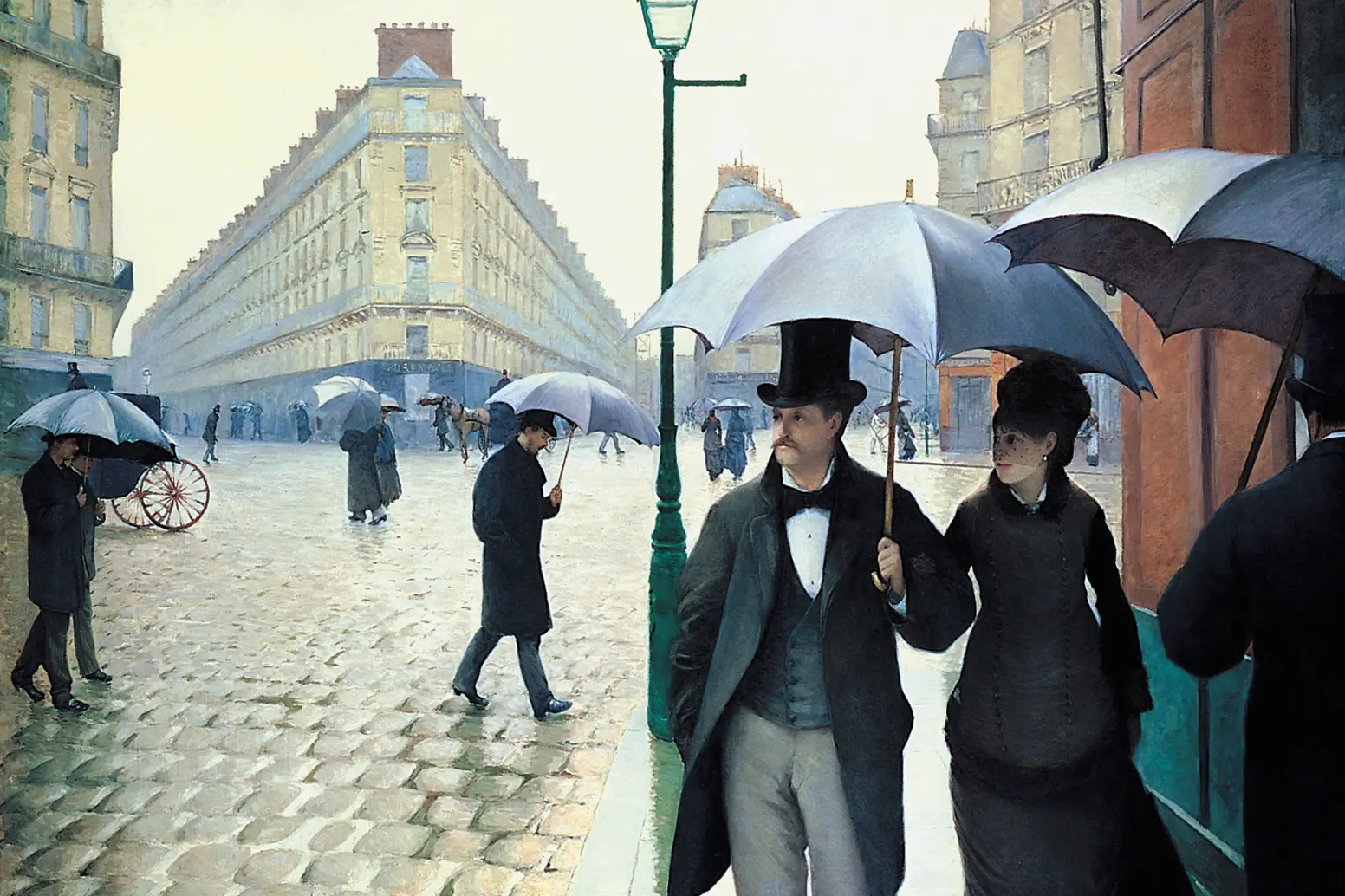
Per restare aggiornato entra nel nostro canale Whatsapp
The umbrella? It's now practically disposable and disliked by younger generations, who consider it a cumbersome, outdated tool. In short, the traditional umbrella isn't trendy and hasn't yet found a designer or influencer who can make it indispensable for being cool and fashionable, as it was in many past eras. Umbrellas, in fact, have always had their ups and downs in public opinion. Looking back at history, we know that umbrellas were used even by the most ancient peoples. They were symbols of shelter and protection and associated with the idea of royalty as far back as ancient Egypt, the Assyrians, and the Persians.
The umbrella also has religious ties: it is one of the eight auspicious symbols of Buddhism, a lucky object, despite those who still believe that opening an umbrella indoors brings bad luck. Marion Rankine's entertaining essay, "Forget-Me-Not: A True and Imaginary History of the Umbrella" (Il Saggiatore, 2026, pp. 256, also available as an e-book, translated by Ludovica Mariani), aims to demonstrate precisely how this object, from the most luxurious to the most functional, carries with it a history spanning centuries, continents, and revolutions.

Marion Rankine's is a surprising investigation, which reveals how the umbrella has become over time a symbol of power, freedom, ingenuity and rebellion: from the imperial courts of Asia, where it represented divine protection, to the streets of Victorian London, where it became a sign of social ascent for the bourgeoisie, so much so that a twenty-year-old Robert Stevenson could write in his essay The Philosophy of Umbrellas (1871) that the umbrella was now «the true mark of Respectability… the recognised index of social position».
We then find Japanese traditions, which made it an emblem of elegance and a home for mischievous spirits, and then move on to the everyday gestures of modernity. Rankine explores the metamorphoses of this common but never banal object, which has been a parasol and a scepter, a fashion accessory and a means of defense, the inspiration for scientific innovations—such as the eighteenth-century parachute—and a vehicle of mystery, irony, and wonder for novelists like Daniel Defoe and Charles Dickens.
Even if we don't use it to fly through the sky like Mary Poppins or to dance and "sing in the rain" like Gene Kelly, we will discover in these pages that an umbrella is never just a help to keep us from getting soaked on a bad day: it can become a key to open secret doors from which we can see the world from another perspective, drier and more protected.