

"The Rais Stays Home Today": In Carloforte, the film reimagines the sea from a feminine perspective.
A project that combines artistic research, participatory practices and political reflection on the role of women in the territories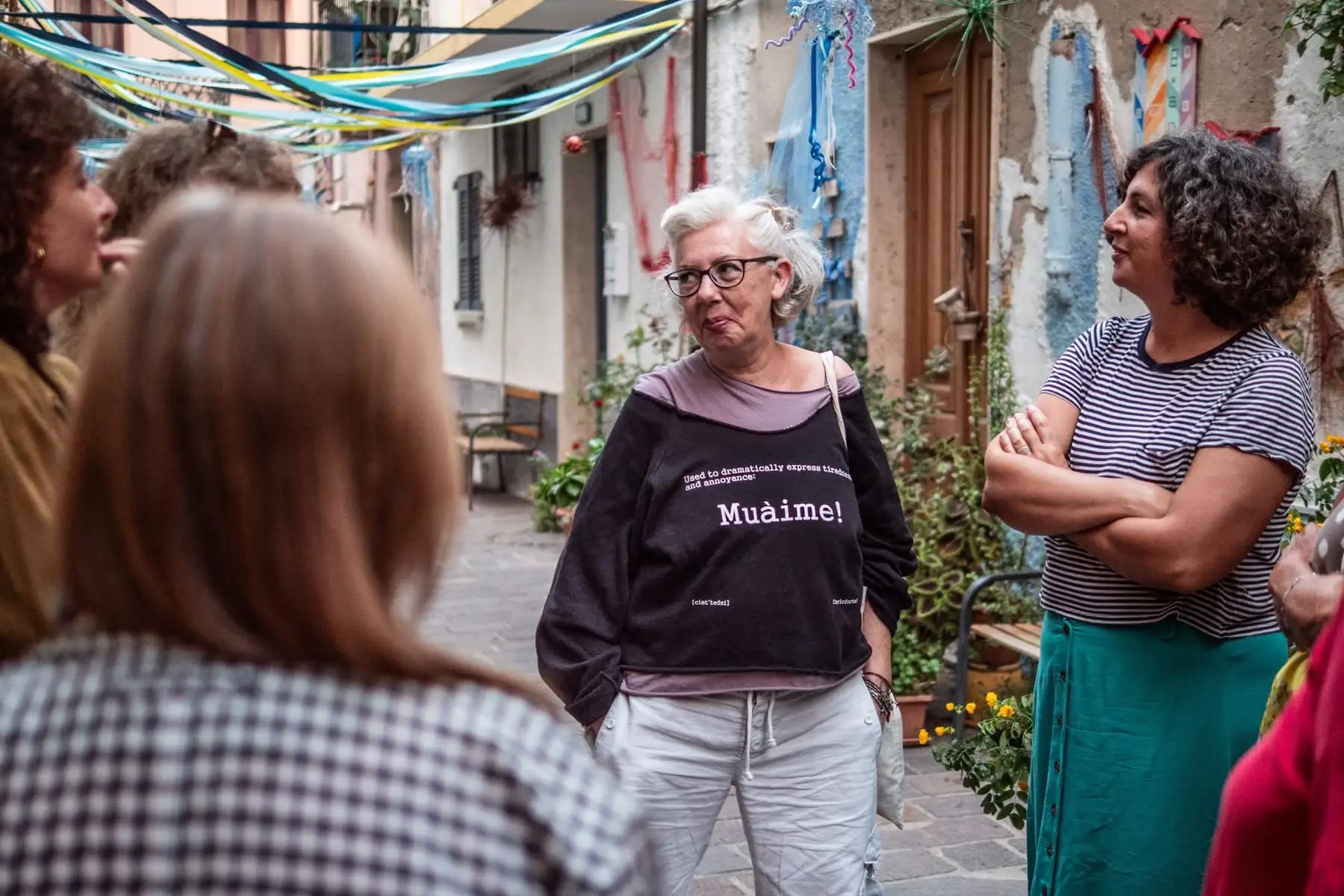
Per restare aggiornato entra nel nostro canale Whatsapp
A film born from listening, constructed over shared time, and challenging a deeply rooted imagery: that of the sea as a masculine space, governed by patriarchal rituals and hierarchies. Titled "The Rais Today Stays Home, " the film by the GIACINTA collective (Sara Basta, Miriam Goi, Maria Luisa Usai) is the result of the Giudicesse2030 artistic residency program, which took place in Carloforte from September 28 to October 10, 2025. This project intertwines artistic research, participatory practices, and political reflection on the role of women in local communities.
The work, which will have its public premiere on April 11, 2026, at 8:00 PM in Carloforte, on the island of San Pietro, is part of a research project that engages with some of the most pressing contemporary issues : the representation of femininity, the construction of collective narratives, and the relationship between art, community, and memory. The presentation will take place at the Teatro La Bottega , run by the Bötti du Shcöggiu association, a hub for the Carloforte community and an intergenerational space dedicated to the production and dissemination of performing arts on the island.
The meeting will be introduced by Andrea Contu and Raffaela Saba for CSC Umanitaria Carbonia, the project leader for Giudicesse2030. They will discuss the project with the artists of the GIACINTA collective, curator Maria Pina Usai, and Marina Fanari, who oversaw the inclusion and accessibility aspects. The film takes shape from a shared process developed during the residency, in close contact with the local community and, in particular, with the women of Via Cagliari , a lively area inhabited almost exclusively by women over 60 whose daily rituals are interwoven into a dense network of relationships, conversations, and exchanges. They are not simply protagonists, but co-authors of the story, involved in a work that spans everyday life, memory, and imagination.
Using digital and Super 8 film, the project interweaves images shot on the island with materials from the family film archives of the project Your Memory Is Our History, curated by the Sardinian Centers of the Società Umanitaria, constructing a choral narrative that moves between the intimate and collective dimensions. "For us, the island was a living laboratory : a space where memory, relationships, and ecology intertwined through engagement with the community. From this process, the film was born, an attempt to make women's daily lives visible and to imagine new, more shared and transformative forms of storytelling," explains the GIACINTA collective.
At the heart of the work is a symbolic gesture: shifting our gaze from the slaughter, a quintessential male ritual, to other forms of relationship with the sea, linked to female experiences of care, choice, and self-determination. The title itself introduces a fracture: the figure of the rais, traditionally associated with a highly structured relationship between the Tabarchina community and the sea, is suspended, sidelined. In his place , a plurality of voices emerges, narrating the sea from new perspectives , opening up new possibilities for imagination and belonging. More than a film, Il rais oggi resta a casa is the result of a process: an artistic device that questions the boundaries between authorship and participation, between documentation and creation, between memory and the present.
The Giudicesse2030 project, promoted by the Carbonia Cultural Services Center of the Società Umanitaria and implemented by U-BOOT Lab, was born with this very goal: to rethink the relationship between art and territory through shared practices, questioning gender inequalities, and activating new forms of collective storytelling. With Il rais oggi resta a casa (The Rais Stays at Home Today), cinema thus becomes a space for connection, a political act, and a practice of imagination: a place where stories are not simply told, but constructed together.
(Unioneonline)