

Philip II: a man, a king, an era
A new biography rewrites the history of the Spanish sovereign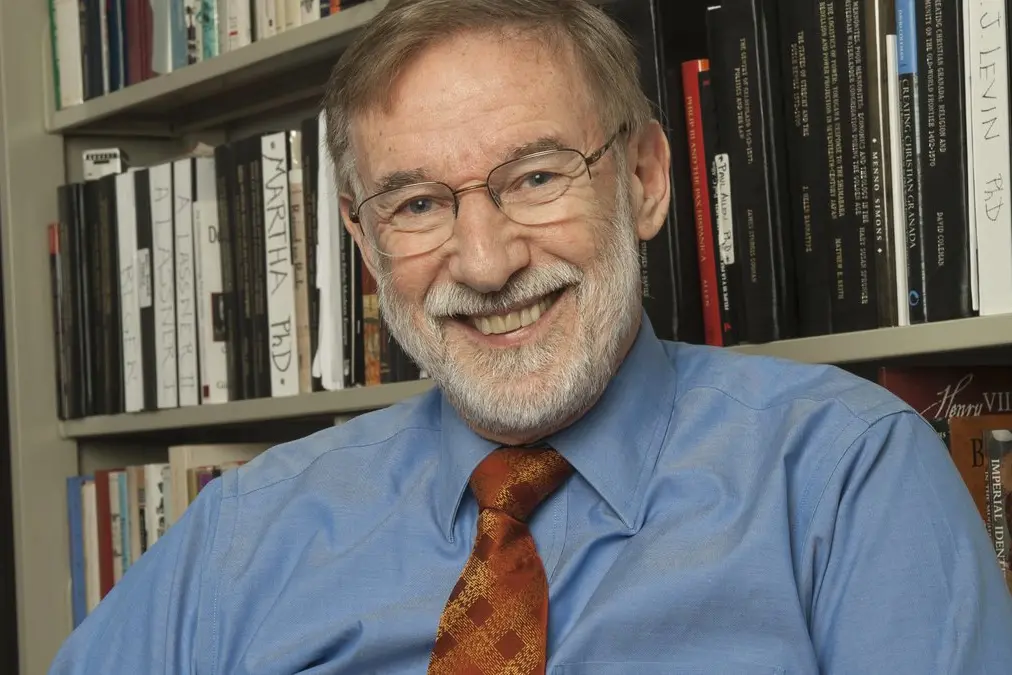
Per restare aggiornato entra nel nostro canale Whatsapp
The second half of the sixteenth century was a violent era. It's difficult to find a more appropriate adjective. It was violent because of the wars fought during those years, and it was violent because it was fueled by irreconcilable conflicts in the way people conceived of power, politics, and economics. It was violent and uncompromising in its conception of religion and the relationship with diversity. It was a time when a growing number of intellectuals felt the need to speak of tolerance because they lived in an intolerant world. A world divided between Catholics and Protestants, between aristocrats and rising bourgeoisie, between sovereigns elected by God and monarchs elected by man. It was a world politically and psychologically unprepared to accept difference. It had not yet developed the mental processes that allow individuals to relate to diversity in terms of relationships and not conflict. Furthermore, politically, the scenario of the second half of the sixteenth century was certainly not comforting: after the great cultural and religious uniformity of the Middle Ages, Europe had literally fallen apart. In this climate of profound contrasts, the figure of Philip II of Spain emerged, son of Charles V and lord of dominions that occupied the Iberian Peninsula, Italy, the Netherlands, a large part of the Americas and the Philippines.
English historian Geoffrey Parker's latest, impressive biography, The Imprudent King (Hoepli editore, 2025, €34.90, pp. 504), is dedicated to the Spanish monarch. Drawing on a vast archive of documents, some previously unpublished, Parker creates a portrait of the son of Charles V, the king who inherited an empire spanning two continents, married Mary Tudor, and launched the Spanish Armada against Elizabeth I of England. This is a compelling and definitive portrait, thanks above all to an extraordinary discovery that significantly alters the stereotypical image of Philip II: a treasure trove of 3,000 documents preserved in the vault of the Hispanic Society of America in New York City, unread since they crossed the ocean with Philip's desk more than four centuries ago.
With a wide-ranging and meticulously detailed reconstruction, Parker examines Philip's long apprenticeship, his three main interests (work, play, and religion), and the major political, military, and personal challenges he faced during his long reign, while also questioning the causes of his leadership failure. He thus portrays a monarch too distant, too austere for modern tastes, yet fully in his late sixteenth-century style, capable of expressing the grandeur and prestige of Spain alongside the significant limitations of what was, it is worth remembering, the greatest world power of its time.

It was Spain whose primacy, power, and gold everyone wanted to strip. An absolute power, whose defeats have perhaps been too often emphasized, forgetting how complex it was for a monarchy established half a century ago to control a multitude of lands, peoples, and cultures. Philip II attempted, and largely succeeded, placing himself and his authority at the center of the entire power system and tying the fate of royal power to the Catholic religion. It was the person of the sovereign and the Catholic faith that united the different parts of the composite monarchy that Philip II had inherited from his father, Charles V. The Spain of the Golden Age was this: a gigantic laboratory of monarchical absolutism, the embryo of the absolute monarchies that would reach full realization in the second half of the seventeenth century with Louis XIV and Peter the Great of Russia. A political centralizer and a fervent religious believer, Philip II governed Spain according to the principles of a Catholicism that brooked no contradiction or uncertainty. By strengthening the repressive activity of the Spanish Inquisition, he imposed the religious uniformity that was considered the foundation of political stability. Even internationally, Philip II acted as an absolute monarch ante litteram, convinced that there could be only one way to understand monarchical power. But his intransigence came at a price: he lost the Dutch provinces and failed to tame England, which sent its corsairs to attack and plunder Spanish fleets carrying the riches of the New World. However, he managed to halt the Ottoman advance in the Mediterranean by defeating the Turkish fleet at Lepanto in 1571, a victory likely decisive for the fate of Europe, in addition to conquering Portugal, reuniting the entire Iberian Peninsula. He then secluded himself, in the final years of his life, in the gigantic palace-monastery of El Escorial, not far from Madrid, a fortress-like shell from which to observe the world, a world whose complexity Philip II had always struggled to comprehend. When someone pointed out to him that a canal near the Isthmus of Panama would allow rapid passage from the Atlantic to the Pacific Ocean, he simply replied: "If God had wanted a canal in Panama, he would have put one there." This was Philip II: a pragmatic monarch to the point of appearing obtuse, perpetually confined to the present and reality. Ultimately imprudent because he was incapable of grasping certain signs of his times.