Once upon a time there was children's TV
TV programs for young people, as told by Marco Danè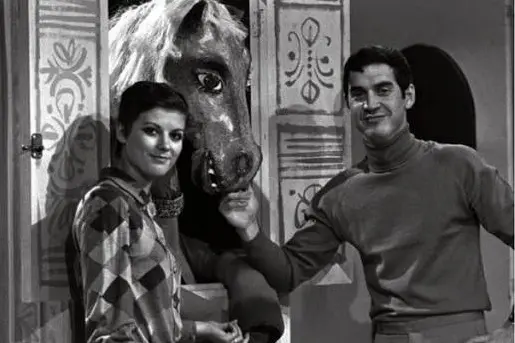
Per restare aggiornato entra nel nostro canale Whatsapp
Being a child or a teenager in the 1960s and 1970s meant spending time in front of the cathode ray tube television, waiting for kids' TV. What was it? Let's quickly explain for the younger ones: it was a collection of programs aimed at those aged approximately 16 and under, a program that occupied the afternoon slot from around 5:00 PM to 7:00 PM. During that time, TV series (the ancestors of today's TV series), cartoons, and, above all, programs specifically designed for boys and girls were offered. These programs were intended to entertain and amuse, but also to educate, impart knowledge and information. These were programs that RAI created with the specific aim of providing a foundation for future generations. After all, state television, in those years, was very clear about its public service mission, and audience ratings and competition from private TV stations were still far away.
One of the main protagonists of this golden age of Italian television, in which educational intent was combined with intelligent entertainment, was Marco Dané, who decided to recall and describe children's TV in the beautiful volume Se possamo fare un gioco (Manni, 2026, Euro 14.00, pp. 112, also e-book).

Dané was a true companion for a couple of generations of girls and young women. He was, in fact, a protagonist of television programs for children and young people as a writer and host, from his debut in 1969 with Il paese di Giocagiò, a program on which Gianni Rodari collaborated, to Trentaminutigiovani, the children's news program on Rai2, to Tandem in the 1980s with Fabrizio Frizzi, up until his role as a judge on Paroliamo (on Rai and later within Gianni Boncompagni's Non è la Rai). As Marco Dané writes in his book: "Children's television had become my world. And for many children, that television was a window into possibility. We talked with them, not just for them. We played, told stories, sang, explained, but we also listened. And when today an adult stops me in the street and says, 'I watched you as a child, you taught me to smile,' I smile too. Because I know that on that journey, I wasn't alone. There were many of us. And we all learned something."

Starting from this premise , Dané retraces his broadcasts in the book, programs that have influenced entire generations , reviving the magic of characters like Mr. Something, Scribble, Buendía, the Clown... In short, a story that becomes a journey through the history of children's TV and a discovery of the first technical experiments, such as the evolution of filming equipment, electronics, and new possibilities for interacting with viewers. The result is a slim volume that, for many adults today, is a bridge to childhood: a gallery of memories, emotions, and nostalgia, but also a demonstration of how fantasy, play, and entertainment can be a serious and formative thing.