


Music in Fascist Italy: How Black-Shirted Power Entered Theaters, Conservatories, and Orchestras
In Harvey Sachs' essay, a reflection on the ways in which one of the most complex musical scenes in Europe adapted to the rules, conveniences and lies of totalitarianism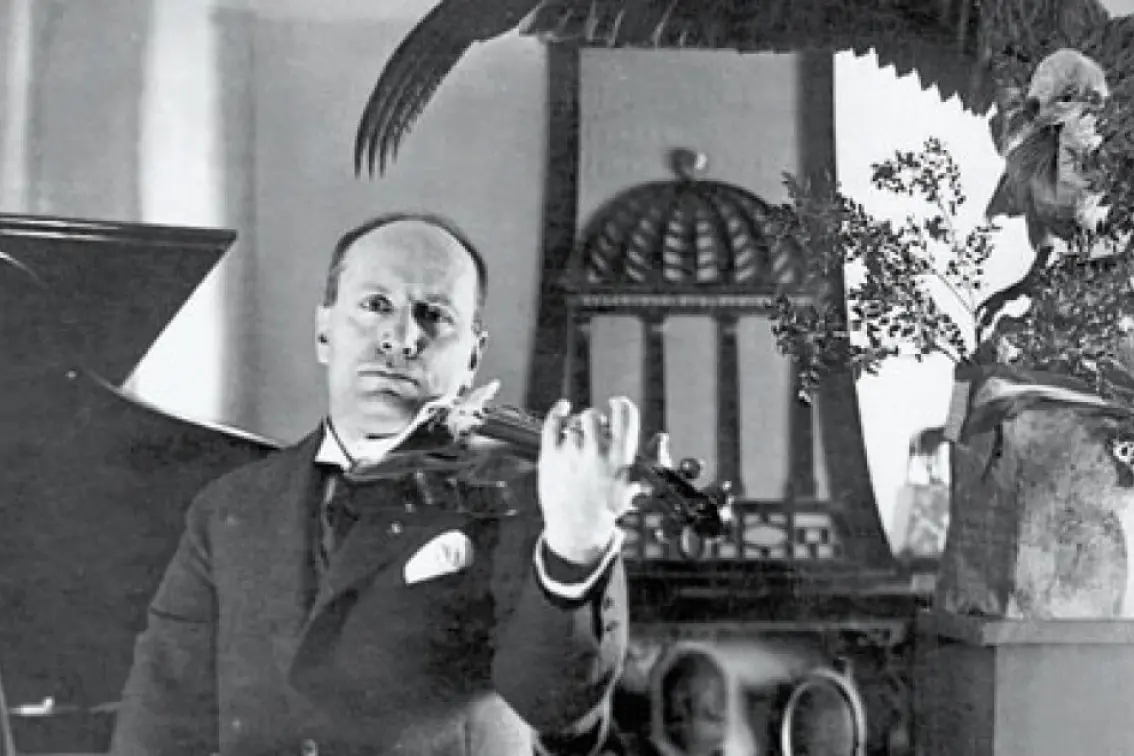
Per restare aggiornato entra nel nostro canale Whatsapp
The term "totalitarian" was coined in the mid-1920s in Italy to specify the characteristics of the fascist state and its ability to intervene in every aspect of Italian life. But what characterized fascist totalitarianism (and other totalitarianisms of the first half of the twentieth century, such as Nazism and Stalinism)? First of all, the presence of an official ideology aimed at transforming both society and human nature itself , identifying society with the state . The individual is therefore subordinated to the state in all aspects of his or her life, and no opposition can be tolerated. Secondly, the existence of a single party, led by a charismatic leader, the object of a personality cult, which has annulled the democratic tripartite division of powers and combines both legislative and executive power. The single party is not subject to any judgment by the citizens, and its leaders always come from within the party itself; But the true holders of power are only a handful of individuals. Furthermore, totalitarianism is based on an economic system in which a rigid bureaucracy, directly dependent on the party, plans the production and distribution of goods and services. Then comes a widespread police force trained to monitor citizens' private lives to nip any form of dissent in the bud. This is followed by absolute control over the media through rigorous censorship. And finally, in totalitarianism, every aspect of public life must be addressed to foster consensus and eliminate, or at least delegitimize, any form of dissent. Therefore, propaganda tools must be used to the fullest extent possible.
Mussolini, for example, recognized the great potential of cinema as a tool for fascist propaganda and for Italian power. Cinecittà, the Hollywood of Italy, and the Centro Sperimentale di Cinematografia were created in Rome. In movie theaters, screenings were preceded by newsreels touting the regime's successes , produced by the Istituto Luce, founded in 1924. Another powerful propaganda tool was the radio, through which the Duce's voice could reach the homes of every Italian: by 1938, the number of subscribers reached one million. Loudspeakers were installed in every city and town to listen to Mussolini's speeches and propaganda broadcasts such as the Chronicles of the Regime.
Even music could not escape the Duce's control, whether pop songs or classical music. But what happens when a regime decides that even music must obey him? Music in Fascist Italy (Il Saggiatore, 2026, 400 pp., also available as an e-book, translated by Luca Fontana) is the story of how black-shirted power entered theaters, conservatories, and orchestras , transforming an entire cultural system into a tool for creating consensus.

In this essay, writer and music historian Harvey Sachs reconstructs the stages and methods by which one of Europe's most complex musical scenes adapted —often with surprising speed— to the rules, conventions, and lies of fascism : from the constant surveillance to which Arturo Toscanini was subjected—eventually forced into exile—to the imprisonment of musicologist and militant critic Massimo Mila; from the experiences of composers like Respighi, Pizzetti, Casella, and Malipiero, torn between adherence, ambiguity, and dissent, to those of the many zealous and mediocre officials, complacent critics, and manipulative administrators who actively collaborated with the regime. In this crackdown, even institutions, major opera houses, and festivals were affected by the new course, leading, among other things, to the birth of fascist musicians' unions and the founding of the Maggio Musicale Fiorentino as a propaganda tool.
It's a story of concrete episodes, made up of servile letters (which extolled Mussolini's skill as a violinist), sudden decisions, and small, daily compromises in the shadow of the dictatorship's vast bureaucratic machinery. Music in Fascist Italy, therefore, doesn't tell the story of an exception, but of a recurring pattern, concerning the relationship between culture, responsibility, and power. What remains, beyond a succession of directives, proclamations, and laws, are the lives of those who, faced with unjust orders, chose to submit, remain silent, participate, and serve, and of the few who, instead, tried to resist and lost everything—except their dignity.
