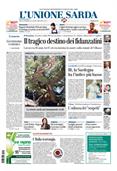


Minister Zangrillo in Cagliari: "I want Generation Z in public administration."
"We will reward the deserving. Digital voter cards will be available in 2027."Minister of Public Administration Paolo Zangrillo (ANSA/RICCARDO ANTIMIANI)
Per restare aggiornato entra nel nostro canale Whatsapp
Debunking clichés has become the main hobby of Paolo Zangrillo, Minister of Public Administration, who is in Cagliari today for two meetings on simplification and training: the first, with businesses, at the Chamber of Commerce, the other this afternoon at the former Manifattura. "It's not true that the public sector is doomed to inefficiency," he explained on the eve of the meeting. "It depends on how it's organized. This is also why we're working so hard on simplification."
It's been talked about forever...
"Simplification work was done before, but always behind closed doors. Since the goal is to make life easier for citizens and businesses, we said: let's ask them where we need to intervene. I'm coming to Cagliari to continue the discussion."
What is this work leading to?
"Well, we've launched around 450 administrative simplification processes, also approved by the EU, on as many relationships between citizens and public administration."
Can you give some concrete examples?
Let's start with pharmacies: with a struggling healthcare system, they're now centralized locations where you can choose your primary care doctor, get some vaccinations, and access telemedicine services without going through the local health authorities. Let's move on to retail: previously, retailers had to keep paper records of POS transactions for ten years. Now, that's no longer the case; they're digital.
And what other simplification projects do you have underway?
One that's almost ready is an identity card for those over seventy, which will be valid forever. They won't have to renew it anymore. And then we're working on the digital voter card: for the 2027 general election, if all goes well, it will no longer be necessary to have a paper one, and perhaps even have to wait in line at the town hall to renew it. You'll have it on your smartphone and show it at the polling station with that.
You're also coming to Cagliari for an initiative to train public employees. What's the purpose?
"You see, when I took office at the ministry in 2022, one of the first things I noticed was that Italian public employees received, on average, six hours of training per year. In an era of technological upheaval, I felt it was necessary to work more on worker skills. So I launched a directive to reach at least 40 hours per year, and we created, with universities and businesses, training hubs in the regions dedicated to the public sector. Currently, the average has already risen to 38 hours of training per year."
However, in public opinion, the public administration remains synonymous with inefficiency. Is this a correct narrative?
"No. I come from the private sector: there are people who don't do their job to the best of their ability both there and in the public sector. The effectiveness of an organization depends on how well we engage people. A good employer is one that brings out the best in its staff."
And is this more difficult in public?
"I'll tell you, when I hear about these differences, I'm a little confused. I think every organization operates according to the same rules: if we pay attention to people, reward the deserving, and show young people the opportunity to pursue challenging careers, then the results will come. Even public administrations need a bit of managerial culture."
Young people, you say? But the feeling is that a public job is no longer a reasonable goal. Perhaps not even a desirable one.
This too is a vision far from reality, due to ten years of a total freeze on staff turnover. But did you know that in the three-year period 2023-2025, 614,000 people were hired? And 60% of them were under 40. Last year, for the first time in a long time, the public sector employee growth rate rose again.
Don't we already have a PA that's too elephantine?
Yet another cliché: in Italy, the ratio of public employees to the population is 5.8%, while the average for European countries we compare ourselves to (Germany, Spain, and so on) is 9%. It's not true that we have a redundant public administration; if anything, we had—and this is true—an inefficient recruitment system: in 2021, the average time to hire a person was two years, now we've reduced it to five months.
You said that one million public employees will retire between now and 2032. Will they be replaced?
"Of course we need to replace them. That's why I say we need to make public administration more attractive. We need Generation Z. We need digital natives who can help us face the future using new technologies, starting with artificial intelligence."
How do you make a public place attractive?
"With rapid recruitment, training, and employee development, the opportunity to earn a fair salary, growth opportunities for deserving individuals, and a healthy work-life balance."
Earning a fair amount of money is perhaps the most difficult thing, given the crisis in purchasing power of salaries in Italy.
It's true, and in public administration there's a long tradition of severely delayed contract renewals. When I became minister, I concluded the negotiations for the three-year period 2019-21 in 2023, you might imagine. But we're accelerating, thanks also to the help of the Ministry of Economy and Finance and the government: the budget laws have already allocated €30 billion for three rounds of contract renewals, and in 2025, for the first time, we began discussing a renewal (for 2025-2027) in the first of the three reference years.
Even rewarding merit is an objective that has never been achieved.
It's not easy, but if you want to do something, you get it done. The Court of Auditors (Corte dei Conti) emphasized in 2023 that 95% of public sector employees receive excellent evaluations: a far cry from what people perceive. There's no adequate evaluation system. My bill, already approved by the Chamber of Deputies, which is expected to pass the Senate in April, introduces new mechanisms: public sector employees will also be able to evaluate their work like they do in the private sector. That is, a worker won't be able to advance their career solely through internal competitions, based on their education, but also based on the evaluations their superiors give of their results and work.
She said that meritocratic criteria should also be introduced for judges.
"Well, today we have a governing body for the profession, the CSM, which gives positive evaluations to 99.6 percent of magistrates. Yet since 1992, 80,000 people have been unjustly imprisoned: it's not credible that everyone has positive evaluations. This is also why I'm a staunch supporter of the 'yes' vote."
Marina Berlusconi said that the referendum debate must be freed from ideological constraints. Do you agree?
"Absolutely. There are no right-wing or left-wing solutions on these issues. Moreover, even eminent left-wing jurists are in favor of a yes vote."
However, Minister Nordio's chief of staff, Giusi Bartolozzi, has just compared the judiciary to "firing squads".
"Look, to encourage proper citizen engagement on a challenging issue, we must avoid a confrontational tone. I absolutely don't think the separation of careers is against the judiciary; on the contrary, I believe that freeing the judiciary from factionalism makes it even more independent, as the Constitution requires, and gives it greater recognition."