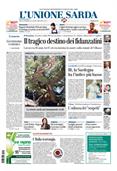


Holy Trinity, the alarm about infections: "This is how the safety protocol was triggered."
Chief Angioni: "We put all measures into practice after the late-night call."Per restare aggiornato entra nel nostro canale Whatsapp
The call to the head of the Infectious Diseases department at Santissima Trinità Hospital, Goffredo Angioni, came at 2:00 a.m. yesterday. He was the doctor on duty: "There's a suspected case of Ebola in the city, what do we do?"
The alarm
And so the alarm was raised in Cagliari, with a series of measures and actions to be decided on the spot, given that the crisis unit, the control room that should manage an emergency of this kind, had never met before, the lessons of Covid are now archived, protective equipment for healthcare workers is from those "distant" times, and healthcare workers have not yet undergone updated training.
"In a situation like this, when both clinical and epidemiological criteria are present—that is, symptoms and provenance—the ministry's guidelines are applied," explains Dr. Angioni. "After the patient was collected at home, he was admitted to our hospital, placed in isolation, and a blood sample was then sent to the Spallanzani Hospital in Rome, the national reference center."
The patient
The man, a 46-year-old Italian citizen of Congolese origin who lives on Via Manno and is currently under observation at the Santissima Trinità hospital, landed in Elmas on Saturday around 11 p.m. from Rome. He had a fever, headache, and other symptoms suggestive of Ebola, but despite arriving from Kinshasa, where he had visited family in early May, he was not stopped at Fiumicino Airport for an initial health assessment by the border health offices, as required by ministry protocol. This is worrying, as who knows how many people could slip through these checks.
The man arrived home unwell. His wife—currently confined to her home, under constant monitoring by the Local Health Authority's Public Health Department—called an ambulance for help. From the time of the call to the time of his arrival at the hospital, over twelve hours passed. Organizing transportation was complicated, with a well-equipped vehicle, trained staff, and highly protected personnel. Even within the ward—with the entire team headed by Goffredo Angioni and the hospital's health management—dedicated spaces had to be set up.
The patient was admitted to hospital around 3:30 pm yesterday afternoon and is doing quite well.
The expert
Professor Aldo Manzin, Director of Microbiology and Virology at the University Hospital of Cagliari, explained in recent days that "the serious Ebola epidemics in the Democratic Republic of Congo and Uganda, and the Hantavirus in South America, remind us that when infectious episodes occur in geographically distant areas, the travel times and trajectories followed by 'exotic' pathogens can become increasingly shorter and faster, respectively." He also stated: "The risk to the general European and Italian population is currently assessed as very low, but, as the World Health Organization reminds us, the threat of infectious diseases remains extremely present and risks worsening in the future. Unfortunately, from 2003 alone to today, the number of infections caused by new, newly identified pathogens or by 'old' pathogens that have conquered new territories has been steadily increasing."
Globalization
Today, distances between populations are increasingly shorter, contact between humans and animals is increasingly frequent, and encounters with old and new pathogens are increasingly likely. In a globalized world that has essentially lost its calling for solidarity and international cooperation, where these are essential tools for containing any potential spread, the risk is that a future, foreseeable pandemic could strike a world that is more divided, weaker, and less prepared to protect its citizens.