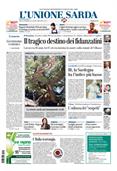


Farewell to Francesco Guccini, poet of the taverns. Concerts in Cagliari, "Naschet su Sardu" with the Tenores di Neoneli, and his final concert in Carbonia.
From "The Locomotive" to "Auschwitz," from "God Is Dead" to "The Poisoned One," he leaves behind a legacy of memory and freedom. As a poet of the people, he loved Sardinia.He died in his hometown of Pavana, in the Modena province, in the Tuscan-Emilian Apennines to which he had dedicated a profound part of his life, surrounded by the love of his wife Raffaella, his daughter Teresa, and his family. Francesco Guccini, a poet of taverns, a singer-songwriter, a writer of short stories and big questions, was 86 years old.
Thus passes away one of the most authoritative voices of the songwriter genre, a narrator capable of setting to music the passing of time, childhood memories, friendships, disappointments, and civil wars. Born in Modena on June 14, 1940, and raised between the Emilian city and the mountains of Pavana , he debuted in the 1960s, quickly becoming one of the symbols of politically charged songs. From "Dio è morto," "La locomotiva," "Auschwitz," "L'avvelenata" to "Il vecchio e il bambino," he was the singer of the underdogs, of rebels, of dreamers, and of those who always sought an alternative to conformism. His songs contained memories of the Resistance, political reflection, the disenchantment of adulthood, and nostalgia for a world that was changing too quickly. But also irony, love for friends, evenings spent in taverns, and a taste for simple stories.
As the voice of the people, of languages, and of traditions, he had a very close relationship with Sardinia. He fondly remembered the first time he played, in 1975, at the Palazzetto in Cagliari. There was no stage, no barriers, just a chair and a microphone. He took advantage of the visit to meet the sculptor Pinuccio Sciola and visit his studio. In 2000, he agreed to participate in the Tenores di Neoneli album "Barones," singing "Naschet su Sardu" in limba. Then, in September 2004, he performed again at the Roman Amphitheater in Cagliari, released in 2005 as a double live album and DVD titled "Anfiteatro Live." His last concert on the island was in 2011, before his retirement from the stage, at the Serbariu mine in Carbonia.
Alongside music, he cultivated a lifelong passion for writing, writing novels and stories that evoked the landscapes of the Apennines , the characters he encountered along the way, and that wealth of memories that he had always defended as a precious treasure.
