

Ermal Meta, at Sanremo, addresses the tragedy of the Gaza children: "A people without a voice."
Winner of the Festival in 2018, he returns to the event with a nursery rhyme-lullaby dedicated to the most innocent victims there are.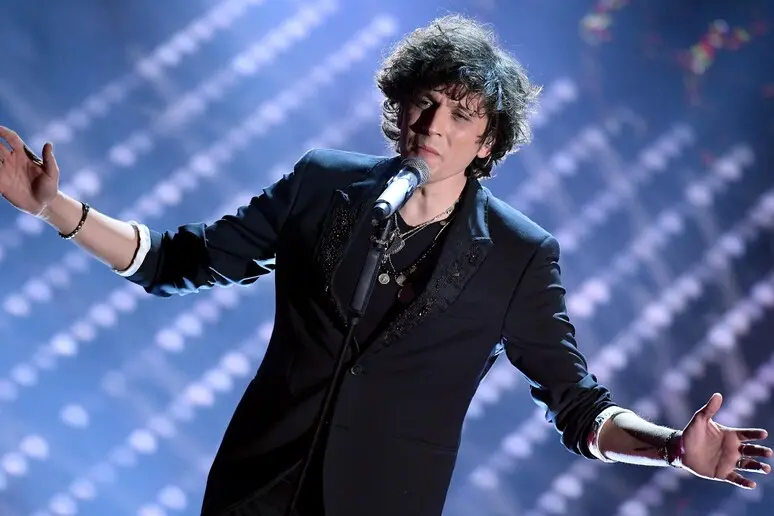
Per restare aggiornato entra nel nostro canale Whatsapp
"A nameless little girl, belonging to a voiceless people, on everyone's lips yet forgotten." Ermal Meta, winner of Sanremo alongside Fabrizio Moro in 2018 with "Non mi avete fatto niente" (and third place the other three times), returns to the Festival after five years with a poignant poem dedicated to the most innocent victims of all: children. "Stella stellina," which will be included on the album of unreleased songs "Funzioni vitale" out February 27, is a nursery rhyme, a lullaby, sung to his little girl by an adult bearing the responsibility of explaining a reality of constant violence, death, and oppression. Gaza, the setting, is never mentioned. "Because I didn't want to limit the song, but there are so many references," explains Meta, who is now the father of Fortuna Marie, born from the love of his partner Chiara Sturdà, as well as two eighteen-year-old girls, who grew up in an orphanage in the country where he was born 44 years ago, Albania, and from which he moved to Bari at a very young age with his mother, brother, and sister.
Ermal Meta, how did this piece come about?
"A father-daughter moment. I was playing the guitar for Fortuna, as I often do. I improvised the melody of "Stella Stellina," with sweet, comforting lyrics. A few hours earlier, however, I had seen some very disturbing images coming from Gaza, particularly the gaze of a Gazan girl that literally transfixed me."
And then?
When my daughter fell asleep, I went down to the studio and found myself singing the melody I'd invented for her, but with a different intention. I put myself in the shoes of one of the many desperate men living in that land. How do you explain to a child what's happening when it's difficult for us too? I wrote it like that, in one go, with that little girl's eyes fixed on my head and a frustrating sense of absolute helplessness.
The collaboration with Dario “Dardust” Faini, with whom she will duet on Thursday evening, did the rest.
I liked the idea of the circular melody that recalls folk music, a genre that has been passed down through the centuries because it's easy to remember, it enters people's DNA. Dardust, a brilliant producer who also agreed to participate with me in the duets evening, did an incredible level-up: when he sent me his version, I fell out of my chair. It was exactly what I'd heard but wasn't able to put into music. It was as if I'd looked too closely at a complex painting. Now it's the right song.
The right song but probably the one that will spark the most controversy…
For a singer-songwriter, it's crucial to express what he feels and not filter it. The moment he filters it, he's doing something wrong. If you expose yourself, you expose yourself to everything, but you also have to be able to defend it. The Constitution guarantees me the right to freedom of speech, and I want to use that right. I don't know if everything will come at me, maybe it will, but I don't care. My mission is different.
Ritual question: if he wins, will he participate in Eurovision?
I've asked myself this question many times. There are many ways to express your dissent; boycotting is just as legitimate as showing up and digging in your heels. After all, when the riots against the communist dictatorship broke out in Albania, I was there, and I remember it well. If people hadn't taken to the streets, nothing would have changed . With this song, it would be like not taking the final step, not fully supporting the message. Obviously, if they asked me to change the lyrics, I would never agree.
What memories do you have of the concert in Porto Cervo last summer?
I had a great time, thanks also to my partner Davide Antonio Pio, pianist and co-author of the show. The next day I relaxed in the crystal-clear waters of San Teodoro. I love Sardinia; it's one of my favorite places, especially Alghero: for me, one of the most beautiful places in the world. I hope to return soon .
