

Ebola: Measures are in place for those arriving from Congo and Uganda: mandatory reporting, five risk levels.
Fiumicino becomes a health hub: Regions will have to designate referral centers. Here's who is quarantined.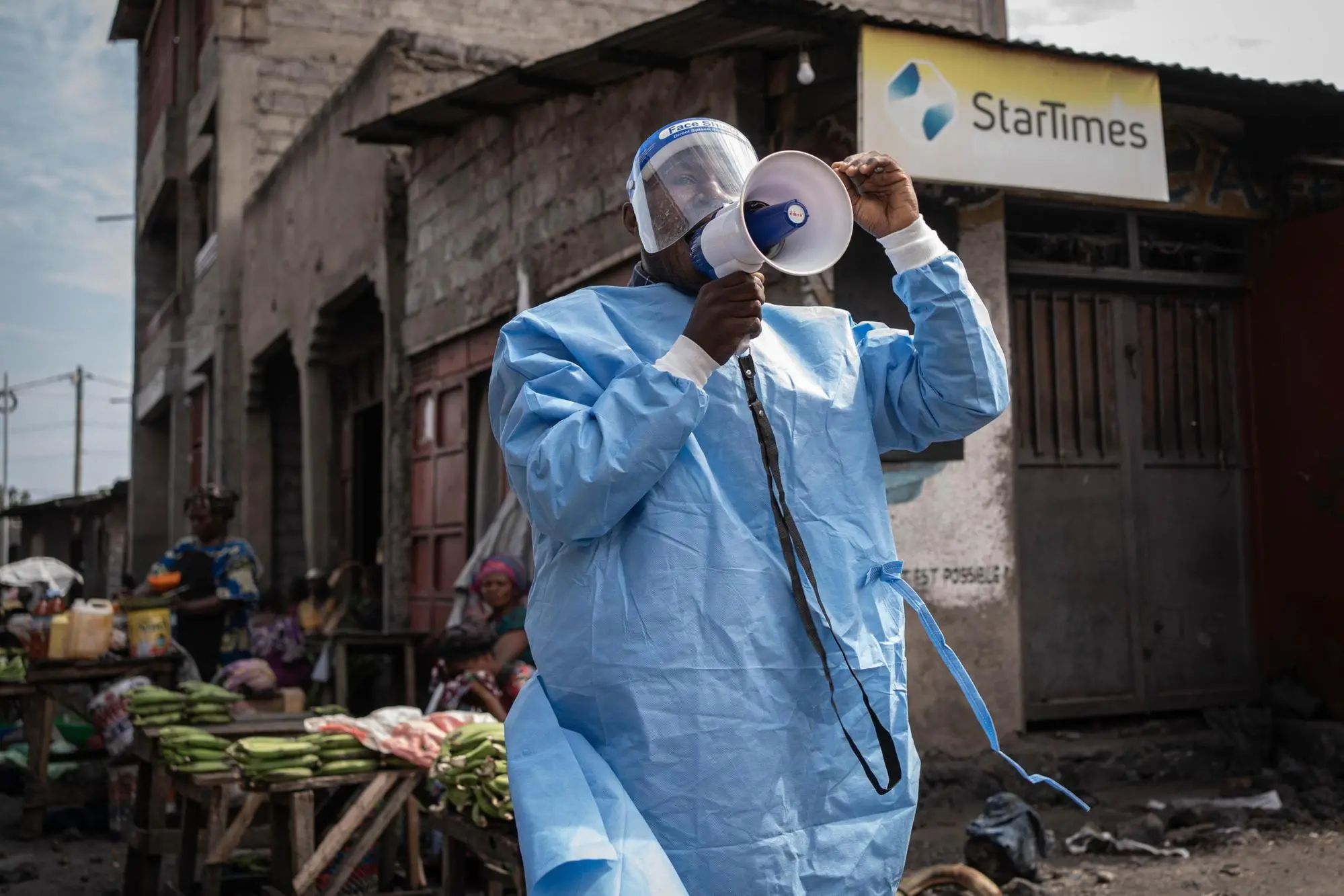
(Ansa photo)
Per restare aggiornato entra nel nostro canale Whatsapp
In Italy , the ordinance and related circular from the Ministry of Health have introduced the obligation to declare for travellers arriving from the Democratic Republic of Congo and Uganda , the two countries affected by the Ebola virus with at least 1,077 suspected cases and 246 deaths.
There are 5 risk levels that will guide the measures for travelers who have had contact or show symptoms, while flights arriving in Italy with at-risk passengers will have to land at the Fiumicino health hub and the Regions will have to identify their own reference centers for infectious diseases .
The national reference center is the Spallanzani Institute in Rome. In Italy, the ministry notes, the risk of infection is "low" and measures are dictated primarily by the "principle of maximum precaution."
The EU is also considering "coordinated action" and is "evaluating all response options," including convening a video conference of health ministers and holding a discussion on June 16 at the EPCSO Health Council, the European body dedicated to public health, prevention, and safety.
THE EPIDEMIC – The new Ebola epidemic sweeping the heart of Africa is caused by the Bundibugyo variant of the virus, about which little is known. Drugs and vaccines are only now being studied , with the first trials just arriving, and large-scale trials were nonexistent when the first cases appeared. Hence the concern that the infection is already widespread, so much so that initial estimates predict thousands of cases in the two African countries. For this reason , WHO Director General Tedros Adhanom Ghebreyesus has arrived in the Democratic Republic of the Congo: he wants to work with the authorities to explore interventions to "strengthen the health system" and "improve emergency preparedness."
THE CIRCULAR – For other countries, the priority is to promptly identify any suspected cases . This is also the meaning of the ordinance signed by the Minister of Health, Orazio Schillaci, and the circular with the implementing measures: they require anyone arriving in Italy from the two countries "directly or indirectly" and "by any means" to declare within 24 hours whether they arrived from those areas in the previous 21 days, i.e., during the virus's incubation period .
LEVELS – The circular lists five risk levels, based on the type of traveler exposure in the previous 21 days (high-risk and non-high-risk) and the presence or absence of symptoms. The levels range from very low to low, moderate, high, and very high.
The lowest levels include all asymptomatic individuals who have not been in a designated area and do not report a potential exposure (who can be contacted by the Local Health Authority for 21 days), as well as asymptomatic individuals who have not been in a designated area but who report one or more non-high-risk exposures. For the latter , daily self-monitoring, temperature measurement, and at least one check-up by the Department of Prevention are required.
The moderate level refers to asymptomatic individuals who have been in a designated area but who do not report any potential risk exposure. They (who must be contacted by the Local Health Authority if symptoms appear) are subject to active surveillance, including temperature measurement, daily checks by the Prevention Department, and the obligation to report any travel outside the region where they are staying .
Finally, the two categories most at risk , those asymptomatic people who have been in a warning area and who report a non-high-risk exposure , are required to quarantine , and those asymptomatic people who have had a high-risk exposure: the latter are required to be transported in biocontainment.
(Unioneonline/vl)