

Diesel prices in Sardinia are among the highest in Italy. Associations warn: "This will increase the burden on businesses and families."
Self-service diesel at €2.355 per liter. Confederazione Imprese: "Insularity cannot become an economic disadvantage." Confinmprenditori: "Price cap at €1.95."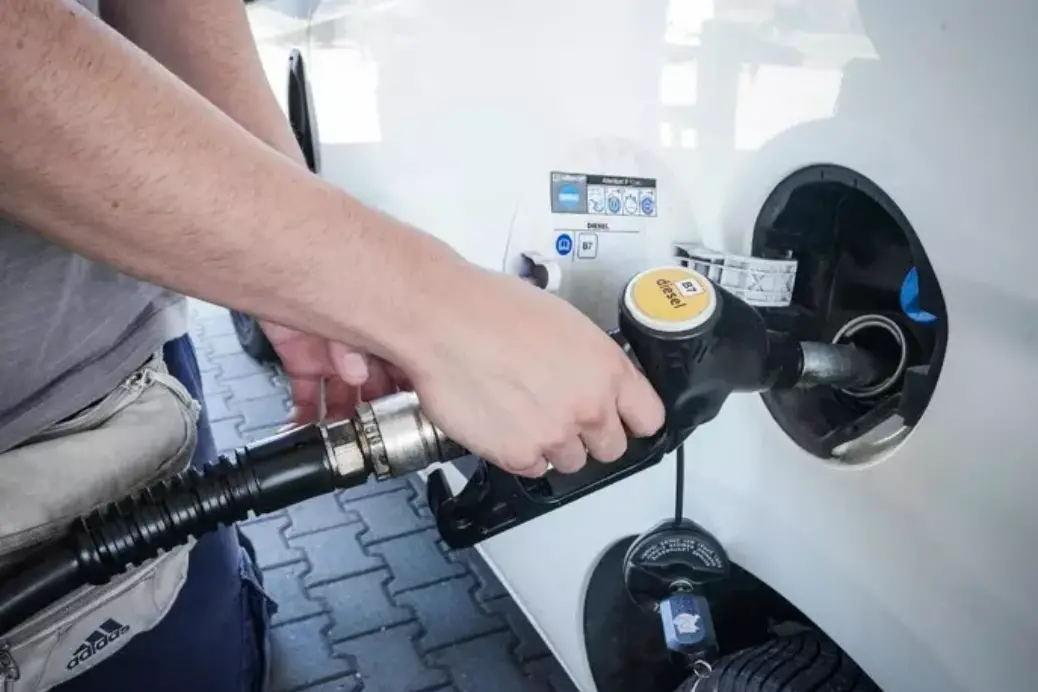
(Handle)
Per restare aggiornato entra nel nostro canale Whatsapp
Fuel prices in Sardinia remain above the national average, and diesel prices are among the highest in Italy.
According to the latest update provided by the Ministry of Enterprise , to date the average price in self-service mode along the national road network is equal to 2.154 euros per litre for petrol and 2.338 euros per litre for diesel.
On the island, however, the average cost for self-service petrol is 2.164 euros per litre, while for self-service diesel the average is 2.355 euros per litre, the highest price among the twenty regions, after Friuli Venezia Giulia, Calabria and Sicily.

Given the costs, trade associations are protesting , and are making several proposals to the government to mitigate the situation. "In terms of price, diesel has gone from around 1.65 to around 2.33 euros per liter, an increase of almost 42% in twelve months," emphasizes Stefano Ruvolo, president of Confimprenditori , adding: "For hauliers, artisans, farmers, and fishermen, an increase of this magnitude compresses margins and ultimately impacts the prices of goods and services, fueling a new inflationary push." For this reason, Confimprenditori is relaunching the proposal for a fair price cap, no higher than 1.90 euros per liter for gasoline and 1.95 euros for diesel.
"In Sardinia and Sicily, the high cost of fuel impacts every trip, deliveries, services, and the daily operations of businesses. The cost of filling up doesn't stop at the gas station: it enters businesses' budgets, is reflected in the prices of goods, and reduces households' purchasing power ," says Francesco Bevacqua, National Councilor of Confederazione Imprese Italia with responsibility for the Islands.
"For our islands," Bevacqua adds, "fuel is a vital item. When transportation costs increase, those affected are the businesses receiving goods, the artisans reaching a customer, and the families who depend on cars for work or access to services. This impact must be assessed taking into account the conditions of the island territories."
"There's one piece of information in the 2026 budget law," Bevacqua continues, "that's worth mentioning. Starting January 1st, the excise tax on diesel fuel has increased by 4.05 cents per liter; at the same time, the excise tax on gasoline has been reduced by the same amount. This is a realignment of the two rates, but its effects aren't the same for everyone. For businesses that use diesel, this tax decision adds to other cost pressures, even taking into account the incentives provided for specific uses."
The final price, Confederazione Imprese further highlights, is also affected by a significant tax component. The budget law set the standard excise duty on diesel at €672.90 per thousand liters, equal to 67.29 cents per liter. Subsequent temporary measures have raised it: 57.29 cents per liter from September 18th to 25th and 62.29 cents from September 26th to October 5th. Added to these amounts is 22% VAT, calculated on the price of fuel including excise duty. To give an idea of the tax impact, on a purely illustrative price of €1.70 per liter, excise duty and VAT would total approximately 88–93 cents per liter during the two periods indicated. The calculation describes the taxes included in the pump price and does not take into account any deductions or refunds due to businesses.
"The government can't just focus on the overall balance of the transaction," Bevacqua continues. "It must ask itself who is supporting the increase in diesel prices and what consequences it has along the supply chain. In Sardinia and Sicily, where distance and transportation already impact competitiveness, this question is even more urgent. The burden of fuel taxes must be made transparent and targeted measures must be considered for the most disadvantaged areas."
"Temporary excise tax cuts," Bevacqua continues, "can offer relief, but they don't give businesses the certainty they need to plan prices, deliveries, and investments. The currently scheduled reduction for diesel fuel changes on September 26th and ends on October 5th. What will happen after that date? Confederazione Imprese Italia calls for "a clear response, along with measures capable of considering the real impact of fuels on island economies. Insularity is a geographical condition. It cannot become a permanent economic disadvantage," Bevacqua concludes.
And then Codacons , which is raising a new alarm, reminding us that "the excise duty cut will halve tomorrow, September 26th, which will mean a tank of diesel will cost 3 euros more on roads and highways, regardless of the price at the pump. The tax discount of 12.2 cents per liter currently in effect will therefore be halved starting tomorrow, with the price at the pump dropping to 6.1 cents, including VAT. For motorists, this represents a net increase of +3.05 euros per tank, but if we consider the effect of the entire decree enacted on September 18th, the impact is +5.45 euros per tank ," the association calculates.
