

Claudio Cerasa presents "The Antidote" on Saturday at L'Unione Sarda.
The meeting is scheduled for 6 pm and the director Emanuele Dessì will interview him.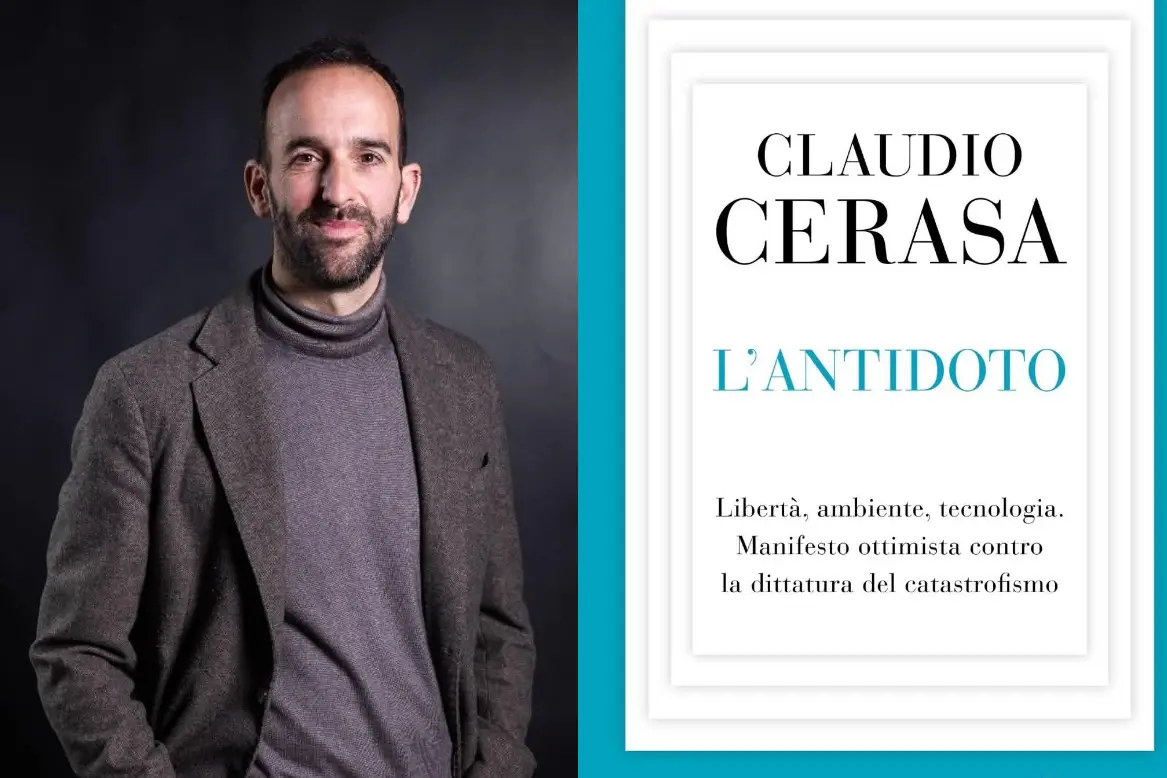
Per restare aggiornato entra nel nostro canale Whatsapp
A meeting dedicated to ideas, discussion, and reflection on the present and future through the story of one of the protagonists of contemporary Italian journalism. On Saturday, May 23, at 6:00 p.m., in the Giorgio Pisano Room of L'Unione Sarda in Cagliari, Claudio Cerasa , editor of the daily newspaper Il Foglio , will present his new book, “The Antidote. Freedom, Environment, Technology. An Optimistic Manifesto Against the Dictatorship of Catastrophism,” published by Mondadori - Silvio Berlusconi Editore.
The event, free of charge and subject to availability, organized by Isolarte in collaboration with the L'Unione Sarda Publishing Group, with the support of the Sardinia Region and the Fondazione di Sardegna, is one of the most anticipated cultural events of the season and will offer the public the opportunity to engage directly with one of the most authoritative names in national journalism.
The author will be interviewed by Emanuele Dessì , director of the newspapers of the L'Unione Sarda Group , one of the most well-known Sardinian journalists at a national level and a frequent guest on Rai Cultura as an editorialist for the series of programmes “Il giorno e la Storia”, a successful format by Giovanni Paolo Fontana, entrusted weekly to the great names of Italian newspapers.
This conversation promises to be rich in insights and capable of addressing some of the major issues currently pervading public debate: the relationship between information and reality, the role of technology, the crisis of traditional narratives, the future of Europe, climate change, individual and collective freedom, the weight of media language, and the risk of a society increasingly dominated by pessimistic and catastrophic visions.
The event was created with the aim of creating a space for open discussion , where culture becomes a concrete opportunity for participation and reflection. Through the book presentation, the audience will be asked to reflect on a question that pervades our time: to what extent is the narrative of the reality around us influenced by fear, and to what extent is it possible to imagine new tools for interpreting the present without falling into defeatism?
"The Antidote" isn't just a book of political or social analysis. It's a cultural provocation, an invitation to observe the world from a different perspective. In the book, Cerasa questions what he calls a sort of "dictatorship of catastrophism," the contemporary tendency to describe the future exclusively through scenarios of permanent crisis, fear, and decline.
The author proposes an alternative approach: recognizing problems and addressing them realistically, but without renouncing faith in progress , in humanity's capacity for innovation, and in the possibility of developing solutions. According to Cerasa, optimism does not equate with superficiality or the denial of difficulties, but represents a cultural and civic responsibility.
The book addresses central contemporary issues: the environment, technology, artificial intelligence, social transformation, demographics, international politics, and individual freedom. It does so through data, observations, and reflections that aim to offer a different perspective than a public narrative often dominated by pessimism. The core message of the book is as simple as it is powerful: catastrophism immobilizes, while confidence in the future pushes us to seek solutions.
Claudio Cerasa belongs to the new generation of editors who have redefined Italian journalistic language . Born in Palermo in 1982, he grew up in an environment deeply rooted in the world of information. After his initial professional experiences in journalism, he joined the editorial staff of "Il Foglio," the newspaper founded by Giuliano Ferrara, where he began a career that would lead him to become one of the most recognizable figures in national journalism.
Over the years, Cerasa has collaborated with various newspapers, television programs, and publishing houses, distinguishing himself with a direct, often provocative style, strongly oriented towards the debate of ideas. In January 2015, he was appointed editor-in-chief of Il Foglio , following in the footsteps of Giuliano Ferrara and taking over one of the most influential publications in the Italian cultural and political landscape.
Under his direction, the newspaper developed an editorial line characterized by a strong interest in issues of individual freedom, innovation, international politics, and cultural debate, while maintaining a recognizable identity and an often unconventional editorial style.
The Cagliari presentation of "The Antidote" therefore takes on a special significance: not just a literary event but an opportunity for public dialogue on issues that concern us all, at a time in history when the relationship between information, perception of reality, and consensus-building is increasingly crucial.
The meeting in the Giorgio Pisano Hall will offer participants the opportunity to delve into the author's reflections and discuss some of the great questions of our time: What future do we imagine? How much does fear influence how we interpret the present? And above all: is there really an antidote to the culture of pessimism?
The event is scheduled for Saturday, May 23, at 6:00 PM in the Giorgio Pisano Hall of L'Unione Sarda in Cagliari. Admission is free, subject to availability.
