

Carbonia: Ten Years of Cinema and Memory
The Carbonia CSC of the Società Umanitaria is offering a two-day event featuring films and meetings open to the public.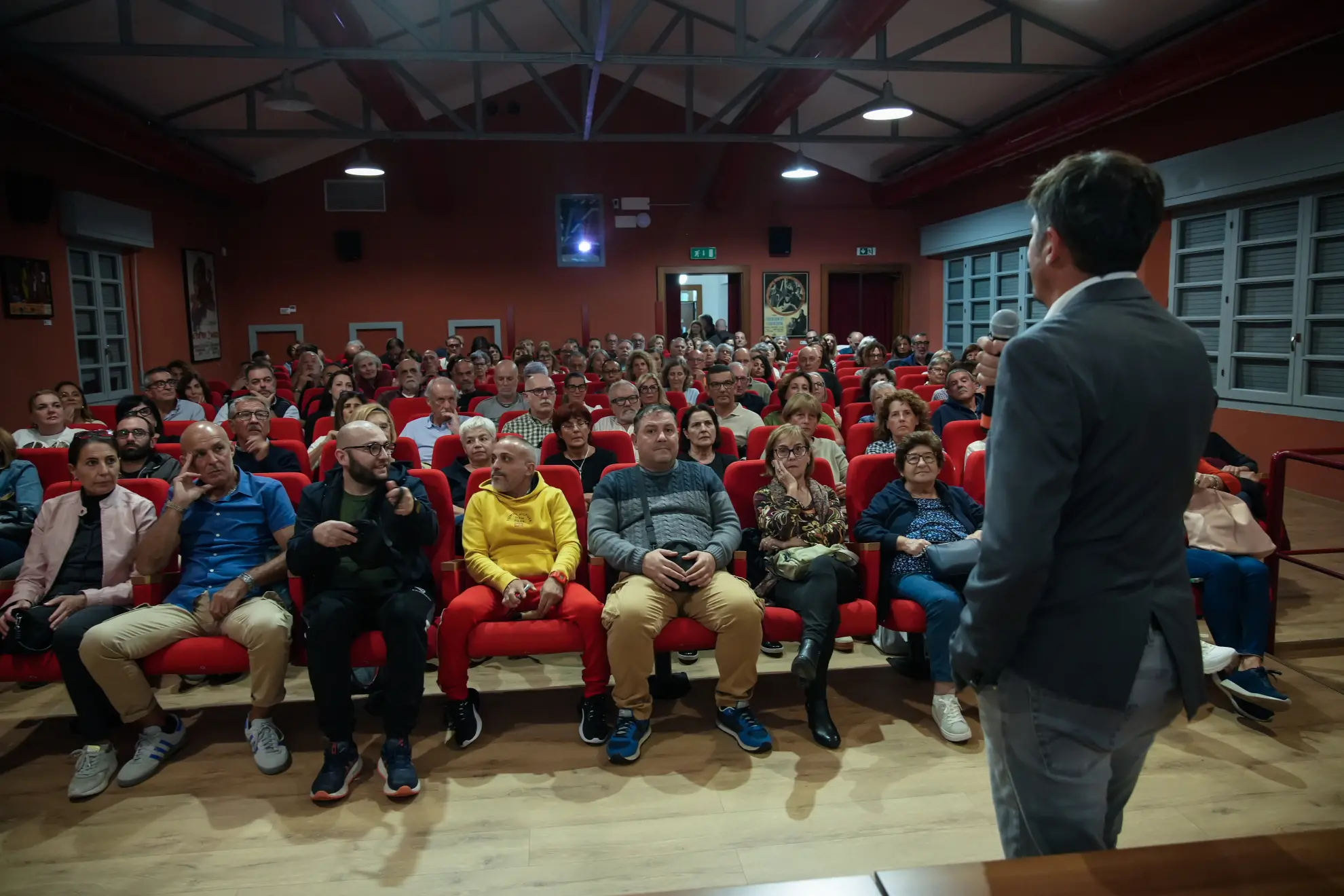
Per restare aggiornato entra nel nostro canale Whatsapp
A ten-year archive of perspectives, relationships, projects, and ideas that have spanned a region. To celebrate the first decade of the Fabbrica del Cinema, the Carbonia CSC of the Società Umanitaria is offering two days of films and meetings open to the public: an opportunity to gather, discuss, and retrace the steps of a journey made up of films, workshops, training, and community. A look back at what has been accomplished, but above all a way to peer into future horizons, following the core principles of the Società Umanitaria: doing to understand, preserving memory to make it living matter, capable of communicating and being passed down in new forms.
On Wednesday, December 17th and Thursday, December 18th, the "Fabio Masala" theater will host directors who have interpreted these principles through their work. The meetings will be introduced and moderated by the artistic director of the Carbonia Film Festival , Francesco Giai Via, who, together with the Fabbrica del Cinema staff, curated the selection of films and guests. The program features Sara Fgaier, Gianluca De Serio, and Daniele Gaglianone, one of Italy's most respected documentary filmmakers whose path has crossed paths with the Fabbrica del Cinema for years. They, along with partners, institutions, traveling companions, and industry professionals, will offer new insights into memory, territory, community, languages, and future possibilities. A moment of celebration and sharing, a collective assessment focused on the future, a way to restore to the audience a sense of shared growth.

It begins on Wednesday, December 17th at 6:00 PM, when the "Fabio Masala" theater will host director Sara Fgaier and her Sulla terra leggeri (Italy 2024, 95 minutes), a delicate and disturbing film that follows Professor Gian as he attempts to piece together his memory, wounded by amnesia. Through his search for a woman from his past, Leila, and the fragments of a love left suspended, the protagonist embarks on a journey that takes him back to the root of his wounds and, at the same time, to his ability to be reborn. Confused images surface in his mind: the bond with his daughter, the grief that resurfaces like distant music. Everything conspires to transform this intimate investigation into a meditation on loss, rediscovery, and the possibility of returning to oneself.

The evening continues with Gianluca De Serio, who will lead the audience through Canone effimero (Italy 2025, 120 minutes), made with his brother Massimiliano. The film is a journey into invisible Italy: the protagonists of this immersion are individuals or small, remote communities struggling against the extinction of their symbolic horizons, in the gestures of solitary makers of ancient instruments or in the voices of singers of polyphonic songs from the past. This work highlights the polyphonic traditions of various Italian regions, challenging the marginalization of these cultures and re-centering them through a visual approach inspired by Byzantine icons and medieval art. The result is a collective diary, a fragile code waiting to be completed.

Thursday, December 18th, begins in the morning with the roundtable discussion "Timeless Films and the Geography of Memory: The Tenth Anniversary of the Fabbrica del Cinema." Starting at 10:00 a.m., it will be an opportunity to reflect on the suspended time of memory, that space that—as Lewis Carroll noted—would be very poor if it could "only work backward." Over the years, that space has been traversed by filmmakers, cultural workers, students, associations, institutions, and partners who have helped make the Fabbrica del Cinema a hub of ideas and projects. This will be an opportunity for a review that will speak to the future, in an attempt to imagine the new responsibilities and possible directions of a work that continues to intertwine with the local community.
The roundtable discussion will be led by figures who have worked directly with the Fabbrica del Cinema over the years. These include Francesco Giai Via, Maria Pina Usai of the U-Boot Lab association, which has overseen the Giudicesse 2030 artistic residency project for the past three years, and Mario Tuscano , president of the CIC Arci Iglesias, which organizes and promotes the Mediterranean Cinema Days festival. Also scheduled for a talk is Francesca Cinus, an expert in participatory processes, who in the second part of the roundtable will attempt to offer a window into the future. She will be joined by graphic recorder Ilaria Fresa, who will translate the discussions in real time and provide a visual summary.
The celebrations conclude in the evening at 9 pm with the eagerly awaited screening of Cumpartia (Italia 2025, 70 minutes), Daniele Gaglianone 's latest film, created as part of the third edition of the Carbonia Cinema Giovani – Filming Lab training program, organized by the CSC Carbonia and funded by the Region through funds earmarked for the development of film-making activities in the Sulcis-Iglesiente area. The film, which won an award last November in Florence during the Festival dei Popoli, is considered the autobiography of a region and will be screened for the first time in Sardinia.
Cumpartia is the story of Ivan's return. After three years in France, where he worked as a winemaker, he chooses Sulcis to make wine with his parents in their small winery. The film unfolds as a tale of the daily life of a family of winemakers, but Ivan's return home is also, and above all, an interior journey, suspended and rarefied, where people and things left in the past—and rediscovered in the present—meet in the protagonist's emotional and solitary dimension. It's a reflection on the relationship with one's roots, the relationship between generations, what it means to be a child, and how fathers and mothers view themselves, balancing the melancholy of the past with the energy needed to face the present.
Director Daniele Gaglianone explains: "I feel Cumpartia represents a transitional moment in my filmmaking journey. Perhaps because it's a film that recounts a significant life transition for the protagonist, who finds himself torn between the still-living intentions of the past and the energy of new perspectives. It's a minimalist film that deals with primary and essential things: confronting one's roots. Asking oneself what the earth is and what meaning lies behind a growing tree. A film about solitude, melancholy, and the necessary joy of sharing, born precisely from an unexpected encounter with a group of friends old and new, which made me feel, at least once again, the beauty and privilege of telling a story."
"If we look back at what happened ten years ago," says Paolo Serra, regional director of the Società Umanitaria's CSCs in Sardinia, "we can declare ourselves satisfied with the work done and increasingly eager to develop it in a context that has changed favorably, thanks in part to the work La Fabbrica del Cinema has accomplished, interpreting to the best of its ability the objectives it set itself: to facilitate processes and catalyze energy and proposals. If training, preservation, and promotion of film and audiovisual culture (but also promoting the island's historical memory and producing new audiovisual memory) were the guiding principles of the main actions, today we can affirm that these lines of development have never run parallel but have intertwined and blended, producing something new and beautiful for the region. Fifteen years after that December 19, 2015, we can say that Southwest Sardinia has a development center that collaborates steadily with a myriad of entities committed to educational, productive, and cultural development: the University, part of the partnership network for the new master's programs in cinema launched in Carbonia, as well as with the Sardinia Film Commission Foundation, the many existing public and private organizations, and not to mention the ongoing support for associations. The past decade, he concludes, "thanks to the essential support of the Region through the Department of Cultural Heritage, has thus helped consolidate a model of practices and networks geared toward innovation and future development."
"Taking stock of these ten years and looking around us, we find a vibrant space capable of capturing, every year, the attention of the world of cinema and culture," adds Moreno Pilloni, director of the Carbonia Center for Cultural Studies of the Società Umanitaria. "It's an organization that engages with and serves educational agencies, from schools of all levels to universities, as well as local public administrations, effectively fulfilling and leveraging the role of 'Service Center' that the Sardinia Region has entrusted to us. Thanks to the Fabbrica del Cinema project, our Center has managed to broaden its scope, becoming a true production and training center that grows with the region."
(Unioneonline)