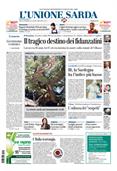


Budget, final act: €7.9 billion in tax cuts. Focus on families and businesses.
Little impetus for growth, Giorgetti: "Prudent, not stagnant." Banks and ministries are paying the price.Tax cuts of €7.9 billion, spending increases of €14.4 billion: the budget budget has reached €22.3 billion. There will be no more changes. Now the curtain rises on the budget's final act, with a foregone conclusion. The budget bill arrives in the Chamber of Deputies, where it will be finalized in four days. It has been in the Senate for 63 days, following what Economy Minister Giancarlo Giorgetti himself called a "tortuous path." The path is now clear, and the parliamentary agenda has set the final vote in the Chamber of Deputies for December 30th, including a vote of confidence.
The planned budget is "prudent, not stagnant," to use Giorgetti's words. It aims to maintain the economic growth of families and businesses on the one hand, and the balance of public finances on the other. There will be no boost to economic growth , which the government estimates will remain at +0.7% in 2026, thanks largely to the final year of NRRP resources. The government aims to bring the deficit to just below 3% as early as 2025, a year early. This would allow Italy to exit the EU deficit procedure and not include in its deficit calculations the growing defense spending to which European NATO countries have committed. During parliamentary scrutiny, especially with the arrival of the government's latest amendment, the budget grew.
The financial impact is expected to be €22.3 billion in 2026. The impact remains at €22 billion in 2027 and then drops to €20.6 billion in 2028. The key points have not changed, although provisions have been introduced that will impact Italians' habits, such as the €2 tax on small non-EU parcels worth up to €150 . Navigating the figures for the measures allows us to understand their true impact. The most significant item is the reduction of the second income tax rate from 35 to 33%, in the €28,000 to €50,000 bracket. This will amount to €2.9 billion in 2026, and approximately €3 billion from 2027. The greatest impact is from €50,000 to €200,000, a ceiling beyond which the benefits are negated by a cut in tax deductions. The €1.5 billion tax relief package, which expires on December 31, 2023, is also significant. The €420 million tax discount (5% rate) on contract renewal increases for those earning less than €28,000 is nearly four times less.
The reduced rate on performance bonuses, decreasing from 5% to 1%, is worth €535 million; the substitute tax on the additional compensation of public sector workers reduces the tax burden by €359 million. The partial elimination of the additional months of retirement (only one instead of three) is costly, but only starting in 2027: it impacts the budget by €1.2 billion. Family and healthcare are two other significant items. Healthcare is being refinanced with €2 billion. Among the largest items, two concern mothers: €630,000 to supplement the income of working women with two or more children, and €225,000 to facilitate their exemption from social security contributions. €466 million is also being funded to adjust the ISEE calculation, which excludes primary residences up to €200,000 in large cities.
The social card is being refinanced with half a billion, and the month-long suspension for the Inclusion Allowance (ADI) following the initial allocation of €440 million is being eliminated. Businesses will receive €2.3 billion in 2026 from the Single Economic Zone (ZES) tax credit. However, the super-depreciation program, which has no impact on the accounts in the first year, will help them by €541 million in 2027 and €1 billion in 2028. Funds are also being allocated for machinery (the Sabbatini law), for tourism supply chains, and the postponement of the plastic and sugar tax, which alone is worth €385 million in the first year . Banks and ministries, however, will foot the bill: the latter will see cuts of €2 billion but will be able to reschedule their spending. Taxes applied to banks and insurance companies are also high: the IRAP increase alone will cost them €1.2-1.3 billion. But if you look closely, citizens will also pay for something: there's also 552 million from the increase in fuel excise taxes and another 213 million from rising tobacco prices, values that are higher than the much-discussed mini-restrictions on short-term rentals, which will generate 138 million but only from 2027.
(Unioneonline)